MLB may change debt rule

At the end of last season I wrote about how MLB’s lightly-enforced debt rule might impact the A’s in the future. Now that the Mets have been practically sunk by the Madoff scandal and the Dodgers handcuffed by the McCourts’ divorce proceedings, Bud Selig may be looking to actually monitor the situation more closely and even act on violations.

The NY Post kicked off today’s news by indicating that a change to the existing debt rule may be in order. The article cites the now obsolete 60:40 rule, which was mothballed in favor of a multiplier-based system in which debt couldn’t be more than 10x operating income, or 15x if a new stadium were in operation. The kicker is that MLB is looking to include holding company debt in the calculation, which has potentially enormous implications. For ownership groups that were heavily leveraged to buy TV networks and radio stations, enforcement could have crippling effects on how much they can spend in the future, whether it’s on players or anything else. MLBPA may be pushing in favor of such a plan since it would provide a more honest assessment of each club’s financial stability and risk.

A source who represents players said, “I think it [a rule change] is positive,” even if it could have a negative impact on salaries.

That kind of agreement is nowhere to be found among the NFL, NBA and their unions. Craig Calcaterra has a short take on the rule change as well.

Where I’m not clear on the impact is whether or not additional teams and their debt in other sports is applicable. After all, Tom Hicks overreached to buy Liverpool F.C. and lost both the soccer team and the Texas Rangers because of it. While that’s clearly an outlier case, crazier things have happened. Ask Fred Wilpon, John Moores, or Frank McCourt.

The upshot of this is that while the A’s appear to be clean at the moment, things will get a more stringent in the next CBA and with the building of a new ballpark. MLB will look at any stadium deal and the A’s ability to make it work very, very closely. And while Selig may be supporting his friends Wilpon and McCourt right now, it wouldn’t surprise me for Selig to make an example out of one of them in the future, and to use the A’s or Rays as an example of how to properly run a lower-revenue franchise.

To further explain this, let’s take a look at operating income for the A’s as reported by Forbes for the last three seasons:

  • 2009 – $26 million
  • 2010 – $22 million
  • 2011 – $23 million

The average of those is $23.7 million. With a 10x multiplier, the A’s debt ceiling is $236.7 million. They’re nowhere near that point right now. Once they add a ballpark, that number will shoot up considerably. The ceiling will be $355 million, though that’s not enough to fully cover construction costs (and outstanding debt). The stadium cost number may go down by MLB’s definition if more corporates are locked in early and long term, I suppose that’s at the league’s discretion. Just as important, the debt number will be as high or perhaps even higher than the franchise value. Whether the debt rule stays the same, just with greater enforcement, or evolves to include holding companies, it’ll be interesting to see how individual teams respond in terms of fiscal restraint. That a debt rule change is on the table would also reinforce the idea that the A’s stadium resolution may not come until after CBA talks are complete. Will that happen before or after the season ends? We’ll find out soon enough.

News for 3/24/11

Quick housekeeping note: If you were not aware, this blog is a self-hosted WordPress site. Ever since I moved to this platform in November 2009 after years with Blogger, I have been astonished at the rapid pace of third party development for WordPress. One feature came out today in the form of a server-side plugin called Onswipe, which can automatically reformat any WordPress site into an iPad/touch-friendly format. If you’ve used iPad apps such as Flipboard, Pulse, and Zite, you’ll feel right at home. Here’s a screenshot:

If you have an iPad, your browser (Safari) will show this version of the site automatically. I’m going to leave it up for now, but if any iPad users would prefer to go back to the original version of the site with the sidebars, I’ll heed your words. No other browsers or platforms should be affected. If you are, let me know in the comments. I’ve experimented with a mobile version of the site, but I’ve chosen not to launch it because nobody’s asked for it, so I didn’t want to penalize readers who are happy with the full site on their smartphones, etc.

Now the news:

Evan Weiner has a good overview of how the landmark Tax Reform Act of 1986 impacted the ways stadiums and arenas could be financed.

Jorge Leon was interviewed by Oakland North, a three minute clip in which he manages to dismiss economic viability concerns in Oakland as easily as he does train safety.

Press Democrat columnist Robert Rubino bashes the Giants in consecutive weeks – first the fans, then the team over T-rights.

Bleacher Report’s Brandon McClintock seems to buying into a Wolff conspiracy theory – nevermind the millions spent in Fremont, the lack of interest or cooperation during the Brown administration, or the Coliseum Authority’s lack of willingness to explore a ballpark plus development at the Malibu/HomeBase site.

As for the fate of redevelopment? The legislature is steeling themselves for the fight over tax extensions. Redevelopment will have to wait.

Added 2:27 PM – Speaking of trains, the Harbor Drive Bridge, a pedestrian/bike span that goes over heavily used heavy and light rail tracks near PETCO Park in San Diego, has finally opened. It’s lovely and it only cost $12.8 million $26.8 million to construct. A Victory Court-to-Jack London Square bridge shouldn’t cost as much. It will probably cost many millions of dollars to build, and yes, it absolutely is necessary.

Picture from San Diego Union Tribune / CCDC

2011 Forbes valuations out, A’s up 4%

It’s late March, and you know what that means: the new Forbes MLB franchise valuations are out. With a few notable exceptions due to debt problems (Mets, Dodgers), things in baseball are going quite swimmingly. The A’s are back above the $300 million mark with a $307 million valuation, up 4% from 2010. The team remains second-to-last among all MLB franchises, eclipsing only the Pirates. Forbes also listed at $23.2 million, which is probably due entirely to revenue sharing.

To understand where the A’s may be headed, I took five teams and looked a little deeper at how their valuations were constituted. The teams are the A’s, Giants (natch), Red Sox (Giants’ aspirations), Rockies and Padres (aspirational western mid-markets for the A’s). The numbers are quite interesting.

First off, it’s important to note Forbes’ explanations for some of the components of each valuation. “Sport” is described as attributable to revenue shared among all teams. You’ll see there’s an inverse relationship between the bigger revenue teams and this number. If a team is highly dependent on revenue sharing, this number will be higher. “Market” seems self-explanatory, though for the two Bay Area teams it’s interesting that according to Forbes they share the same market, which based on its size (4,274,000) is probably defined as the SF-Oakland-Fremont MSA. That leaves out both the South Bay and all of the North Bay save for Marin County. Not clear on what impact this has, so I’ve reached out to Forbes editor Kurt Badenhausen for a clarification. Here’s his response:

We publish the population and revenue per fan numbers based on the San Francisco-Oakland-Fremont MSA. We use the official MSA designations for all those numbers. Market size plays a role in the value of teams in terms of how they drive revenues, but a bad stadium situation in a big market is still not going to help a team out.

“Stadium” is fairly straightforward, though it should be pointed out that just because you build a $500 million dollar stadium you’re not going to see a similar appreciation in your franchise valuation. That makes “Stadium” more a function of gate revenue and attendance, areas where the A’s and Padres fall behind while the Giants and Red Sox excel. “Brand Management” must be related to marketing efforts – or in the case of the A’s, a lack thereof.

Debt/value is a tricky beast, both in how it’s defined and how MLB’s debt rules get enforced. It always includes stadium debt, and should the A’s get their new ballpark in the next few years that number will jump up significantly from its 29% position, which has hovered there for several years. Since it’s possible that some of that debt may come in the form of a loan from MLB, it will be extremely important for Wolff/Fisher to ensure that revenue streams are locked in to service that debt (and then some) for the foreseeable future.

Surely, this annual release by Forbes will be followed up by a denial of the veracity of the figures by Commissioner Bud Selig. Despite this, it’s telling that franchise sales tend to use the Forbes figures as a baseline at the very least, leading me to believe that they’re far more accurate than Selig, who is loathe to provide any real financial data from MLB, is willing to let on.

April 3rd A’s – Japanese Relief Effort

Press release from the A’s today:

OAKLAND, CALIF. — In their ongoing efforts to support victims of last week’s Japanese earthquake disaster, the Oakland A’s announced today that the team will donate $1 for every ticket sold to their Sunday, April 3 game against the Seattle Mariners at the Oakland-Alameda Coliseum to the Red Cross for their relief efforts in Japan. In addition, the A’s have established a new web site, www.oaklandathletics.com/japan, which will allow fans to make tax-deductible donations to the A’s Community Fund, with 100 percent of those proceeds-along with money raised from the April 3 game — given to the Red Cross.

The benefit game, which will showcase Japan’s two greatest modern-day players in Oakland’s Hideki Matsui and Seattle’s Ichiro Suzuki, is also Japanese Heritage Day at the Coliseum, featuring pre-game ceremonies and entertainment. Yet most importantly, the game will feature many fund-raising components to support the Japanese relief efforts.

Beyond the $1 per ticket commitment by the A’s organization, corporate sponsors for Japanese Heritage Day, including title sponsor Capcom and presenting sponsors NetSuite and Futjisu, will also contribute thousands of dollars to the cause. Besides purchasing a game ticket, fans will be encouraged to donate in the following ways:

CONTRIBUTE ON-LINE-Make a personal donation on line to the A’s Community Fund by going to www.oaklandathletics.com/japan. All proceeds will go to the Red Cross.

A SILENT AUCTION – Before and during the April 3 game, the A’s will conduct a silent auction of signed and game-used baseball equipment by Oakland players, with 100 percent of the proceeds raised going to the relief efforts.

MATSUI AUTOGRAPHED PHOTOS – A limited supply of personally-signed 8×10 color photos of Matsui will also be sold for $50 each.

FRAMED AUTOGRAPHED GAME JERSEYS – Personally-signed game jerseys worn by Japanese baseball icons Hideki Matsui and Ichiro Suzuki on 2011 Opening Night will be added to the Silent Auction on April 3.

As part of Japanese Heritage Day, 10,000 fans will be given complimentary Hideki Matsui t-shirts, presented by Super Street Fighter IV 3D Edition. Pre-game festivities will include an on-field ceremony and relief-effort check presentation featuring Matsui, the San Francisco Japanese Consul-General Hiroshi Inomata, and Japanese Heritage Day sponsors.

In addition, Taiko drummers will entertain fans before first pitch. For more information regarding Japanese Heritage Day and the Japanese relief efforts, go to the A’s newly-created web site, www.oaklandathletics.com/japan.

Give by enjoying an A’s game that Sunday. Then give again (if you can) via one of the methods above. A’s games are a great deal, and on April 3 you’ll be there for a great cause.

News for 3/14/11

Today’s hearing for Santa Clara County and the City of San Jose may set the stage for a proper settlement between the two parties over $62.9 million in redevelopment funds owed to the county. The Merc’s Karen de Sá has the details, including this bit from County Supervisor Dave Cortese, who has long been a ballpark backer:

“This is what we call a straight breach of contract, it’s not that much different than if somebody got behind on their car or house payments — you gotta settle up,” said board president Dave Cortese. “The difference is, this isn’t money for a car payment, this is money that needs to go toward all the services the county provides, everything from emergency rooms to a regional park service, libraries and courthouses. There’s no end to the hardship that would result in us being out of pocket $63 million.”

City Attorney Rick Doyle is among those who believe a deal can be reached by Wednesday, which is when the State Legislature is supposed to hear the new budget proposal.

Santa Clara is set to wrap up its work to protect RDA funds for the 49ers stadium project tomorrow.

San Diego is considering a Diridon-like transfer of 135 RDA-owned properties to the City.

Longtime NY Times baseball writer and anti-blog curmudgeon Murray Chass keeps up the weekly trickle of nationally-sourced articles pushing for the A’s to move south. This one follows a widely used AP piece last week. I sense a strategy in there… Chass’s column comes two years after a similar entry at his site, the difference this time being the appearance of Bill Neukom on the scene.

Jonah Keri’s new book about the Moneyball-style rise of the Tampa Bay Rays is out. The book is titled The Extra 2%: How Wall Street Strategies Took a Major League Baseball Team from Worst to First.

Added 3/15 1:00 AM – In Sunday’s edition of the Chronicle, Matier and Ross reported that Denver attorney Paul Jacobs was hired by Oakland to be its lead negotiator for the Victory Court project. The $455 per hour hiring, which wasn’t publicized immediately because it was done in closed session, is a big deal because Jacobs is prominent in the Western US for working on stadium deals. His biggest claims to fame are his role in putting together the resources that eventually created the Colorado Rockies, and the ballpark and land development deal around PETCO Park. As is often the case in the stadium game, Jacobs isn’t batting 1.000. More recently he worked on the aborted Pacific Commons project in Fremont and was retained by the City of Oceanside in its efforts to figure out a football stadium deal for the Chargers. One thing I’m curious about is whether or not the firm Barrett Sports Group was brought in. The last two links include mentions of Barrett Sports Group, the “other half” to Jacobs, with both hired as a package deal of sorts. Jacobs handles the real estate stuff, while BSG takes care of facility planning and financing. BSG counts A’s and Giants ownership as two of its many current or former private sector clients.

Getting ready just in case

KCBS radio reported yesterday that an online construction bidding service, bidclerk, has a new or updated listing for an A’s stadium San Jose (paid subscription required). The value of the project is $400 million, less than what we’ve frequently discussed as the cost of the ballpark. Start date is listed as January 2013. The project description goes as follows:

New construction of an athletic stadium in San Jose. Preliminary plans call for the construction of a 32,000-seat baseball stadium. The stadium will include concession areas, restrooms, ticket boxes, V.I.P. areas, locker rooms, a medical facility and offices.

This project is contingent upon approval from Major League Baseball and the city. Construction is scheduled to begin no earlier than the first quarter of 2013.

The listing dates back to 2006, when the A’s were looking in Fremont. Strangely, the included documents are two of the now outdated Pacific Commons renderings alongside one recent San Jose rendering. Listed as project contacts are Lew Wolff and 360 Architecture principal Brad Schrock. There isn’t much information right now other than a heads up to interested contractors. Should the project be approved by MLB and SJ, activity should increase appreciably.

Wolff’s Maritz-Wolff development company also lists the Earthquakes’ stadium project. Some light-oriented schematics are included, and the project description indicates how much further along the project is compared to the ballpark:

Site work and new construction of a mixed-use development in San Jose. Schematic plans call for the construction of a 20,000-seat soccer stadium.

This project is currently in the financing stage, and construction is tentatively expected to begin in spring 2011.

In both cases, they are accurate reflections of where the two projects stand. That leaves the January 2013 start date for Cisco Field the one truly speculative item. Should it start at that date, construction would have to be completed in 27 months to be done prior to Opening Day.

Ray Ratto: Ballpark Feasibility Detective

Several hours ago I listed to the latest installment of Dale Tafoya’s Athletics After Dark podcast, this one featuring Ray Ratto. Ratto thinks that the San Jose stadium plan is near death:

The “Blue Ribbon Committee” is a fraud. The territorial rights argument is a fraud. This is about one thing and one thing only, and it’s always been about this: Do the A’s have the money to put a shovel in the ground? If they had the money to put a shovel in the ground, we would’ve gone to Bud Selig and said, “We’re ready to go now.” And then Bud Selig can either tell the committee to produce a report or he could just go without it and start harvesting votes if they really want this to happen. I think it is incumbent upon the A’s to show that they’re ready to go right now and the fact that they keep saying, “well we haven’t seen the blue ribbon report…” You know what? That’s due diligence and you’re supposed to do that. If you’ve got that stuff down you’re already working at that.

…In the current economic climate, where you really need help from cities and states to get buildings done if you don’t want to go into your own personal debt. I think that the idea of a San Jose stadium is really fading. It may be dead at this point. It’s taken too long for the A’s to get what ducks they have in a row, in a row. So I think the problem here is the A’s needed more help than they let on and now they’re stuck.

The bedeviling thing about how MLB works is this black hole of information around Selig. We know a lot about what San Jose is doing, we know a decent amount about what Oakland is doing. We have Wolff and his media campaign, we have responses from Neukom and Baer. The only thing we don’t have is the really important stuff. We don’t know what Selig’s, and by extension the other owners’, motivation is. To fill that void, Ratto theorizes that money is the problem. Which it may be, none of us have a financing plan in front of us.

But unlike the territorial rights issue or the progress of environmental impact reports, there is absolutely zero data or precedent to back up Ratto’s supposition. He is quite literally going on a hunch, making the analytical leap that it must be the money and everything else is a sham.

That makes little sense when you consider the following:

  • The Giants have been spending millions on preserving T-rights to the South Bay over the last two years. They bought a majority share of the SJ Giants. They’ve been redoubling marketing efforts in the South Bay. Their stance on T-rights has gotten more hardline with the passing of time. They’ve threatened legal action – not directly, through intermediaries. No organization goes to this much trouble if they don’t believe that something major is at stake.
  • They don’t call Selig “Slug” for nothing. The man is interminably slow when it comes to big decisions and is more than willing to say the sky is green when it is obviously blue (his remarks about competitive balance are a good example). This one’s a very big one since it involves something the big market owners consider sacred. I’ve said before that Selig isn’t going to act until at least one of these cities has all of their ducks in a row. That means the site, legal/political clearances, everything. San Jose isn’t there yet. Oakland isn’t there yet. And the Grim Reaper is coming fast for cities. Plus there’s the possibility that upcoming CBA negotiations will come into play, especially because the biggest debate will be about revenue sharing. If you’re Selig, why would you lift a finger until this other stuff shakes out? I wouldn’t. I guess you can call me “Slug” too.
  • The money is a lot more “there” than “not there.” Wolff hasn’t been afraid to say when money is an issue – look at what’s been happening with the Quakes. He also hasn’t been afraid to bail on a project when it couldn’t work out financially, as was the case in Fremont and Oakland. Is it all locked in and under contract? Probably not. The timing of the hiring of Darrin Gross to the business side of the A’s may be a clue. Wolff hired David Kaval under the same auspices with the Quakes last year, and now we’re a few months away from groundbreaking. And let’s not forget that Cisco and SVLG are nothing to sneeze at.
  • This stuff takes a long time to pan out. Peter Magowan took over the Giants in spring 1993. It took four years to get a ballpark deal in place and another three to build it. Magowan never had to worry about complications like T-rights. San Jose has been handicapped by the T-rights debate, which has strung the effort out to five years to get to this point (though there were two silent years). Ratto makes it sound like either Selig or Wolff can just forcefully say, “Make it so,” and things start happening, chop-chop. That’s not reflective of how this works. It’s an ugly, dirty process, borderline corrupt (if not outright) at times.

This post is yet another case of devoting nearly 1,000 words to something that was not news, merely a theory from a columnist. Who knows, maybe Ratto will be proven right in the end? If not, I suspect that when a groundbreaking ceremony occurs at Diridon this very interview will be played over the loudspeakers, an audio version of the “Dewey beats Truman” moment. Tech writer John Gruber calls it claim chowder. I’ll just call it a hunch.

Requiem for a Finley (or Peterson complains about Wolff’s complaining)

One of the problems I have with Lew Wolff pleading his case in the media is that it gives the media plenty of fuel for columns – columns that are almost invariably anti-Wolff. Such is the case today, with a Bloomberg article followed up by a rejoinder by Tribune columnist Gary Peterson. None of it moves the conversation forward, and it creates a cloud over a team at a time when all teams should have unfiltered hope on their side. You’ve got pro-Oaklanders and most local columnists on one side and Wolff, Beane, and the national columnists on the other side. And there isn’t much room for convincing either.

Peterson has plenty of good points (the beer size scandal) and some bad ones (the non-existent big development in SJ), but he makes one rhetorical mistake in comparing Wolff to Charlie Finley. In no way is Wolff as cheap, colorful, or rebellious as the maverick Finley. MLB wouldn’t have a Finley in the current era. As much of a mixed bag as Finley was, his honeymoon in Oakland may have ended as early as April 18, 1968. That was the date of the second ever home game for the Athletics in Oakland. After a sellout, 50,000+ crowd on opening night, game two brought in a whopping 5,304, most of those probably season tickets. Out of curiosity, I did a check of every first and second home game ever played in Oakland, and the results are only marginally better, sometimes worse.

Bold/italic figures indicate doubleheaders. Blue years are in Kansas City, Green years are in Oakland. Home games played outside of Oakland were not counted. Data source: Baseball Reference

There’s a story – possibly apocryphal – of how Finley said that he made a mistake in moving the A’s to Oakland when he saw the crowd for that second game (that may be how Selig got the basis for his famous quote). To be fair, BART was under construction. On the other hand, traffic was not nearly as bad on the Nimitz, then also known as Highway 17. Seriously though, 5,304? And less for the second games the next few years? The Haas era bumped things up, but even then the A’s had two years whose second games had four-figure crowds. Increased season ticket sales this year should ensure that a <10,000 crowd won't occur this year. Still, no matter how much Oaklanders and columnists despise Lew Wolff, hate alone won't save the A's. Showing up just might. I know that many of you will be there on Opening Day. What about the following day?

When encroachment is not encroachment

Update 3/1 2:00 PM – Lew Wolff is keeping the campaign going. In a Bloomberg article, Wolff states that he is “aghast” at how the Giants could be so stubborn in guarding T-rights when the A’s are moving further away.

Thanks to jk-usa for getting hold of KCBS In Depth’s (Doug Sovern / Ed Cavagnaro) interview with Giants president Larry Baer. Nearly four minutes of the interview is spent talking about the A’s and territorial rights. Below is a transcription of the relevant section (starting at 17:30 of the interview).

KCBS: The other team in our market – the A’s – their owner still very much has his eye on San Jose. What is the Giants’ on this, has it changed at all as far as, is there something you would accept to give the A’s entry into San Jose?

Baer: No change. When we go back to 1992 and the team was acquired by this group, there was a territorial right that went with that purchase… the exclusive right to exhibit baseball in San Francisco, San Mateo, and Santa Clara counties… We understand the A’s situation. We believe that they need a new ballpark. There’s no doubt about that… but they need a new ballpark, not a new territory. Certainly in their exclusive areas, Alameda or Contra Costa County or anywhere else in this region whether it’s Sacramento or wherever, we wish the A’s luck and hope that they’re able – for the good of the sport – to get a stadium that’s to their liking.

KCBS: We know you have the right and that you’re opposed, but do you think that there’s any chance that the owners would allow the A’s to move to San Jose, and the odds that the San Jose people would be able to build a baseball stadium?

Baer: Well, there’s no precedent for stripping a team of its territory. People point to Baltimore-Washington. That’s a totally different situation because the Orioles did not have a territorial right to Washington. In fact, when Montreal moved to Washington there were reparations paid to the Orioles even though it wasn’t necessary. So in a way it argues our point that even when another team doesn’t own a territory, that it’s allowed to move close, there’s a chance for real destabilization of the existing team. So this has been kicked around forever. The commissioner has never indicated to us that he believes that the territorial right that we have is in doubt.

KCBS: How do you feel having the A’s in San Jose would harm the Giants?

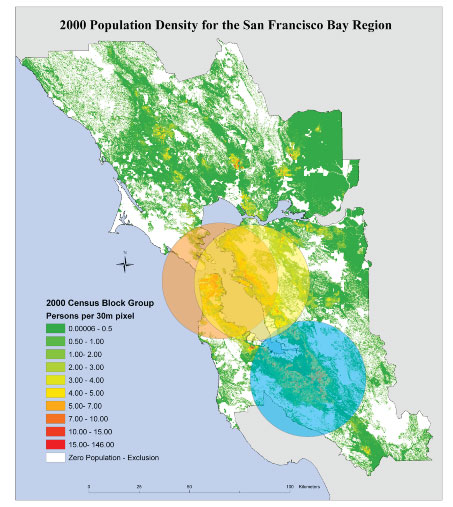
Baer: Well if you look at the patterns, Ed, and you look at over the years what’s transpired… when the team was first acquired in ’92 or ’93 the team was in trouble. We were playing in Candlestick but the fans weren’t coming. We were thinking that it was franchise that maybe could not survive. We redoubled the marketing effort – San Francisco, San Mateo, and Santa Clara counties. That is our core. If you look at – even though Oakland may be closer to SF than San Jose – there’s a little thing that people forget called the San Francisco Bay. The path of travel in this region is really north-south. If you look at KCBS traffic reporters and where people are moving it’s a north-south grid. People are well versed and in the habit of coming up the train to San Francisco – we have to preserve Caltrain by the way – coming up the train to Giants games. They take buses, they take BART into parts of the South Bay. That is our fanbase. It’s a big part of who we are, it’s where our sponsors come from, and we’d be destabilized if the Giants had another team that was right there.

That part of the interview was sandwiched by talk about an arena in SF and CBA matters.

First off, I have to admit I admire the way Baer said that he hopes it works out for the A’s in Alameda/Contra Costa Counties and sneaks in a reference to Sacramento or other parts of “the region” in the same breath. The Giants certainly won’t be shedding any tears if the A’s moved to Sacramento. They’d probably pay for the Mayflower trucks. Of course, Sacramento is such a hamstrung market right now that any suggestion like this is clearly a straw man. Still – well played, Baer.

Next up – the path of travel is really north-south? That must explain the full Embarcadero BART platform before and after each Giants game. Or the record BART ridership the day of the championship parade. Or the fact that fans coming via Caltrain are 5% of a typical Giants gameday attendance. Or the 444,000 vehicles that take the three east-west bridges every day. Come on, let’s get real. We all know something that neither Larry Baer nor Bill Neukom are willing to say – that the Giants and AT&T Park have taken much of the East Bay fanbase, especially the casual fan. They have that and they want continued protection of their “core.” As much as fans may come from the South Bay, it still isn’t the most convenient kind of fandom. If a weeknight Giants game ends at 10 PM, fans aren’t leaving on the train until 10:30 and won’t arrive at their respective stations in Santa Clara County until at least 11-11:15. Add a drive home and it’s 11:30. That may be perfectly acceptable for diehard Giants fans (it is for me when going to A’s games) but it’s a tall task to get a truly significant number of fans from the South Bay. And the “BART into parts of the South Bay” business? That is truly rich.

Circles indicate a 20-mile radius from China Basin, Coliseum, Diridon sites

Circles indicate a 20-mile radius from China Basin, Coliseum, Diridon sites

The Giants frequently like to point out that 50% of their ticket sales come from south of the San Francisco City-County line. Roughly half of those come from Santa Clara County, and many of those are long-time Giants fans. Many are corporate interests who can’t or won’t buy into the A’s where they’re currently situated. Sometimes it’s both. If they’re that worried, why not measure it? Let’s set a baseline for how much revenue comes from the South Bay, and if the Giants see an attributable drop to the A’s move to San Jose, MLB can set compensation on a seasonal basis until the loans on AT&T Park are paid off. I’ve suggested in the past the the A’s simply shift part of their existing revenue sharing check – which basically is paid by the Giants anyway given the clubs’ relationship to the revenue sharing pool – and be done with it. Once the A’s move in, then use the baseline. The fact is that San Jose is too far from either San Francisco or Oakland to be even remotely optimized as a market. If MLB wants to maximize sales to the entire Bay Area, it needs to maximize the sales territory. Ever wonder why Oakland doesn’t have great retail shopping districts or a mall? It’s partly because long ago, retailers and developers decided they could get sales from Oakland without having to locate in Oakland by locating in Emeryville, San Leandro, and even SF for some major stores. At some point MLB will have to decide if it wants as much from the Bay Area as possible or not. The status quo will surely not provide that.

Finally, there’s this matter of the Giants getting the South Bay baked into the $100 million purchase price paid by Peter Magowan and company in 1993. That price was a hometown discount, well shy of the $115 million offered by Vincent Piazza when he tried to move the team to St. Petersburg. We’re familiar with the hometown discount since it allowed Steve Schott and Ken Hofmann to get the A’s from Wally Haas for a cut rate. However, that brings up the question of how much the T-rights for the South Bay were worth back then and now. Below is a table showing the purchase prices for eight teams that changed hands in the early 90’s.

franchisesales-early90s

So Magowan paid about the same for a bigger market, greater legacy team as Drayton McLane and Nintendo did? Barely more than the two National League expansion franchises, both of whom were in inferior markets compared to the Giants? Incidentally, Magowan initially offered $95 million but may have brought in additional outside money to bolster the bid (at the time Magowan was worth a “measly” $60 million, hardly billionaire status).

If $95 million could be considered the Value of a Replacement Franchise, that doesn’t say much for having additional value baked into the 1993 price paid for the Giants, whether that value comes from T-rights to the South Bay or not. In all of the resale cases, franchise values may have been artificially depressed to maintain that team in-market. That’s fine, better that than a free-for-all. Let’s not kid ourselves about how much Santa Clara County was worth back then. In fact, in 1993 the A’s franchise valuation was $114 million, well north of the Giants, close to Piazza’s bid, and more reflective of an open market valuation. Shortly after Magowan assumed control, he inked Barry Bonds and the franchise value took off. It’s hard to argue that the South Bay had so much value in that transition when Magowan such a huge discount in the process. There’s more meat to the story if the value is baked into the financing of the stadium. But that’s done in 2017, and the Giants want the South Bay in perpetuity.

The funny thing is that I’ve spent over 1,000 words on what is essentially no change in position on the part of the Giants from 2009, when Neukom took the helm. While the A’s and South Bay interests have shifted to an appeal to decency, the Giants haven’t budged one bit. It’s clear that one team is better at playing this particular game, and it’s not the one who has more World Series trophies.

Emphasis, or beating a dead horse

The Chronicle’s Susan Slusser catches up with Lew Wolff on the stadium situation:

Wolff reiterated that he believes that the Bay Area should be considered like the other two-team markets, none of which have territorial rights assigned.

Wolff said that funding for any stadium approved in San Jose is in place. “We’re prepared to build the stadium,” he said. “We have the funding, the equity, the sources of revenue.”

This is the first I’ve heard or read Wolff confirm this. Obviously he’s not going to divulge details on how this would work, but we’ve made plenty of reasonably good guesses here to paint a picture.

In other news, the Kings have asked for an extension to the March 1 deadline to petition for a franchise move, presumably to Anaheim.

With both of those in mind, here’s a simple poll question.