CBA Talk 2011: A comparison of leagues

Three of the four major professional sports leagues have collective bargaining agreements which will expire later this year. In the NBA and NFL, discussions between management and labor have been contentious for at least the last year, with threats of work stoppages all too real and quite likely. That makes MLB an outlier, as there has been little tension in its ongoing labor discussions, even though its CBA will run out only a few months after the other two leagues’. The NHLPA authorized a one-year extension of its current agreement in the fall, allowing its CBA to expire after the 2011-12 season, but under the terms of the agreement, no further extension can be negotiated between the union and league. With Donald Fehr brought in to helm the NHLPA’s side of future talks, the players there aren’t looking to go soft at the table.

Before we get into the details, I’ve put together an overview of each league’s current CBA, sans drug testing details. Next week, each league will get its own post and in depth analysis. For now, take a look at the table and if any questions or corrections come to mind, throw them into comments. Every effort has been made to verify all of the data in the table, including each league’s CBA documents when possible. Still, there may be some issues with what’s reported, so here’s your chance to fact check. It’s also your opportunity to steer the discussion in a certain direction if you so choose.

I look forward to your questions and comments. Until then, enjoy the rest of the football weekend. My thoughts are with those who were senselessly hurt or killed at the Tucson atrocity today, and their families.

End of 2010 news

To celebrate the holiday season, the Marlins have sent out a virtual greeting card showing a time-lapse of the construction of their new ballpark. It’s scheduled to open in 2012. Impressive, right? Maybe not when you take a look at this cross-section (via Autodesk/Hunt-Moss), in which all of the luxury suites have been stuffed behind the plate:

Craig Calcaterra thinks Oakland is wasting $750k on the EIR study. His rationale at the end may be more spot on than you might think.

Jeff Moorad and partners finally completed their purchase of the Portland Beavers. The team will play in Tucson for at least the 2011 season, with the idea of playing in Escondido as soon as 2012.

The San Diego Reader’s business/finance writer, Don Bauder, considers Petco Park a failure and considers it a cautionary tale for those who may want a downtown SD football stadium for the Chargers.

At Biz of Baseball, Maury Brown has a slew of new articles:

Lancaster is adding solar panels to its ballpark, which will make it 98% self-powered.

The ballpark for the now relocated Omaha Storm Chasers (Royals) is already having the team move in, even though construction started only in August. Called Werner Park, the new digs are expected to open in April.

Escondido votes 4-1 to approve… something

If you’ve been following the Twitter feed, you’d know that tonight I’ve been following the Escondido city council’s decision on whether to move forward with its $50 million AAA ballpark plan for the Padres.

The City Council voted 5-0 on two items: to move forward with EIR work and the acquisition of some land that would be needed for the ballpark. The last item was a MOU that brought more questions than answers among the Council and public speakers. Because of these questions, the Council chose to approve the MOU 4-1, with every Council member expressing reservations in an effort to get a better deal down the road.

A better deal than what, you ask? Let’s break down this $50 million, 9,000-seat ballpark:

  • $40 million for ballpark construction
  • $5.1 million for remaining land acquisition for the ballpark alone
  • $0.4 million for demolition
  • $0.5 million for paving a parking lot
  • $6 million for additional property acquisition (relocations)
  • $5 million for infrastructure
  • $0.5 million for current expenses
  • $2.5 million for contingency costs

A little addition shows that the cost above totals $60 million, not $50 million as advertised. To help shore this up, Jeff Moorad and his partners will pony up $5 million. That leaves a gap of some $5 million, money that is not accounted for yet. The city is also getting the team to pay a lease of $200,000 annually, adjusted for inflation every 5 years. There’s a serious shortfall between that lease payment and the debt service on the $50 million, though the Council didn’t seem overly concerned, citing revenues from other sources (generally other taxes including tax increment).

There are multiple opportunities for the City to back away from the project. As is customary with big projects, staff were quick to explain that a MOU is not a binding contract, and that if the Council doesn’t approve any of the subsequent necessary steps (lease terms, development agreement), the project won’t move forward. Those decisions aren’t really due until February. While the Council made it clear they want to get a better deal, Moorad was equally clear in his statement as the last speaker of the night. Moorad was not really open to reopening the deal, and he was afraid that the ballpark may not get built due to “death by a thousand paper cuts.” We’ll see if the agreement in the end has any significant material changes. For now, it’s a serious gamble by Escondido, one that will tie up its redevelopment funds for up to 25 years.

The public speaker discussion was, other than for a nasty racial debate component, somewhat reminiscent of what I saw in Fremont. Fremont is a good analogue because like Escondido, it’s trying to make a splash as a city that’s not particularly large. The types of discussions Escondido citizens are having about the ballpark could happen nearly anywhere, and with the San Jose Giants possible moving elsewhere, it’s likely those discussions will happen somewhere else. It’s quite likely that this Escondido deal will create a sort of baseline for what the Giants (Bill Neukom and partners) will ask for elsewhere in the Bay Area.

A Triple-A ballpark is larger than the typical Single-A ballpark. Here’s a partial list of California minor league teams and stadium capacities:

  • San Jose Municipal Stadium – 4,200
  • Banner Island Ballpark (Stockton) – 5,500, $22 million cost in 2005
  • John Thurman Field (Modesto) – 4,000
  • Clear Channel Stadium (Lancaster) – 4,600, $14.5 million in 1996
  • Raley Field (Sacramento) – 11,000, $42 million in 2000
  • Chukchansi Park (Fresno) – 12,500, $46 million in 2002
  • Aces Ballpark (Reno, NV) – 9,100, $50 million in 2009

With inflation, a new Single-A park (~5,000 seats) would probably cost somewhere north of $25 million, though land cost could make that price tag vary considerably. Any city that might consider such a project would be smart to have it somewhere there is already a decent amount of public parking, along with BART, Caltrain, or even Capitol Corridor. The North Bay, which I’ve always thought would be a natural fit for a Giants minor league team, has none of those transit options. Yet I don’t consider transportation much of a deterrent, as I expect several groups to come out of the woodwork hoping to land the team if the A’s move to San Jose.

You know what it means if that happens? My work on this blog will NEVER end.

Oakland committee approves full EIR study

The Trib’s Angela Woodall observed the proceedings today. The result? 3-1 in favor of a full EIR study. As expected, the lone dissenter on the committee was Ignacio De La Fuente. The issue will appear before the Oakland City Council next Tuesday, where it should pass. The one important detail:

In the end, the committee added a provision that allows the city to cancel the contract with LSA Associates and pay only for work that has been finished.

That’s a good safety mechanism to put in place, just in case.

A cup of Joe with the Georges

2/22/16 – George Vukasin Sr. passed away last week at the age of 82. George Jr. informed me of this sad news earlier this morning. SFGate and BANG covered the man’s life. I only met George Sr. once. Fortunately, I wrote about it. Apparently he liked the article, as did many other readers. So in honor of George Sr., I’m reposting my article from December 13, 2010 (was it that long ago?). RIP George Vukasin Sr. Wherever you are, I’m sure the coffee just got a lot better.

peerless-sm

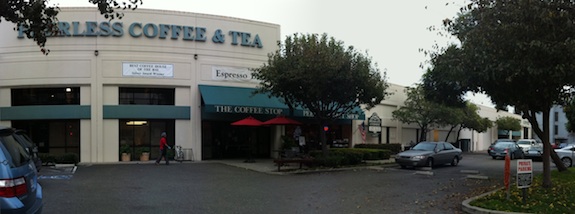
Peerless Coffee is based out of a low-slung, light industrial building built in 1976. Established in 1924, the company has seen it all: wars, boom and bust cycles, and several sports teams. Three generations of the Vukasin family have helmed the company, and they are Oaklanders through and through. They have every intention and desire to continue being a pillar of the Oakland business community. How that can continue with a ballpark proposal lingering in the immediate future is uncertain.

As I approached the building, the aroma of roasting coffee nearly overwhelmed me. I sipped an au lait inside the store as I waited to interview George Vukasin, Jr., who runs the business, and George Vukasin, Sr., who left the company to his children and still is a major presence there. George Sr. is also well known as a major proponent of Oakland and East Bay sports, as he was pivotal in making the Coliseum complex come into being. I sat down in their front office and we talked for nearly two hours. I could’ve easily sat there for another two as George Sr. recounted stories of Oakland sports glories past, but I had to start writing. Maybe another time.

We first talked about how the Coliseum deal was struck. George Sr. happily took on the role of historian, recalling how the late developer Bob Nahas put together a coalition of civic and business interests, including the elder Vukasin, to get a sports showcase built in the East Bay. They quickly focused on a site in East Oakland. The land was undeveloped, with the major owners being the Port of Oakland, EBMUD, and PG&E. Deals were struck with both utilities to maintain easements at the complex while a land swap was negotiated with EBMUD for a parcel on High Street, where the utility’s maintenance yard now resides. The Port of Oakland handled the land deal, as George Sr. was a Port commissioner at the time. The process from first discussion to groundbreaking took 2 years and was unencumbered by CEQA laws or other red tape.

The Coliseum Commission ran the complex for close to three decades. They understood what it took to keep the complex in the black, such as the need for 130 event days at the complex every year. While that should be easy to do with 81+ baseball games, 7-10 football games (sometimes), and 41+ basketball games, occasionally things would run tight. One particular year, Vukasin couldn’t figure out what to do so he called rock promoter Bill Graham and asked for help. Graham magically produced 7 days of Grateful Dead shows at the arena, the proceeds of which allowed the Commission to take care of the debt service.

Around the same time, Amnesty International contacted the Commission about putting on a single concert, which would be held at the stadium. Walter Haas, who had put a good deal of money into renovating the Coliseum, was not particularly fond of having a large number of concertgoers trampling his pristine baseball field, as evidenced by the declining number of Day on the Green concerts during the Haas era. When Amnesty International inquired, Haas and Roy Eisenhardt unequivocally said no. Vukasin and others tracked Haas down at the Pacific Union building in San Francisco, where they asked him to grant permission face-to-face. Haas, ever the gentleman, relented on the spot and the concert was held, as long as there were assurances that the field would be kept in good condition. No contracts, no litigation, just a talk and a handshake.

We shifted topics to Victory Court, and that’s when George Jr. was able to speak more. He was contacted 18 months ago by Mike Ghielmetti and Jim Falaschi, who suggested that Victory Court would be a studied site for a ballpark, and that the Peerless Coffee property was one of the targeted parcels. That led to a meeting with Ghielmetti and the City of Oakland’s real estate manager, Frank Fanelli. Little happened during the meeting, and no direct contact has been made since. Once George Jr. caught a man surveying and measuring the property. The man couldn’t divulge who sent him, and George Jr. asked him to leave. The man got in his car and went around to the back of the property, which is accessible from both Oak and Fallon Streets. George Jr. saw him surveying that side and kicked him off the property for good. To this day the Vukasins don’t know who the appraiser was, let alone who sent him. They asked me who I thought it was, and I guessed that it was MLB, contracting the work as part of its “due diligence.”

I asked why the current site was so crucial, and George Jr. went into great detail about how the business worked. While the plant looks like a 70’s office building from the outside, the nondescript façade hides many unique features that are part and parcel of what makes Peerless Coffee run the way it does. Among the important features:

  • The floor is an extra thick concrete pad, which allows the company to stack huge bags of coffee from floor to ceiling without worrying about weight.
  • The plant’s location near the port lowers transportation costs.
  • Peerless rents out some surplus space in the back, with the knowledge that the space can be repurposed for a plant expansion if need be.

Perhaps the most interesting thing is the process of roasting coffee itself. Peerless does a lot of custom roasting for different clients, such as restaurants and hotels. This makes it important for the company to have extremely precise control over the variables that come into play, from humidity to the shape of the natural gas flame as the beans are being roasted. Roasting the beans an extra five minutes can severely change a coffee’s flavor profile, according to George Sr. George Jr. followed that up, saying that the process is so delicate, a transition period of 18 months would be necessary, including construction time. During that time, both facilities would be running (or under construction), allowing the new plant to work out the kinks and match the old plant’s flavor. The fact that coffee is perishable, coupled with the change of equipment and environment, mandates such a long transition. It’s possible that a lot of product will be wasted along the way. When another coffee roaster built a new plant to replace an old one, it supposedly took 6 months or more after it started operating to “dial in” the flavor properly. Essentially, the coffee is roasted based on the conditions in that exact location. Any changes would require a costly upheaval.

In preparation for what could happen, George Jr. and his sister, Kristina Brouhard, have done the necessary background work just in case. As I was talking with the two Georges, Kristina, an attorney who is also Peerless Coffee’s legal counsel, popped in for a moment and we exchanged pleasantries. They’re getting ready to (and I’m paraphrasing here) man the troops.

That’s not to say that manning of any troops will be needed. I asked the Georges if, as I had suggested last week, a ballpark land grab extended as far out as Fallon Street, instead of the taking of all land between Oak Street and Lake Merritt Channel. They both said they’d be fine with it, though no one has explained to them why all of the land was needed. They’re perfectly content to be neighbors to the ballpark, and their comfort with their specialized operation suggests that they aren’t in this just to hike up the price on their property. George Jr. doesn’t want anyone to feel sorry for the business, but he was very clear in saying, “This business is our family.” And right now it’s threatened by the ballpark. Already, customers are asking if Peerless is going out of business, which is clearly not the case. If you think that battling perception is hard now, just wait until the word gets out about a ballpark.

There were plenty of other anecdotes about Wally Haas, Herb Caen, Franklin Mieuli, Ken Hofmann, and strangely enough, former Warriors bust Chris Washburn, who George Sr. said had a “Rolls Royce grille on a Volkswagen.” George Sr. lamented how the revenue chase has made getting a fair stadium deal so difficult. We talked about how genuine Oakland’s (and Let’s Go Oakland’s) efforts were, and I was surprised how much we were all on the same page. There was a bittersweet moment in realizing that it is possible that Oakland, so defined by its sports franchises and full of history, could lose two or all three of them. George Sr. would’ve preferred a ballpark at Howard Terminal. George Jr. would’ve liked a downtown site. They told me how much they appreciated my work, and I thanked them for the time they gave me to discuss the issues. As I got up to leave, George Sr. had the most surprising parting words for me,

You never go over the owner’s head. If you call the commissioner, the first thing he’ll do once he gets off the phone is call the owner.

Coming from a man who has heard and seen it all – especially in Oakland and in dealing with pro sports teams – those are sage words.

Dolich supports a new “multi-use” stadium

A reader alerted me to Andy Dolich’s piece last week in the Biz Ball section of the CSN Bay Area/California website. Dolich goes back through the postwar history of stadia in America, going from the multipurpose bowls of yesteryear to the new single purpose venues of the last twenty years. He then summarizes the current difficulty experienced by California teams when it comes to getting stadia built. After that, he proposes an idea so strange it might have come out of the 60’s: the 49ers, Raiders, and A’s should all share one stadium where the Coliseum currently sits. In supporting this “multi-use” concept, Dolich cites major technological advances, such as the movable seating decks at ANZ Stadium and customizable LED displays used everywhere nowadays. While Dolich’s sense of history is sound, he left out a major factor that has sent both the NFL and MLB on different tracks. The Neo-Classical ballparks are much smaller in terms of capacity than their predecessors, while the new football stadia are much larger. 40,000 has emerged as a sweet spot for MLB, while 65,000 is preferable for the NFL. No amount of new technology is going to be able to mask or easily move 25,000 seats, not even tarps. The requirements for baseball and football have diverged so much that it’s hard to envision even attempting to make a multipurpose stadium work these days. Let’s take a look at how the two sports’ requirements differ:

  • Proximity to the field. In baseball, it’s customary to have the first row at the same level as the field, or perhaps a foot above the field. In football, the first row may be 6-10 feet above the field.
  • Quantity of premium seating. Football stadia tend to have 7,500 club seats and 100-200 suites. Ballparks have 3-4,000 club seats and around 40 suites.
  • Confinement. Colder seasons force football stadia to enclose their suites behind glass, whereas ballparks like to take advantage of the summer by putting the seats outside the glassed-in parts of the suites.
  • Surfaces. While Field Turf and other advanced artificial surfaces have gotten better at mimicking grass, they’re still far away from being truly comparable for baseball applications. The fake stuff is welcome in football, where there’s no need to worry about having a true ball bounce or roll. If a stadium were to utilize grass, the dirt infield problem emerges.
  • Environment aesthetics. In football, the stadium is the scene. In baseball, ballparks are frequently designed take advantage of a pastoral or urban backdrop.
ANZ Stadium's pitch. Note the tracks used to move the seats in and out.

ANZ Stadium’s pitch. Note the tracks used to move the seats in and out.

The technology that Dolich espouses does little to address the differences in fan experience that the single purpose venues achieve. For instance, ANZ Stadium‘s movable seating sections could be an inspiration. Prime lower deck seats are mounted on tracks that expand and contract based on each sport’s specifications. It sounds good until you realize that the difference in capacity between ANZ’s rectangular (rugby, soccer) and oval (cricket, Aussie Rules) is only 2,000 seats. As a cricket venue it is severely compromised in terms of dimensions, with far more cricket tests played at Sydney’s older Cricket Ground. Movable seating decks have been employed to mixed success in the United States, the most prominent examples being the Louisiana Superdome and Candlestick Park. Aloha Stadium and Mile High Stadium both had novel methods to move entire seating stands. At Aloha, four double-deck stands either pinched in for football or widened out for baseball. Eventually the stadium was locked into its football configuration, much the same way The Stick’s east stands have been kept in their football mode. LED displays are great replacements for signage. They make an excellent platform for disseminating game information. But they don’t address the capacity disparity. From a fan experience standpoint, it could be said that the displays are sometimes counterproductive since they are so distracting. Either way, they’re just window dressing. Dolich uses the current economic state as justification for building a multipurpose stadium. Why bother, if the fan experience will only be marginally better than the current stadium, and will always be compared to superior experiences at single purpose venues? Dolich worked for the 49ers as a consultant to help improve the experience at The Stick, and was not particularly prominent in the selling of the new stadium to Santa Clara residents. He was unceremoniously let go at the beginning of this calendar year, and now he’s practically endorsing an alternative to the plan. If this were the 60’s, when both baseball and football were played in 50,000-seat ashtrays, it might be feasible. Times have changed. Until someone figures out how to make 25,000 seats disappear, the idea is not really worthy of discussion.

Put up or…

‘Tis the season to put up or shut up. We have a few examples at our disposal.

Robert Gammon reports that Oakland’s CEDA committee will examine the financing proposal for the $750,000 Victory Court ballpark EIR. The meeting is next Tuesday at 1:30 PM @ Oakland City Hall. If it is approved in committee, the City Council will vote on it the following Tuesday, December 21. There are three choices going forward:

  • Choose not to pay for the study. Gammon expects that the only dissenter on the committee will be Ignacio De La Fuente, with IDLF and Nancy Nadel the two members of the City Council who are opposed.
  • Authorize $350k for the initial traffic study. A complete traffic study hasn’t been completed in the JLS area for a decade, so the information could prove valuable for any number of future projects, including a ballpark.
  • Authorize all $750k. This should cover the complete EIR, including the traffic study.

LSA Associates, the Berkeley firm that did EIR work for both the Fremont and San Jose ballpark proposals, is doing this one as well if approved. Traffic study work is usually farmed out to a different set of consultants, that’s why it can be separated out.

In the unlikely event that either the CEDA committee or the City Council voted against the study funding, the message to MLB would be in effect a white flag. They could just authorize the traffic study and either wait until MLB renders a decision or ask MLB for some funding help. Previously I wrote that the latter was a good idea, however when I read that MLB has paid for all of the work up to this point, maybe that’s not such a good idea. Oakland may have to pay the whole $750k just to show that it has some skin in the game.

Over in TV land, if you are a Dish Network subscriber and a Sharks fan, someone on high doesn’t love you much. Yet another carriage squabble has occurred, this time between Dish and Comcast over CSN California. The dispute has viewers blaming both parties. Dish has always been the “budget” satellite alternative, with DirecTV having long been the true sports fan’s choice thanks in large part to its exclusive right to broadcast NFL Sunday Ticket. Hopefully they’ll get this resolved before the A’s season starts, or Dish loses a ton of subscribers.

Down south near the border, Escondido continues to struggle with authorizing $50 million for a new ballpark for the now homeless Padres AAA affiliate, formerly the Portland Beavers. The ballpark proposal is being fast-tracked so that it can be ready in time for the 2012 season (17 months from now), which sounds like a bad idea. Unlike Santa Clara, which at least had three years to study the 49ers stadium deal, the similarly sized Escondido is only getting a few months. $50 million in redevelopment funds would tap the agency’s budget for the next decade. Padres owner  Jeff Moorad is trying to buy the team, but the deal appears to be contingent upon getting the Escondido deal done. Portland is out of the question because PGE Park is being renovated for soccer. Tucson will be the interim home, though it’s possible Tucson could become the next long-term home. A MOU between the City and Moorad’s group is available here.

Speaking of fast-tracking, AEG’s Tim Leiweke is really pushing his vision of a retractable roof NFL stadium in downtown LA. The stadium, which would replace the West Hall of the LA Convention Center, would have “up to 72,000 fixed seats, 14,700 club seats and 40 field-level suites among its 218 skyboxes.” Apparently AEG isn’t demanding an ownership stake in whatever team moves there, though I’ll believe that when the ink is dry.

Thoughts on the Winter Meetings drama

First up, Carl Steward just posted his last Chin Music update from Orlando. It includes the following:

In the Internet age, you get websites trying to establish credibility for themselves by throwing things against the wall to see if they might stick. We had one this week when a site called Ballpark Digest, which I must confess I don’t patronize, put out a report hinting that the MLB panel that will recommend the A’s future home might be prepared to anoint Oakland soon as the preferable choice over San Jose.

My dilemma: Do I even report such hazy conjecture?  Having followed this story pretty closely and understanding how commissioner Bud Selig operates, there are not likely any leaks of what this panel might recommend — at least to this kind of outfit. Ultimately, I chose not to report it at all because, quite frankly, I didn’t want to even legitimize Ballpark Digest’s “scoop” by publishing info from their non-bylined story.

And it goes from there. Let’s get something straight. Ballpark Digest and this site are bloggers. Most of the time we don’t break news. Often bloggers are lazy. There are also bloggers and other internet media who have, thanks to long-established credibility, elevated themselves to true subject matter experts. Good examples of this are guys like Maury Brown at Biz of Baseball and Larry Coon, the NBA salary cap expert who is so good that the NBPA links to his stuff. I don’t claim that I’ll ever reach either Brown’s or Coon’s internet rockstar status. This blog is 80% focused on the A’s stadium saga, which limits its scope. I’m fine with that. It’s also a place for a healthy amount of conjecture, thanks largely to the vacuum that MLB has created. That’s also fine and largely necessary, as long as the conjecture is within reason.

Aside from those subject matter experts, there’s also the regular media, which is basically split into the print or video version and the blog or blog-like section. Both have different standards due to editorial control. Who knows, maybe MLB will rule in favor of Oakland in the coming weeks or months? I doubt the news will break thanks to a questionably-sourced rumor. Still, all of the media, including us, will have to give it its due. When it’s real, it helps elevate the internet as a legitimate news medium. When it’s as difficult to verify as yesterday’s news, it’s difficult to take us seriously.

One thing you’ll notice about this site is that there’s no hit counter. I don’t keep too much track of traffic, and I don’t publish so-called “click bait” pieces that are designed to bring in visitors but have little real substance. Most click bait is intentional, some isn’t. BD’s “story” isn’t even click bait, it’s just a simple piece of guesswork that had an incredible snowball effect. Since I don’t care too much about volume of traffic as opposed to quality of readership, there’s no pressure to write click bait. This site also isn’t particularly SEO-optimized, which is also not a big deal. If people really want to find out what’s going on, a simple Google or Yahoo search will lead to this blog fairly quickly. We’re trying to cover one narrow topic well, and I stand by everything that gets published here.

We try to make educated guesses. We do our best to dig up what we can. We have sources. Sometimes we hear things that are real, and sometimes we hear things that are meant to gin up support. We do our best to get multiple sources for all rumors. That means that sometimes we’ll be wrong, and other times we’ll be right. Most of the time it means we won’t publish it, at least not until we’ve done our checks.

So I read the previous post’s comments thread with a bit of bemused detachment. San Jose supporters were probably looking for bridges to jump off – bridges that don’t exist in SJ, thankfully. Oakland supporters hailed the news as if the A’s were going to the playoffs. The truth is simple: WE DON’T KNOW. What was everyone getting all excited about? Was it that whiff of hope, that glimmer of daylight? There’s nothing wrong with that, but as expected, many people took the whole thing waaaaaayyyyyyyy too far.

When news breaks, we’ll report it and analyze it. Honestly, I had no idea where to go with what happened yesterday, and readers here and elsewhere ran with it. I checked with three different sources and heard nothing to confirm it. Yet it was there, and some attention had to be paid to it so I took it at face value. That’s all this blog can do. Whatever happens, we’ll link to it (unless it gets ridiculously repetitive like certain columnists). But really folks, relax. Understand that MLB’s process is born of inertia. It’s slow. It doesn’t change direction quickly. It appears to be extremely thorough – it has to be after all this time. The good news is that I’m working on some upcoming stories that will lead into the Christmas break. When we find out what the actual decision is, we’ll cover it thoroughly. Then everyone will have a real reason to get excited or depressed. Until then, take it easy.

Are you there Bud? It’s me, Jeffrey

Writing about and obsessing over the stadium saga is enough to make anyone lose their religion. Still, sometimes there’s a little glimmer that shows that even those on high are at least paying attention to us.

Our own editor-at-large took to sending a missive to one A. H. “Bud” Selig on Sunday, asking for some clarity on the situation. The letter was posted on Athletics Nation. Here’s the final plea:

On the eve of your organizations annual Winter Meetings I ask that you make the case for one of the two scenarios. If the local media is to be believed, your stadium panel has done a thorough and exhaustive search that has considered timing, financing, revenue impacts, traffic, political support, and even the height of light towers and the path of airplanes. There are no more angles to explore. No new rocks to turn over. It all comes down to you and your willingness to make either Bill Neukom or Lew Wolff, and their respective partners, miffed. Please do so at some point in the next two days so we can all move on from this unnecessary purgatory.

While it looks for the moment as if those prayers won’t get answered, at least Jeffrey got a reply from someone else in know, in this case Lew Wolff. For those who aren’t aware, Wolff reads AN and this blog (not so sure about all of the comments), mostly to get a read on how the fans are feeling about all matters Athletics – especially the ballpark stuff. Will we get some kind of judgment in the next week or ten? I have no clue. Regardless, it’s good to know that someone’s noticing the little guy. Kudos, Jeffrey, as always.

The chattering class takes their turn

In the Trib, Gary Peterson asks for Bud Selig to show some leadership and settle this once and for all, even though he thinks Selig pretty much already has this figured out. Craig Calcaterra feels the same way.

But our inner realist understands that Selig isn’t nearly that disengaged. It’s entirely possible, bordering on likely, that the great consensus builder knows how MLB owners feel about the Giants’ territorial rights, has a pretty good idea what the outcome of this conflict is going to be, understands why it has to be that way, and has figured out a way to get from here to there. The rest is just time-consuming mechanics — glad-handing, horse trading, making the money work.

Meanwhile, Mark Purdy is pissed and has his talking points in order. So does the Merc’s editorial board.

Keep the comments thread civil, everyone.