Day 8: US Cellular Field

Those of you who follow the site’s Twitter feed found out on Sunday that the train I was taking from St. Louis to Chicago accidentally hit a car on the tracks a few miles south of Joliet, IL. It happened shortly after 11 AM at a crossing with no gates to prevent cars from roaming onto the tracks. The driver, a young woman, was the lone occupant in the car. It took 19 minutes to extract her from the vehicle, after which she was airlifted to a local hospital. I haven’t heard anything about the story since, but I was told that her vitals were good, which seems almost miraculous given that cars and drivers don’t normally do well in such accidents.

Not to sound shallow, but the hour-plus delay pretty much killed any chance I had of making the White Sox game that day. When I finally got there it was the bottom of the 5th and the Tigers appeared to be on the verge of blowing out the White Sox. Lo and behold, the Sox mounted a major comeback to pull ahead 8-7, but the Tigers came back themselves and finished the Sox off 13-8.

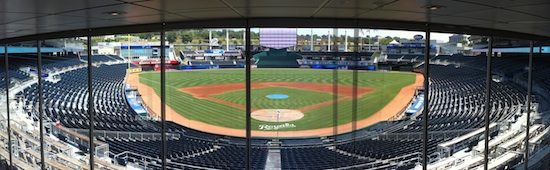
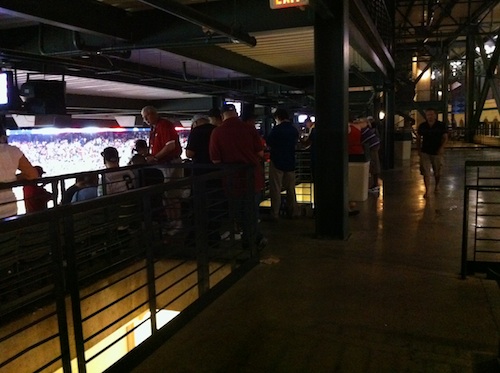
Downcast from the day’s events, I still went to The Cell to take some exterior photos, if not check out the interior, which I had done more informally a decade ago. My initial thoughts then were that it was a larger, newer, yet worse version of Kauffman Stadium. Since I didn’t enter the ballpark, I can’t appraise the changes that were made a few years ago. For all intents and purposes, this day and ballpark review were shot.

Getting there

One thing that hasn’t changed is transportation access. The “L” Red Line runs along the Dan Ryan Expressway (I-95) and stops one block from the LF corner gate. For $2.25 each way, it’s a steal. The Red Line also runs through the loop downtown, and also stops near Wrigley Field and Midway Airport. Skip the $23 parking and go with the “L.” It just works.

Ticketing

Nothing to report.

Concessions

Nothing to report.

Circulation

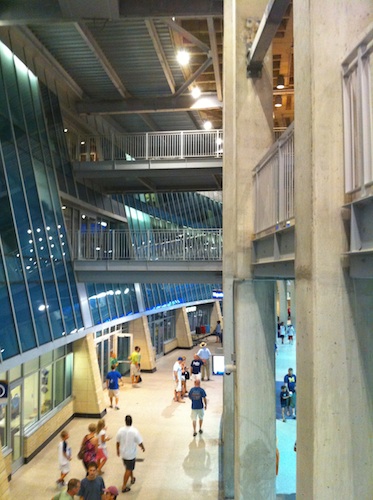
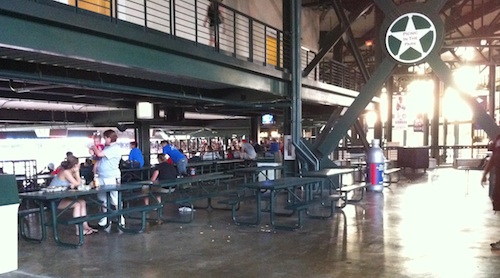
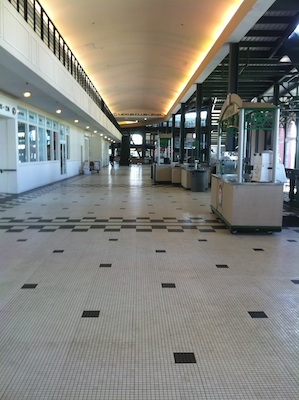
Okay, I can write about this. The original vision for the New Comiskey Park was to be an updated version of Kauffman Stadium, with added luxury amenities. Access would be severely restricted, as is the case in Dodger Stadium. It took 15 years for the team to correct much of these mistakes, which they did by lopping up several rows of the upper deck, installing a proper metal roof, and putting in some kid’s entertainment in the outfield. The place is still somewhat segregated, which can’t be helped given the three-story wall of club seats and suites dividing the lower deck from the upper deck. The seats up top are still much too steep.

Other observations

  • The limestone exterior has held up well in the last 20 years. It’s easily the most handsome feature of the ballpark.
  • I tried walking around the entire exterior of the ballpark but ran into a fence behind centerfield. There’s certainly enough room to do it. The fencing and security here is rather aggressive, in keeping with a location in the South Side.
  • sdffsd

Wrap-up

Historically, US Cellular Field has been overshadowed by the retro trend leader, Oriole Park at Camden Yards, since that ballpark opened in 1992. Now that the retro fad has faded, it’ll be interesting to see how long the trend of building more modern ballparks lasts. The Cell might have received some praise – if they hadn’t retroed the place up in the meantime. Oh well.

Day 7: Busch Stadium (III)

8/14. Game time- 3:10 PM
Attendance: 46,313
Weather: 94 degrees, sunny
Matchup: Chicago Cubs at St. Louis Cardinals
Pitchers: Carlos Zambrano vs. Chris Carpenter
Result: CHC 3, STL 2, W- Zambrano (4-6), L- Carpenter (13-4), S- Marmol (20)
Ticket Purchased: Upper reserve outfield- $42.75 including fees
Beer of choice: Choice? What’s that? Budweiser 16 oz. – $8
Food: None
Travel cost: $7.50 for a Metrorail All Day Pass
Other: None
Total spent: $58.25

St. Louis was the last of those classic baseball towns with a multipurpose stadium. Busch Stadium was easily the best of breed, as the baseball Cardinals had the luxury of having the football Cardinals move to Phoenix in the late 80’s. That allowed the baseball team to make incremental changes and improvements to the old stadium, making it more baseball friendly. That parallels with the A’s to some degree, but in 1995 everything that went “right” for the Gateway City went wrong for Oakland. The LA Rams, a vagabond team in its own right, went to St. Louis and a new domed stadium. Oakland chose to fix up the Coliseum for football, alienating the incoming Schott-Hofmann group and destroying the Coliseum as a somewhat pastoral, if not altogether charming, venue for baseball.

Back to St. Louis. As part of the football-free renovation the carpet was ripped out and replaced with grass. The seating bowl was redone for baseball with 8,000 seats removed as part of the process. A friendly deep green (here we go again with the green) was part of the makeover, making the Busch Stadium II the best of the old cookie cutters. Moreover, the stadium was also privately owned. When the Rams moved to STL, their stay at Busch was only temporary and was the impetus to lengthen the life of the old girl. Those improvements proved to last another 18 years, until the team moved into the new baseball-only stadium fans currently enjoy.

That good history for the stadium meant that the team and HOK could draw on recent history of ballpark building, while not reacting too adversely to bad experiences at the old stadium (since that largely didn’t exist). For instance, the Tigers had Comerica Park designed as a polar opposite to Tiger Stadium, as it had almost all of its seats in the sun and a really huge lower deck, which only served to punish those in the upper deck. Did they really need to go that far? Not really. It’s best to start with a clean sheet and aim for the best fan experience, without worrying about having to address specific past grievances. It tends to get their eye off the ball, as it were.

For the most part, Busch Stadium gets it right. There are aggressive cantilevers on the upper decks. The outfield sections have a party atmosphere. Most of the suites are arranged behind the plate. Concourses are more than adequate. Yet there’s something odd about the place, and for me it took a while to understand what it was. The problem is “neighborhoods.” I’m not referring to the area where the ballpark is located. The issue is the marketing term as it relates to how the seating is arranged. Seating decks are broken up and somewhat isolated to create their own sort of intimacy. Lew Wolff has hinted at this at Cisco Field on more than one occasion, and it’s likely that visits to his old hometown confirmed this notion. Right now I’m going to use this platform to caution Lew and Keith Wolff not to go too far with this. It’s one thing when neighborhoods within stadia are built over time with expansion, as was often done in past eras or in European soccer stadia. To manufacture it into a new ballpark is, well, artificial. Neighborhoods are not created by assigning price points to blocks of seats, they’re fostered by generations of fans who attend regularly and buy decades worth of season tickets. That isn’t happening in the Bay Area, at least not with the A’s right now. Some segmentation is not bad if a sense of community is the goal, but don’t do it just because the Coliseum looks like a round toilet, or because Busch II looks like an ashtray. The effect at Busch III is somewhat jarring and a little confusing when it comes to walking around the place.

Getting there
The game was held on a Saturday, which made things easy. I traveled from my cheap hotel near the airport to downtown via the Metrorail service, which was a 30-minute ride. If I drove it would’ve only cost me gas, as on-street parking on weekends downtown is free on the weekend. Some people choose to overpay for the various lots, and I don’t understand why. After the game there were two other major events in the area: a Rams exhibition game at Edward Jones Dome and Black Eyed Peas at the Scottrade Center, both within blocks of the ballpark. Keep in mind that while the now rundown downtown is large, a city of 400,000 is able to handle three big events and 120,000 visitors in one day. Are you paying attention, San Jose?

Ticketing
Tradition is great when it comes to cultivating a fan base. You know what it really means, right? It’s a license to print money. The upper deck ticket down the RF line that I had to purchase in advance because it was a Cubs game had a $34 face value, plus $8.75 in tickets.com fees. That ticket should never cost more than $25 anywhere, and probably less than $20 in most cities.

Price aside, the seat I had was not bad. Busch Stadium follows the recent trend of having its upper deck split into two, to allow for a view from the concourse and additional ADA wheelchair spots. It also makes navigating to one’s seat easier as there are fewer rows to climb. Two really nice touches are how the landings from the stairs are bowed out to allow for greater room, and the sets of three seats by themselves above the vomitories. It’s like having your own little box, if you’re into that sort of thing.

Concessions
I had taken a train from Kansas City in the morning, which got me in 2 hours before first pitch. That gave me time to eat lunch, and as a result I didn’t eat anything at the ballpark. The only beers I saw on tap were – surprise! – Bud and Bud Light. Same thing for vendors with cans in the stands. Not that I expected anything more.

Circulation

In recent years, there’s been talk about a new style of cookie cutter ballpark, the main culprit being HOK (now Populous). While certain aspects of ballparks from the 90’s and the early 2000’s applies, Busch Stadium and Philadelphia’s Citizens Bank Park take a bit of a departure. CBP has a square block footprint, while Busch has its neighborhoods.

Traveling between the decks hasn’t changed much among the HOK designs. Ramps are large and easily accessible. There are escalators along each base line, though it took four escalator segments to reach the upper deck. That ensures that anyone in the upper deck is pretty high up there.

The main concourse is not open, as the Cards chose to stick an extra level of suites behind the plate and additional seats down the lines. The seats are similar to what I described at Rangers Ballpark, except that the sections are somewhat sealed off from the concourse. The exception for this is the wide openings down the line on either side. Even then, the Cards decided to spite fans by putting up what look like large baby barriers at the entrances to the seating sections, thereby discouraging people from using the areas as standing room. In the corners this isn’t as bad, and the back/upper sections are sufficiently elevated above the walkway to allow for standing room patrons.

Other observations

  • Look at that steel column and compare it to the size of the guy on the right. That’s strength.
  • It seemed like there were party suites everywhere.
  • Perhaps one-third of the crowd were Cubs fans. I’d never been to one of the rivalry games, and I was expecting much more tension. Then again, these are the Cubs after all.
  • The picture at the top is what’s supposed to be the Ballpark Village, the multi-use project that remains in development hell. It’s also where the old Busch used to stand.

Wrap-up
The new Busch Stadium suffers from a timing issue. The private financing that took care of half the cost came later than expected, making certain that Busch III rode the coattails of other ballparks. Innovations here were done in the service of marketing concerns and to put in more than 45,000 seats, which can be a bit tricky. The ballpark village isn’t there yet, forcing fans who want a bit to eat to go to restaurants named after the insufferable duo of Joe Buck and Mike Shannon (the laziest radio play-by-play man there is). Still, it works well and will serve the good Cardinal fan base for decades to come. That’s all anyone can really ask for.

Day 6: Kauffman Stadium

8/13. Game time- 7:05 PM
Attendance: 30,680
Matchup: New York Yankees vs. Kansas City Royals
Pitchers: Dustin Moseley vs. Kyle Davies
Results: KC 4, NYY 3, W – Davies (6-7), L – Moseley (2-2), S – Soria (32)
Ticket purchased: Upper Box Infield ($22)
Beer of choice: Boulevard Pale Ale ($7)
Food: BBQ Pulled Pork Dog ($6)
Travel cost: $10 in gas, $10 parking
Other: Kauffman Stadium All-Star tour ($20), Negro Leagues Baseball Museum/American Jazz Museum tours ($10)
Total spent: $95.00


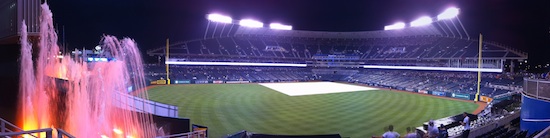
The footage above was captured by my iPhone as part of the Kansas City Royals Hall of Fame’s 14-minute video introduction to baseball in Kansas City. It is splendid. It is magnificent. It manages to make no mention of Arnold Johnson. Not that it matters, the presentation rocks – in particular because the technology used is not a projector but rather a large LED display, or a scoreboard/video board in layman’s terms. The colors are so vibrant, the video so crisp, the screen so wide, that it’s a visual feast. Every team, every major league city deserves this kind of tribute. I fortuitously got this clip as it has some relevant history for A’s fans.
017-Fountain_Pano-sm
No matter where I travel, I maintain a place in my heart for Kansas City. Maybe it’s the barbecue. Or the shared history with the A’s. Or the general friendliness I always encounter. Whatever it is, the city’s Kauffman Stadium has always been lauded for being a postmodern relic that has managed to stand the test of time. No need to couch the praise anymore, as Kauffman is as good as any of the new ballparks built in the last twenty years.

Every single thing a modern ballpark has is now in place. A concourse that allows fans to walk completely around the stadium? Check. Wider concourses with weather protection? Check. New press box? Check. Multiple clubs and restaurants? Check. Improved suites? Check. A museum? Check. Incredible video board? Check. It was always a comfortable place to watch a game. Now it’s comfortable and up-to-date. Sadly, a refreshed stadium is not the same thing as a new ballpark in terms of fan perception, and the revamp can’t fully cover for a crappy team, as 2009’s attendance didn’t surpass 1.8 million and 2010 looks to be a drop from that.

006-Dugout_Pano-sm

Getting There

As part of the post-war sprawl trend, the Truman Sports Complex was built in the middle of nowhere. 40 years later and it’s still in the middle of nowhere. You want in, you gotta drive. Parking is $10 and there’s plenty of it. Prior to the remodeling of the ballpark, local business interests spurred an effort to bring the team downtown. That effort went nowhere as the Royals’ interest was tepid at best.

Ticketing

Back Camera

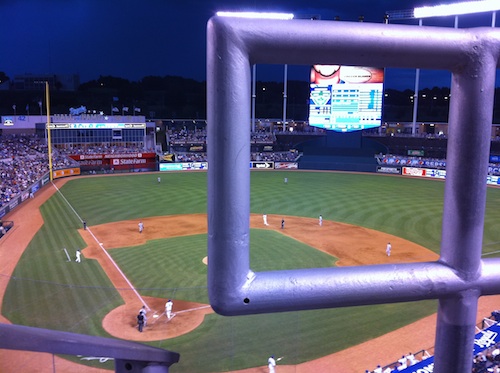
I figured that a Yankees game might be somewhat impacted. Silly me. I was able to score a $23 seat in the front row of the upper deck. The deal proved too good to be true, as the ticket seller neglected to inform me about this:

Back Camera

Then again, it started raining shortly after I took my seat, so I headed back to the concourse to get some cover from the rain coming through the area. That’s when the improvements at the stadium really started to shine. Simple things, like better traction on the steps and a weatherproof coating on the concrete, combined with a large, high roof covering the concourse made things bearable. It used to be that the only thing that helped previously was the back of the upper deck cantilevering over the concourse, which really wasn’t much protection at all.

After the 2 hour, 15 minute rain delay, it was easy to find a good seat as two-thirds of the crowd cleared out. I didn’t even stick around for the whole thing as I needed to take an early train the next day. I wiped off a seat about 22 rows up on the third base side, and that’s when the place felt familiar. The seating bowl’s signature contours are still there, and the layout hasn’t fundamentally changed other than the outfield.

I left in the middle of the 7th, rain cleared out but constant thunder and lightning in the distance. My biggest regret was not being patient enough to capture lightning on camera as it lit up the ballpark. During the rain delay, I stopped at a picnic table to tap out the Day 4 post. Several other people were there, waiting out the rain. Two young girls from Wichita asked me what I was doing, and showed them the iPad’s MLB app. They asked if I they could see some highlights from the Wichita minor league club, I replied that it’s not ready yet. As the concourse filled up, the view to the field was blocked and I could no longer see if the grounds crew was working with the tarp or not. I scooted over to make room for an elderly gentleman. I asked him about the tarp and he ignored me, or so I thought at the time.

Turns out that the man and his wife were both deaf. As he saw me showing the MLB app to the kids, he started scrawling on a scrap of paper, which he laid in front me. It read, “Cardinals 6, Cubs 3. Box Score.” I quickly tapped the STL-CHC score, and the newspaper like box score opened in front of us. I quickly gestured to him how he could navigate the app, and he started smiling. Apparently he was really looking for Adam Wainwright’s line for the game. After he was done, he explained to me that he had season ticket to the Cards and was in KC visiting family. We “talked” some more and exchanged pleasantries. Okay I lied, I have one other regret, that I wish I had let that one girl I was dating in college teach me ASL.

Concessions

Seems like all over the Midwest ballparks are doing the gourmet dog thing. It’s a good way to charge an extra two bucks for a dog, a suppose. I figured I should try it once, and it was okay, not worth $6 but okay nonetheless. It was washed down with a Boulevard Pale Ale, KC’s most famous craft brewer. Strangely, the Pale Ale that cost $7 on the main concourse cost $7.50 on the upper concourse.

Circulation

Back Camera

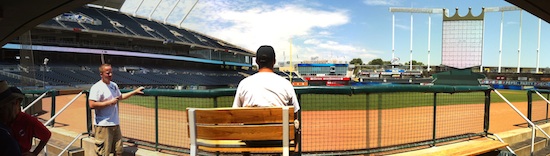
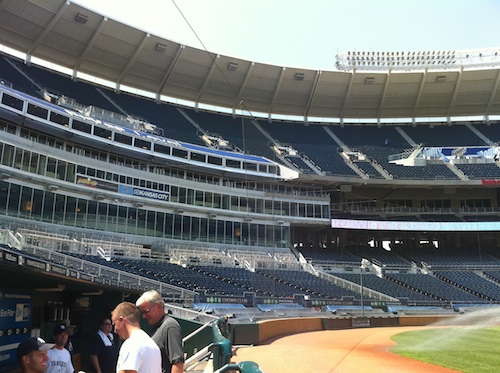
The tour enters the ballpark at the main level. Behind home plate on the main level there is the Diamond Club, which despite its name is not the most exclusive club in the park. That honor would go to the BATS Club for the 100 or so seats directly behind the plate. Branding has gone way up since the last time I was here, over 10 years ago.

Now there’s proper room for escalators and those familiar circular ramps. Even with 20,000 people fleeing for the main concourse during the rain delay, it never felt cramped. The team administration building is physically separate from the rest of the ballpark, linked by a series of footbridges at each level. In doing this they allowed more natural light and air into the space. Very smart move.

The outfield area, which was once off limits, is now vast and spacious. There are special bars, a team store, frozen custard stand, fried chicken stand, play areas, and even a couple of mini golf holes. The piece de resistance is the Hall of Fame, which is tucked into the LF corner. It’s really lovely, covers over 50 years of baseball history without sounding bitter, and when coupled with a trip to the Negro Leagues Baseball Museum near downtown, makes for a really fun and educational day trip that also happens to include a major league game. If you go to KC, do all three. You’ll get the video, you’ll get a sense of justice, you’ll feel good about humanity.

001-Kauffman-PressBox-sm

Other Observations

  • Billy Butler was in the cage behind the dugout and taking extra BP. It must’ve worked because he hit the winning home run that night.
  • As impressed as I was by the Cowboys Stadium video boards, the single huge board at Kauffman rates nearly as high. The vertical orientation allows for an uncompromising combination of video and text information. It proved extremely useful during the rain delay as well, because it has plenty of space to support two simultaneous video feeds: the Red Sox-Rangers game and Chiefs-Falcons exhibition.
  • The bad seat I had was due in part to the way the new press box cut into the original upper deck. I’ve incorporated such a feature into some of my sketches. Now I know what to watch for.
  • Maybe BBQ is old hat in KC, maybe not. Whatever the case, it wouldn’t hurt to have one of the well known pit masters have a stand of their own in the ballpark, whether it’s Arthur Bryant’s or Gates. I had an Arthur Bryant’s “sandwich” before the game, and it heaven wrapped in butcher paper.
  • The team offers four different grades or levels of tours, based mostly on access. The cheapest tour offers basic info and access. The tour I took at $20 provided a free Kauffman Stadium hat, team magazine, and a longer running time. The most expensive tour allows fans on the field to watch batting practice.

Wrap-up

Kauffman Stadium rocks in many ways, even if the team doesn’t. If you’re planning a ballpark trip or even have already been there prior to the remodel, it’s worth going. It’s not garish or overstated, it’s family friendly, and it’s a great educational opportunity when coupled with the Negro Leagues Museum or even the American Jazz Museum, which is in the same building. This is my first true endorsement on the trip, and it’s a full one.
Back Camera

Day 4: Rangers Ballpark

Back Camera

8/11. Game time- 7:05 PM
Attendance: 48,676
Matchup: New York Yankees at Texas Rangers
Pitchers: Javier Vazquez (9-8) vs. Cliff Lee (10-5)
Result: NYY 7, TEX 6, W – Wood (2-4), L – Feliz (3-3), S – Rivera (24)
Ticket purchased: $15 Standing Room Only
Beer of choice: Ziegen bock (Anheuser Busch)
Food: Brought in 2 bananas – $0.50, $0.50 bottled water
Travel cost: $5 in gas. Parked at nearby Wal-Mart for free (normal parking rates are $12 for remote cash lots)
Other: Minute Maid Park tour – $10
Total spent: $31.00

All day long, I had tried to steel myself for the inevitable heat and humidity that I would face at the ballpark that night. The schedule dictated that I would do the Cowboys Stadium tour the same day as the baseball game, and the following day the Rangers Ballpark tour with the football game. The football stadium tour proved to be a godsend, as it was all indoors (more on that in a future post). I strung out the self-guided tour as long as I could, wrapping it up after six before walking over to the ballpark with a short detour to grab some water and two bananas.

Getting there

Arlington is infamous for being the largest city in the US without public transit. With 380,000 residents, it’s just slightly smaller than Oakland, and when you think about it, it’s about as different from Oakland as night and day – politically, geographically, amenities, etc. Not having public transit meant that I’d be driving these two days, which didn’t turn out so bad when I found out that the car rental location ran out of small cars and was forced to give me a Cadillac CTS. Oops. The key, then, would be to figure out where to park. A large Wal-Mart SuperCenter was located across the street from Cowboys Stadium, which itself is 1/4 mile from Rangers ballpark. I figured if I got to do a late stadium tour and bought the food items at Wal-Mart, I could justify my parking there. Which is what I did.

Ticketing

Local sports radio was hyping up the game, going so far as to have it approach the Cowboys’ deity-like popularity (local cable broadcasts for the Yankees series on FSSW rated an impressive 8.0 rating). Plus I got a standing room only seat. Problem there is that I knew that the places I could stand in the ballpark were places I had no intention of standing in for long. The minute I entered the home plate gate, I started looking around the field level for a place where I could stand that wasn’t so hot or affected by the sun in the first 3 innings. In addition, since this was a Yankee game, it was destined to blast past the three-hour mark, which it did (3:48). While sneak down opportunities were scarce due to the near sellout and close game late, I still wanted to find a place to simply sit and relax, even for an inning or two in between my shutterbug sessions.

Fortunately, I was able to find a hidden gem of a spot in the back of the 100-series sections, which are really the back of the lower deck. The way the place is constructed, the concourse gives access to Row 28 of the lower deck. Another 10-12 rows are set up behind the first 28, with a large platform behind the last row above the lower concourse concession stands. The view of the game is somewhat restricted because of the overhang and columns, but if you find a decent spot it’s a great place to stand. Or even sit, if you know where to look.

Lightly used picnic area with suite level above, 100-series sections in front

Having something like what is shown above solves the problem of having limited SRO space, since this wouldn’t cut into the regular concourse. The tradeoff here is that patrons standing in line on the regular concourse wouldn’t be able to see and feel the game, though if their backs are turned, what does that matter anyway? The trend towards open concourses makes this kind of design decision difficult to pull off.

Concessions

The place is littered with portable stands. I was tempted to get funnel cake but passed. Lines were generally short as the stands were very well staffed, as could be expected for a crowd of near 50,000. The beer selection tonight was a Anheuser Busch clone of Shiner Bock called Ziegenbock. It’s a reasonable facsimile, though I suspect it hasn’t caught on that well because I haven’t seen a bar that serves it, as opposed to its more popular competitor. All of the facilities in Texas have extremely poor beer selection. I paid my penance by going to The Ginger Man in Dallas.

Circulation

This being Texas, there’s never a worry about having room to roam. Rangers Ballpark is a large rectangular box with all of the various ballpark bits baked inside. Ramps, which in other parks are often placed outside a ballpark’s facade or hidden from spectator view, are featured here in their full erector set glory. Naturally, the seats, beams, and columns are painted green, “Ranger Green” according to the tour guide. This had me shaking my head because any team that does not feature green in their team colors shouldn’t be allowed to appropriate their own shade of green for their own purposes because they’re afraid to use their own colors in the design. Ridiculous.

Anyway, the concourses inside are tremendous. There’s plenty of room to walk around, hang out, sit at a picnic table, or smoke if you are so inclined. In many places they are some 60-80 feet wide, allowing the Rangers to move around numerous portable concessions carts as if it were the Texas State Fair. And that’s how it feels. The regular concession stands are built below the seating bowl, cutting off the view of the game for those on the concourse. Unlike the two previous parks, there’s still an open air feel to the venue, so at least the crowd doesn’t sound muffled.

The club and suite levels are also open air. This creates a dilemma when the time comes to improve the stadium. Lately, there’s been some talk about having a retractable roof or some kind of shade placed over the ballpark. Estimates for this run from $70-330 million, depending on the complexity of the solution. A movable shade, such as one used in some European soccer stadia, would be cheapest and could reduce temperatures for affect fans some 10-15 degrees. It doesn’t really help temperature on the field that much, and it’s not a great improvement for premium seat holders. A rolling roof like that used at Safeco would be a better solution, but it allows ambient outside air to circulate in and out, making it still quite hot in the summer. A full enclosure of the ballpark, with glass walls and air conditioning everywhere, would be the most expensive solution and not cost effective, especially now that the incoming ownership group has paid $100 million more than they wanted for the club.

Other observations

  • People in the CF offices stuck around after work for the marquee matchup.
  • The suites are much smaller than I expected – about the size of the Coliseum’s original suites – they could be a future ADA issue if they aren’t already.
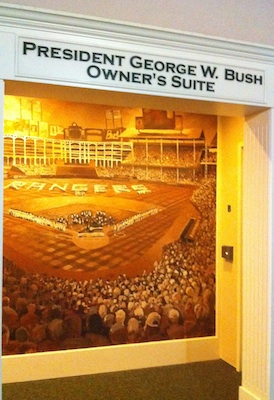
  • I got a peek at the famed owner’s bunker suite. Meh.
  • Cowboys Stadium is oriented so that its east end is directly facing the ballpark, almost as if it will eventually destroy it with lasers or lift up off the ground and consume the ballpark.
  • There were once grand plans to develop this part of Arlington, with lackluster results. There’s a Siemens building, the City of Arlington City Hall, and a convention center. Precious little new private development has occurred, probably because of the need for parking. Cowboys Stadium makes that exponentially worse.
  • There’s a simple explanation for the missing donation bricks: they fell apart in the sun over time. The plaza in front of the home plate gate has been paved. Another brick monument remains in the team hall of fame walk, which only lasted until 1997 as it too deteriorated badly. Future years would not be enshrined in this manner. There is now an indoor Texas Rangers Hall of Fame where the Legends of the Game museum once stood. The following pic couldn’t be more telling. It was closed, and I don’t think I’d be all that interested in checking out the Toby Harrah exhibit.

Wrap-up
It’s Texas. What do you expect? This area’s residents are certifiable for football, no matter how well the Rangers do. The Greenberg-Ryan group have to decide whether their once superior ballpark, now in the middle of the pack in MLB, is worth major upgrades. Ryan has indicated that a major change isn’t in the cards right now. Then again, maybe Arlington will throw another $300 million at a sports franchise instead of getting a rudimentary transit system in place. I’m not holding my breath on either count. Note: the day after I’m there, ownership announces a series of major price cuts for fans, even though they’re not suffering for attendance. Looks like they’re following the Arte Moreno model. BTW, a value menu such as the one the D-backs have would help.

008-Rangers-Field_PanoLFOutfield1-sm

Regionality II: Verticals

Last week I speculated that perhaps MLB teams were changing the way they thought about their Territories. Specifically, I was referencing the San Diego Padres push to have a Triple A team in their territory. The Braves recent move of their Triple A franchise to within 30ish miles also serves as evidence. In a more generic sense, I was talking about Verticals.

I reasoned that minor league franchises could become a revenue stream for big league clubs by allowing them to stretch their TV viewership in outlying areas of their territory and/or extended media markets. The minor league teams also could help the bottom line by reducing the cost of minor league operations. But a recent development has me thinking of another potential revenue stream and verticals.

All of these new stadiums cost a lot of money. To go to any number of games, you have to have a bit of a bigger bank account than I do, at least if you are paying your own way. So what do I do? How do I expose my family to the kind of memory building experiences that I want them to have? I mean, now that we built a snowman and all, baseball is all that’s left. It’s a question everyone keeps hitting on here at New A’s Ballpark, just packaged differently. If the new stadiums are mostly for rich folk… then we ask:

“Who will serve the common man?!?!?!?”

I see an answer! Well, an answer for Sonoma County fans, that is.

The Town of Windsor, a suburb of Santa Rosa (just north on 101), is conducting a feasibility study to evaluate the potential economic impact of a privately financed Single A type baseball stadium. While there is no team identified as a potential tenant, any number of teams could be potential targets. The Town Council only seems to be specifying that any minor league team that plays in the hamlet, on land purchased with RDA funds, have a major league affiliate (excluding the Golden Baseball League, thanks for coming!).There was no mention of where a stadium site might be, though I can imagine some very cool looking possibilites adjacent to the Town Green.

Just to paint a picture, let’s pretend the A’s are in the market for a Single A team and they decide that they want their new investment to play in Wine Country. There are several ways this could work to enhance the fan experience for the average suburbanite, but the team will be thinking about ways to increase ticket sales.

How would minor league teams, seemingly competition for the ticket dollar, benefit big league team’s ticket sales? It seems kind of counterintuitive, I admit.

An example of how this might work in the not so distant future: You live in Santa Rosa and you love the A’s. You’d love to have season tickets, but they are way too steep and you live far enough away that going to the game is an undertaking and expensive (especially since by now they are either in JLS or at Diridon, we hope). What if you could get a cheap package where you could go and watch a game (on the cheap) on weeknights, close to home , and a few times in the season, off in the big city?

The adventurous could even mix in a weekend or two in Sacramento. Mix the idea of consumer choice with demand based pricing and there are any number of ticket packages that can be thrown together for numerous types of budgets up and down the ticket buying market. Now imagine the minor league teams are much closer to the parent club than Windsor is to Sacramento or either is to Oakland. What if the team is in Walnut Creek, Pleasanton, Concord, Livemore, Fremont, Milpitas, or anywhere else in the metro area? How would time and distance from the parent club impact the effectiveness of this approach? What is too close? Should the team be on the edge of the metro, or more towards the centers of population? These are questions without answers, but I am sure someone is trying to answer them in at least one of 30 MLB team’s front office.

With the right ticket packages in place, there is a real opportunity to expand the market. There would need to be a few more dominoes to fall (starting with the TR decision from Bud) before this scenario could really play out.

Assuming Bud’s decision doesn’t rip a gaping gash in the fabric of the space time continuum (highly unlikely), and MLB’s teams are mostly unaffected by the A’s v Giants settlement (or lack of a…) of 2010 the next step would be more MLB teams investing in the business side of minor league teams. The MLB teams could pull the Gap model and own each of the brands targeted at specific demographics. For each and every A’s/Banana Republic full season ticket holder/khaki pant buyer, you find 10 Windsor Ausprey/Old Navy partial ticket buyers/khaki pant buyers.

Or teams could choose to establish separate ownership groups, like the Padres have done in their pursuit of the Portland Beavers, and create a partnership. Or, they could just sign joint marketing agreements, or invest in a small portion (around 10%) of the minor league team, sort of like Daimler Chrysler once did with Hyundai, in the early part of this decade, so they could both profit from the top to the bottom of the market. For every Benz driving full season ticket holding Padres fan you have 5 Elantra driving Solana Beach Sharks partial season ticket holders, or so the analogy goes. Again, any number of combinations could be worked based on supply and demand across the entire market, top to bottom.

However they get into the minor league game, I don’t doubt that the trend will continue. Not when you consider that Windsor is looking into buying land to lease to have a Single A stadium and selling it as a stimulus like plan. If you consider MLB owners sharks (which I don’t), then you can consider this sort of development as blood in the water. No longer do they have to build mega stadiums with $500 Million. No more pushing hard for huge public checks. Instead, pushing small governments for smaller checks. Sure there is less upside, but with less upside comes less volatility. Think of the minor leagues as the twisted equivalent of  bonds to the big leagues stocks.

The teams already own the players rights and have a fixed payroll. They already run the baseball side of the operation. How much larger of an investment would it take to make the minor league system, at least partially, a profit center instead of money drain? I am pretty sure several teams are crunching the numbers on this as the stadium boom, media explosion and league expansion money making programs are less of a boon and more of “been there, done that.”

Day 3: Minute Maid Park


8/10. Game time- 7:05 PM
Attendance: 34,155 (est. 10,000 no-shows)
Conditions: 73 degrees, roof closed (95 degrees outside, high humidity)
Matchup: Atlanta Braves at Houston Astros
Starting pitchers: Jair Jurrgens vs. J.A. Happ
Result: ATL 4, HOU 2, W – Venters (4-0), L – Lindstrom (2-3), S – Wagner (28)
Ticket purchased: $1 View Outfield ticket (Sec 407, Row 8, Seat 25; req. Powerade purchase – $1.83)
Beer of choice: None
Food: Monster chicken nachos – $8.75
Travel cost: $2.50 roundtrip on METRORail from Reliant Park (30 min. ride)
Other: Minute Maid Park tour – $9, $1.50 1L bottled water brought into park
Total spent: $23.08

10 minutes into the 10 AM tour of Minute Maid Park, the tour guide proudly proclaimed Houston the most air-conditioned city in the world. Some time later, I bent down to tie my shoes and noticed an outbreak of heat rash on my lower legs. If there were ever a city that needed all that A/C, it’s Houston.

Just as in Phoenix, a roof is a necessity in Houston. After pioneering the domed revolution with the still-upright-but-decaying Astrodome, Harris County built two domes, one for the Astros and one for the expansion NFL Texans. The Texans would play 300 feet from the Astrodome at the new Reliant Stadium, while the Astros would move downtown on the site of the old Union Station. While passenger rail service in Texas went into serious decline thanks to airline deregulation and the aggressive moves of Southwest, the old rail depot was preserved and integrated into the ballpark as a multi-use lobby, conference center, and team store.

Tributes to the history of rail in Houston abound throughout the ballpark, from the train in LF that runs when a home run is hit to the more subtle cues found within the interior design of the suite level. As a rail fan it’s a heartwarming gesture, especially knowing that in the future a new rail station and transit center will be built on the north side of downtown to replace the very utilitarian building now being used as a depot.

Getting there

While it’s convenient that Minute Maid Park is downtown, there isn’t much in downtown. It’s chiefly one of those places that’s much more lively during the day because of the office buildings in the area. There are restaurants, of course, but little retail. I had to walk several blocks just to find a bottle of Powerade, which seems extremely out of character for a central business district.

As in Phoenix, a new light rail line runs through Houston. It heads briefly north to the University of Houston’s downtown campus, and south past Reliant Park, home of the Astrodome and Reliant Field. A single ride costs only $1.25, though there’s no way to get a pass unless you sign up and send for a smart card type of pass. Parking is among the cheapest I’ve seen at a downtown ballpark, with numerous third party downtown lots within only 2-3 blocks offering spaces for $5, another sign that downtown is no cultural hotspot. Either way, it’s easy to get in and out, making traveling to and from the ballpark a mostly pleasant experience.

Ticketing

While I was waiting for the ballpark tour to begin, I headed to the ticket booths to score a ducat for later that night. Looking over the seating chart, I decided on the $7 View Outfield seat. I was stopped before going further, as the friendly ticket seller showed me a stack of plastic labels from Powerade bottles. He told me that if I could bring him one of the labels, I’d get a seat for a buck as part of the Double Play Tuesday promotion. When I had time after the tour, I headed to a local Asian market (a small Asian retail enclave is only a few blocks away) and got a bottle plus a Vietnamese sandwich. Happy with the bargain, I bought a ticket, then headed over to Treebeards and had lunch.

Concessions

Still full from the late lunch, I figured that I wasn’t going to eat at the ballpark until late at the game, if at all. As I perused the upper concourse unsatisfied, I saw the occasional Blue Bell ice cream stand, which was notable for the toppings bar opposite the concourse from each stand. I ended up getting a much too large bucket of nachos for $8.75, of which I was only able to finish a third. This was chosen over a “gourmet” hot dog, which could be had for $6. Should’ve chosen the hot dog. I didn’t get a beer as I was at that point running on empty, having arrived in the city at 4:40 earlier in the morning and going non-stop until I got to the game. Shiner Bock had a bar on the upper level, where they were pouring out of bottles.

Circulation

Outside the main Union Station gate, the concourse has a bank of three escalators, two going up and one down at the beginning of the game, the reverse at the end of the game. Ramps and stairs are hidden all over. Concourses are more than adequate, though the separation between the upper concourse and the seating it feeds is more prominent here than at any ballpark I’ve visited. This is because there are no openings from which anyone on the concourse can view/feel the game. Add in the glass windows facing out towards greater Houston, and the effect is that the place feels more like an arena than a ballpark on the upper concourse. The lower concourse and mezzanine level in RF are open and don’t have this problem. The seating layout is typical early-2000 HOK/Populous, with a 40-row lower deck, a 12-row club mezzanine, a suite level, and a split upper deck (6+18 rows). Like AT&T Park, the press box is split into two distinct levels, broadcast at the club level and writers at field level.

When it comes to air circulation, I was a bit disappointed. The effectiveness of the air conditioning system varied wildly depending on where you went. In the seating bowl, I rarely felt any air, and although the stated temperature in the stadium was 73 degrees, it felt much more like 83. Much of this was due to the ever-present humidity in the area, so constantly cooling the playing field and thousands of spectators in such a massive space is a big challenge. On the concourses, where the volume of air to be cooled was much less, there was no such problem. Contrast this with Chase Field, where I felt little variance wherever I went thanks to the dry air there being much easier to cool. When asked by a British tourist how the HVAC system worked, the tour guide explained that for night games, the roof closes at 3, with the system cranked up at that point to make the place comfortable. The cost to cool Minute Maid Park is around $1,300 in electricity per game. Physics might keep them from spending more, as the humidity probably exposes diminishing returns in terms of blasting the A/C.

While we’re comparing Chase Field to Minute Maid Park, I should add that the steepness of the Juice Box is not crazy ridiculous, it’s pretty standard. In fact, I found myself climbing all over the upper deck as if it was a jungle gym. You might too if you saw this:

A secondary roof, separate from the retractable system, holds the lighting system. For some reason, the designers chose to put supports in the seating bowl along the first base line, instead of hanging it off the back of stadium. This creates the retro effect we all know and love, obstructed view seats. At least three sections have these seats. You can even go over/under some of the support beams if you like. The curious effect of this design, whether or not you are obstructed, is that at the top you are very close to the roof, with the only thing separating you from the roof being a large A/C duct. As I walked around, I found several people camping out in front of vents, giving them their own private cold air (smart!). I found one for myself and hung out for an inning before moving on.

Other observations

  • The Harris County Sports Authority has held off on doing a mass upgrade of the video and scoreboards for now. The only thing recent is a set of small full color ribbon message boards. If they’re playing Keeping Up With The Joneses, the place is overdue.
  • While I got in for $1, the Astros like to point out that every game has dollar seats, usually for kids in the area where I sat. Kudos to the team for continuing this tradition.
  • The Coca-Cola and Minute Maid branding was much more restrained than I expected, which was nice considering the fact that the company owns a sizable piece of the team. I only found one remaining Enron logo on an original sponsor plaque inside Union Station.
  • Inside the Diamond Level club, what used to be a team interview room was transformed into a private dining room because players complained about walking 100 extra feet out of the way.
  • The broadcast booths were open to the air, save for rollup clear plastic windows. Why did they use the windows? Pigeons. I did not see any birds in the facility, BTW. I did see one bird inside Chase Field.
  • Brett Wallace’s night: 1-3 with a bunt single, 2 strikeouts, lifted for pinch hitter in 7th
  • Braves fan presence: At least 1/3 of crowd

Wrap-up

Drayton McClain and Tal Smith wanted quirky, and quirky is what they got. Other than the roof, Minute Maid Park doesn’t feel outwardly modern and gleaming, as did its predecessor once upon a time. It hides its modernity reasonably well, making the experience much more authentic than the Astrodome ever was. Still, there are signs that the Juice Box is showing its age, and it’ll be interesting to see how quickly major changes such as new scoreboards or expanded luxury seating can be implemented. The Astros are going through a rebuilding phase, making it difficult for them to extend their hand right now. Until then, the team should be able to get by.

Maury Brown on KNBR-1050

The Biz of Baseball‘s Maury Brown will be on The Ticket KNBR-1050 with Damon Bruce on Thursday at 1:30 PM. Don’t miss it, even though I will. Earlier in the week, Maury tried to make sense of the T-rights situation, covering all of the angles.

Consider this the open thread for whatever is discussed. I’ll try to participate once I hear the podcast version.

Quick aside: As I got into Dallas today, one of the big topics of conversation was a question posed to Rangers’ frontman Nolan Ryan about having a retractable roof on Rangers Ballpark. I tweeted Maury about this, he said he heard little, neither had I until today. Now it appears that the issue has legs, turning into a debate about what’s a more sensible investment: Cliff Lee or a roof? Or is it no Lee without a roof? I was there. In person I saw the seemingly indefatigable Lee run out of gas in the 7th, thanks to the nearly 50,000-person communal sauna enjoyed in Arlington tonight. Both teams’ closers are presumed to be unavailable for tomorrow, both bullpens are taxed. It’s what we’ve come to expect out of Texas in August.

Day 2: Train in Vain

The trouble with doing a trip such as the one I planned via train is the nature of the rail system in the United States. Even though Western Europe, Japan, and China have elegant, efficient high speed rail systems and additional feeders that work well in concert, we’re still struggling in this country to get even one state moving in that direction. Part of the deterioration of the US rail system comes from neglect, another part comes from the populace feeling that until recently trains were largely a 19th century technology. Finally, there’s the feeling that for many types of travel, such as coast-to-coast flights, rail isn’t fast enough to compete. High speed rail in particular has a sweet spot of 400-500 miles max before it starts to lose out to planes in terms of time savings.

Even if high speed rail were to become a viable, time and cost-efficient alternative to air travel, something would be lost in the process. Right now, I’m on a 28-hour journey, half of it through West Texas. There’s no 3G coverage out here, and it’s easy to go an hour without seeing a building, let alone civilization. Yet I’m relaxed. The next stop is two hours away, where we’ll all have a chance to get off the train and stretch our legs. Onboard, there are no restrictive seat belts. The coach seats have 50 inches of leg room, so much that my short legs can barely reach the foot rest in front of me. There’s plenty of room to recline, and I can get up and move about the train as much as I like. I’ve spent much of the trip so far in the observation lounge car, where I’ve plugged all of my portable electronic devices at a booth and have gone to work. I got a snack down below and had a dining car immediately next door.

Last night, I met a gentleman who was looking at my ballpark pictures while I was working and decided to strike up a conversation. It turns out that he made it to AAA in the Cleveland organization before being called to serve in Korea, where he was in the Air Force. After his service ended, he decided against pursuing a major league career, instead choosing to start a family and settle down in Southern California. He admired how quickly I manipulated files on my machine, while I thanked him for his service and for giving a bit of his own history. I didn’t get chance to mention to him that the end of his baseball career may have coincided with the last World Series won by the Indians in 1954. Coincidence? Hmmm…

Perhaps trains are of a different age, where people weren’t in such a goddamn hurry. Riding a train certainly won’t make me turn my back on new technology. Yet it’s nice to know that there are still ways to travel in which the journey is appreciated every bit as much as the destination. That is the essence of train travel.

Day 1: Chase Field

  • 8/8. Game time- 1:10 PM
  • Attendance: 27,856
  • Conditions: 76 degrees, roof closed (97 degrees outside)
  • Matchup: San Diego Padres at Arizona Diamondbacks
  • Starting pitchers: Mat Latos vs. Dan Haren Joe Saunders
  • Result: SD 10, ARI 1, W – Latos (12-5), L – Saunders (7-11)
  • Ticket purchased: $16 bleacher ticket (Sec 140, Row 34, Seat 16; includes $1 gameday surcharge)
  • Beer of choice: Leinenkugel Classic Amber, 12 oz. – $4
  • Food: Fatburger with cheese – $6.75, Value corn dog – $1.50
  • Travel cost: $3.50 for Valley Metro light rail/bus day pass, used on light rail from Tempe (30 min. ride)
  • Other: $1.50 1L bottled water brought into park
  • Total spent: $33.25

12 years into its life, Chase Field (formerly BankOne Ballpark or The “BOB”) has settled in like a comfortable old shoe. No longer is it considered a tremendous engineering marvel, now that the other retractable dome in Glendale has captured the region’s imagination. What appeared at first like strange affectations or quirks in the outfield dimensions have become familiar and not particularly offensive. Thousands upon thousands have ascended and descended the mountain range known as the upper deck, and lived to tell others that they did not, in fact, need sherpas.

Getting There

Regardless of how well the now red-clad snakes do on the field, the stadium is an institution, its massive, hangar-like steel roof visible for miles around the valley. A few years ago, Valley Metro opened a light rail line, linking Downtown Phoenix and some neighborhoods north to Tempe, ASU, and Mesa. Color me pleasantly surprised when I encountered very full trains in both directions, even the inbound train I took over 90 minutes prior to the first pitch. If you’re driving, cash lots run from $6 to $12 depending on how close you want to be. A garage on the opposite side of tracks south of the ballpark has a footbridge for direct access by suite holders.

Westbound trains drop fans off two blocks from the ballpark, whereas eastbound trains stop roughly at the location where the above picture was taken. This makes using the train a rather painless experience from those who live within a short, often dry-heat enduring walk, or those who may use a station-adjacent Park-n-Ride lot. One way fare is $1.75, $3.50 for an all day pass good on Valley Metro buses as well.

The ballpark is laid out in Phoenix’s grid from west to east, with the field orientation facing north. Satellite and overhead photos with the roof closed give the appearance of a rectangular football stadium, not a ballpark. Only a nub sticking out on the south face gives a hint at how a baseball grandstand is shoehorned in there. Fans enter on either the west or east face from large, landscaped plazas. The west side has sports bar called Sliders across the plaza. A recording booth for sports radio station KTAR-620 AM is attached. A dozen or more ticket windows are set up in the southeast corner. Throughout my short journey, I did not see or encounter a ticket scalper, though I must admit I wasn’t actively looking for one.

Ticketing

I sidled up to the ticket window with my eye on one of the cheaper seats. The offerings were plentiful:

  • Outfield Reserved (Upper Deck LF/RF corners): $9
  • Bullpen Reserved (Lower Deck LF/RF corners): $15
  • Bleachers (Lower Deck LF/RF outfield): $15
  • Infield Reserve (Upper Deck infield/baselines): $15

As an Oakland bleacher bum, I couldn’t help but get a reasonably priced, $15 bleacher ticket (Sec 140, Row 34, Seat 16). The bleachers are aluminum benches with backs and upholders. Riser depth is the same as the regular seats, making it easy to run between the bleachers and the regular seat sections. I was not pleased to see that the D-backs charge an additional $1 gameday service fee on top of the published price, bringing my ticket cost to $16. It’s still better than dealing with Ticketmaster or Tickets.com, at least for games that are definitely not expected to be sellouts. In hindsight, I probably should’ve gotten the $9 ticket since it was so easy to move around.

From where I sat, I initially had a serious glare problem from the combination of lights and clerestory windows in the roof. It took a few innings to properly adjust so that I could pick up ball flight. It’s not a problem that would seriously affect outfielders.

Concessions

Food offerings at Chase Field are middling with little variety. A Fatburger stand is behind the LF bleachers. All burgers are cooked to order with your choice of toppings, just like the restaurant. The 1/3-lb. burger was $6.75 and was pretty close to what a Fatburger in a restaurant would taste like. Regular ballpark fare rules otherwise, with $5 D-back Dogs and $3.75 sodas, all Pepsi stuff. There’s also a value menu at most stands, consisting of a $1.50 hot dog/corn dog, $1.50 small popcorn, or $1.50 milk or small soda. That’s an excellent deal, and worthy of a thumbs up.

Beer has three pricing tiers. Just about every stand that offers draft beer has a $4, 12-ounce beer on hand, which is usually Coors Light. For $9 a large is offered, in which case a better beer such as Blue Moon Belgian White (also a Molson Coors product) is available. For more discriminating beer lovers, most of the beer stands also have 22-ounce bottles of Fat Tire and Sierra Nevada on hand for $10.50. I choose to get beer from the Leinenkugel stand, just around the corner from Fatburger. Leinenkugel, or “Leinie” to those in the know, is owned by SAB Miller and makes different kinds of craft lager beers. I got the $4 classic leinie, an amber by name and while not as interesting or flavorful as notable craft brew amber ales, is more than a step above the usual Big Three swill. Note: Maricopa County is looking to sell countywide pouring rights to the highest bidder.

Circulation

For some strange reason, only one set of escalators were built at Chase Field, at the West main entrance. Since fans have to exit the air conditioned confines to use the escalator, it doesn’t get heavy use. Ramps and stairs are well marked but also well concealed. Fans enter in on the Main Concourse, with the field 25 feet below MC. The Upper Concourse is over 46 feet above the MC. The MC and UC sandwich the Press Level (lower mezzanine) and the the Insight Diamond Level (upper mezzanine). Interestingly, two sets of elevators in LF and RF are available to the general public. The location of a large play area in the upper deck translates to a mall-like scene where tons of families use the LF elevators heavily. In right field, where there is an unadorned plaza, the elevators are only lightly used. Other elevators elsewhere in the stadium are intended for accessibility uses and are clearly marked as such.

Concourses are the stadium average 30 feet wide, though unlike the Coliseum they don’t include the transitional areas for fans entering or leaving the seating sections, as well as the wheelchair rows. That makes the whole place feel much less cramped, leaving plenty of room for alternative uses, best exemplified by the following picture:

Do you really need to ask what the girl was singing? “Love Story” by Taylor Swift, of course.

While I went through the seating bowl taking pictures, the ushers were extremely friendly and courteous. After the game started, they stayed the same – and not a single one checked for a ticket. I didn’t have time to do a significant seat upgrade, but I was able to get down to the lower boxes around the infield in the 5th inning. By that time the Pads had gotten a big inning thanks to some D-backs defensive miscues, prompting some fans to leave. It also helps that there is no cordoned off field level club area.

Alas, I didn’t stay long. I came not to merely check out the stadium, but to also hike to the top. Chase Field is notorious for its expansive upper deck, which has a minimum of 32 rows and maxes out at 40 in certain locations. If that isn’t bad enough, the pitch (rise) of the seating rows is at least 21 inches, making it the steepest of any ballpark west of the Mississippi. (The Coliseum has only 17 rows in the upper deck, with a pitch of 17-18 inches.)

I noticed that a couple dozen people were hanging out in the upper reaches, so I figured it was time to reach the summit. I made my way to the top, where I was congratulated by a young family. It’s the top row where fans have access to windows looking out on the metro area. Unfortunately, the views aren’t particularly exciting from the east side. From the west side, you can get a good look at Downtown Phoenix. Strangely, the seats behind the plate feel somewhat isolated from the rest of the ballpark as the ceiling is lower. If you’re willing to deal with the climb, it’s a cheap way to go at $15 ($9 in the outfield).

Other observations

  • The sound system is extremely echo-prone. I’d been here before when the roof was open and noticed the same thing.
  • The scoreboard, upon the second or third AB for each batter, displays a “back of the baseball card” show of stats. No advanced stats or peripherals, however.
  • Overhangs are modest, 12 rows over the lower deck for the club level, and 6 rows over the club level for the upper deck.
  • When the park opened, I really hated the Buck Showalter-influenced field dimensions. I realized sometime later that Jerry Colangelo was just trying to squeeze as much revenue out of the outfield as possible.
  • The park is due for some upgrades in the next decade, including a new field level club and better growing lights for the oft-brownish field. The scoreboards were revamped some time ago and need nothing.

Wrap-up

Yes, it’s a dome. Can’t get around it. But you also can’t get around sweltering heat, even if it’s dry heat. MLB and Colangelo were smart to get the ballpark built in time for the 1998 season, instead of having the D-backs play at a beefed up Phoenix Muni or some other spring training facility. The fans like it, the amenities are good, and the transit and parking convenience make it one of the better urban ballparks in the nation. No, the upper deck can’t be fixed. So far, MLB has stood firm in its stance to keep the All Star Game at Chase Field in 2011, despite boycott threats over SB 1070 (which has had an injunction neuter the most controversial parts for now). Small changes may be in the offing if/when All Star Weekend happens, though it probably won’t be much to enhance the fan experience. Until then, Chase Field remains perfectly serviceable and pleasant for snakes and Phoenix MLB fans, and that’s something that would’ve been considered inconceivable 30 years ago.

Stay classy, Rangers + Greenberg-Ryan group wins

After tonight’s EXTREMELY frustrating effort, my heart has been somewhat warmed by this letter to the editor of the Ft. Worth Star Telegram:

I want my brick back

Way back when the Rangers’ ballpark was built, there was a public campaign requesting donations for bricks near the entrance to the stadium. I was a willing donor, and my donated bricks were inscribed with names of several of my granddaughters.

Attending a recent game with my oldest granddaughter, my wife noticed the bricks are missing, and she was told the brick surfaces became uneven and were replaced with pavement.

Am I on the list of Rangers creditors?

— Jan Fersing, Fort Worth

Wow. Just wow. I bet some bean counter saw a number of complaints about the uneven surfaces and felt that there was a lawsuit risk, thereby justifying the paving over of the bricks. I will be investigating this on my visit.

Update on Rangers auction: After much delay this morning, the auction has begun. Despite what appeared to be a last-minute deal put together by the Greenberg-Ryan group, the auction opened with two groups: Greenberg-Ryan and a group with one-time suitor Jim Crane and Mark Cuban. Follow Maury Brown (@BizballMaury) and the Star Telegram’s Anthony Andro (@aandro) for play-by-play.

Update 8/4 10:47 PM – Greenberg-Ryan group has won. Crane-Cuban group had one last chance but backed off. Final tally: $385 million in cash, plus $12 million in escrow and $220 million in assumed debt.