After unsuccessfully trying to get similar positions in both Phoenix and Dallas, Oakland City Administrator Deanna Santana resigned on Monday. Santana served three years at the job. Previously she served several years as Deputy City Manager in San Jose. It’s not clear where Santana will go next, though it is known who will replace her: Assistant City Administrator Fred Blackwell.
You may remember that Santana goofed a year ago when she said that Lew Wolff asked for a lease extension only through the media, not via a letter to the City. The letter was found in a pile of furlough mail, which forced some rather embarrassing backpedaling on her part. Nevertheless, Santana never seemed interested in the various stadium plans that hatched during her tenure, preferring instead to focus on budgetary impacts. From the outside, Santana was definitely the biggest budget hawk Oakland has seen in a while. She ran into friction with protestors over her handling of Occupy Oakland and her decision to close off the balcony at City Council meetings, while also encountering tension with some Council members over their inability to follow rules.
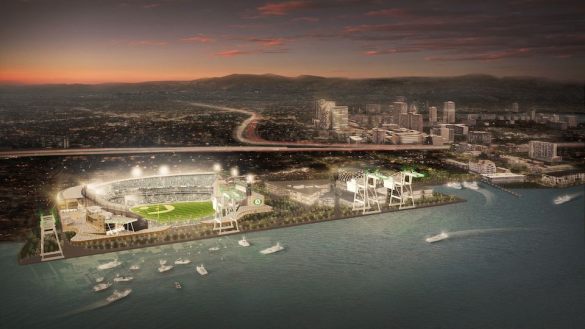
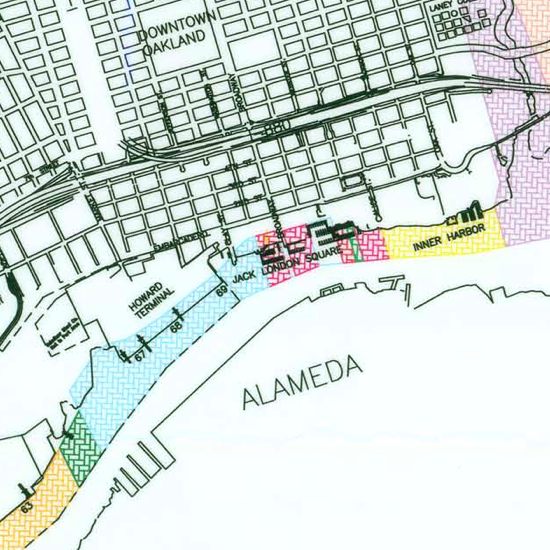
Blackwell, on the other hand, is more of a redevelopment guy than a budget guy. He was tasked with overseeing the development of some of the big ticket City projects, such as the Oakland Army Base, Brooklyn Basin (O29), and Coliseum City. Blackwell has been instrumental in getting the various interests (developers, financial backers, the Raiders, the JPA) on the same page regarding Coliseum City, though that has been with a struggle. Blackwell has been more directly associated with Coliseum City than Howard Terminal, but he considers both sites viable, a position supported by Mayor Jean Quan.
What Blackwell apparently lacks is serious fiscal experience. Prior to his ACM stint in Oakland, he was the redevelopment head of the small agency in San Francisco (compared to Oakland CEDA and San Jose’s RDA it’s tiny), and director of SF’s Community Development office. Blackwell’s fiscal expertise, such as it is, isn’t an imperative at the moment because Santana paved the way by crafting budgets during her tenure. It’ll be more interesting to see if Blackwell keeps his job after the election.
That may depend on his ability to complete Coliseum City. With most cities’ redevelopment powers curbed, Blackwell was left to focus on these high profile projects, which have their own current and potential funding sources. Spring’s big deliverable is a market research report, and the Raiders (and perhaps the A’s and Warriors) are supposed to be signed onto the plan by the summer. If the report looks bad or Mark Davis is hesitant, it’s largely on Blackwell, not that he can control much of it. Most of the circumstances that will dictate Coliseum City’s feasibility are largely beyond his reach. He can continue to sell the concept to investors and teams, but in the end, they’re the ones who’ll be doing the heavy lifting financially, not Blackwell. Then again, Blackwell’s new job will give him to latitude to craft a deal, similar to the plan Robert Bobb had to bring the A’s uptown in 2001. Blackwell could succeed where Bobb failed in getting the Mayor to sign on, a good possibility since Quan already endorses Coliseum City. Will the numbers add up? That’s the real challenge for Blackwell, one that, unlike his predecessor, is not his strong suit.




 newballpark.org