Brown to Redevelopment: Your days are numbered

Governor Brown just finished his press conference, where he explained his budget plans. Brown is pushing for $12.5 Billion in spending cuts, and he is asking the legislature (and the voters) to extend temporary income, sales, and car taxes that are set to expire this year. As for the redevelopment golden goose, Brown said that existing (already bonded) projects are safe. New projects, on the other hand, are in trouble. Brown wants to “phase out” redevelopment agencies and start taking back $1.7 Billion in tax increment annually. What it comes down to is this: If you don’t have your project started and well underway in the next 12-18 months, you are screwed. There continues to be some debate as to how the governor could eliminate RDA’s, with the agencies enshrined in Article 16 in the Constitution and recently passed Prop 22 acting as protection. The governor seems to be saying, “If we get rid of RDA’s, there are no more protections.” Yow. Okay, who would this impact? Let’s put together a list:

  • San Jose Diridon Ballpark – While the City is speeding up land acquisition, what about Autumn Parkway and other mitigations? Will the funds be in place for the rest of the project, or will it get kicked down the road?
  • Oakland Victory Court Ballpark – Oakland already had to deal with a tight schedule based on a 2015 Opening Day. Now, Oakland will have to get its bonds raised and land in place right around the time an EIR is certified, or even before certification. Expect for Oakland to push MLB harder to decide in its favor, even without anything significant in place.
  • 49ers Stadium in Santa Clara – The quasi-public stadium authority would have to get its loans and/or bonds in place in the next 18 months as well.
  • New Raiders Stadium at the Coliseum – A new stadium is practically a nonstarter given the funding questions. Expect the Raiders to look south sooner rather than later.
  • Downtown Los Angeles NFL Stadium – The now $1.5 Billion stadium (+$500 million in the last two weeks) would require $350 million in bonds, which won’t be available if RDA’s go away.
  • City of Industry NFL Stadium – Ed Roski’s plan involves his own land, but much of the stadium cost would be funded by tax increment on the land improvements, thanks to much of the city being one large redevelopment zone. Uncertainty regarding RDAs makes the prospects for building infrastructure for the stadium and ancillary development, murky at best.
  • Sacramento Kings Arena – As Kevin Johnson’s arena task force continues to talk things out, time is running out, especially for an arena at the long dormant Railyards.
  • San Francisco Arena – Land south of AT&T Park could serve as the site for a new arena. Controlled by the Port and with development rights given to the Giants, it’s likely that any dev plan there will require at least the same kind of public outlay that made the ballpark deal work. Proponents would have to find another source for that funding.
redev_cut

Slide captured from the governor’s briefing

The message is abundantly clear: If you want to get something built, get a move on. (BTW, take a look at the counter on the right today. Eerie.)

Jerry Brown: Killing baseball in Oakland not once, but twice

Update 1/4 4:00 PM – San Jose and Mayor Chuck Reed appear ready to fight Governor Brown in order to keep redevelopment dollars intact if Brown’s idea gets past a conceptual stage.

Austerity, thy name is Jerry Brown. As part of the newly sworn-in governor’s agenda to reduce the $25-28 billion state deficit, massive cuts are in store for social services, the University of California and California State University systems, and just about everything else that is state funded.

Robert Gammon thinks this is bad news for any Victory Court ballpark plans, since Brown is looking to eliminate redevelopment agencies as well. Remember that while $750,000 has been authorized for an EIR, nothing has been authorized or raised (via bonds) for further land acquisition or infrastructure work. That part, which is estimated to run $100 million or more, would be unavailable in as little as 12-18 months if redevelopment agencies were killed or if their tax increment funds were diverted to help shore up the budget.

Gammon is unclear whether Brown would try to fight this battle via legislation or some other method. Redevelopment can be viewed in two ways: generally bloated and ineffectual, yet also important for some ongoing smaller projects in many cities throughout the state. Since redevelopment money has more of an indirect benefit for citizens than, say, funds for Cal Grants or Medi-Cal, it’s likely to be less of a hot button issue, which could make it a more likely candidate for the chopping block. However, redevelopment agencies are empowered through Article 16 of the State Constitution, which makes it difficult to see how Brown could do it alone, unless he declared some sort of fiscal “state of emergency” early on in his term and tried to carry out his agenda via fiat. It’s possible that a bill to accomplish this could “sail” through the legislature, but would a referendum be required as well?

Also threatened are enterprise zones, areas designated by cities as economic incubators and eligible for tax credits as a result. Elimination of enterprise zones could raise the price tag on relocation since it’s likely that Oakland/ORA is looking at some of those areas as places where the existing businesses at Victory Court could relocate, with tax credits as an enticement.

Would Brown’s cuts have an effect on San Jose’s ballpark efforts? Perhaps. SJRA’s practice of landbanking has allowed it to use money it raised many years or even decades ago to help fund new projects. With the threat of Brown curtailing SJRA activities severely if not outright, it’s possible that they may see the writing on the wall and sell off various accrued assets to keep existing projects funded or to shore up the agency’s own budget. Better that than for the state to grab the land and sell it on its own, I suppose. Already, SJRA has redone the Airport West deal to suit Lew Wolff’s sliding schedule. They’ve also agreed to sell the long dormant Brandenburg site near downtown to developer Barry Swenson in order to finish a street grid/park project in the North San Pedro area. Going back to the process of killing redevelopment, imagine a June ballot in San Jose with a ballpark initiative and a statewide proposition to eliminate redevelopment agencies. Yikes.

This early on, it’s hard to say how the redevelopment battle will go. Agencies have their own lobbying group and there will be plenty of cities with large agencies who will be steadfastly against such a raid. Lawsuits would be almost guaranteed, as they would be from various other threatened state agencies. Most redevelopment agencies have some ongoing indebtedness, so what happens if their siphon is cut off? Default? Already, CRA is appealing a decision which approved Governor Schwarzenegger’s $2 Billion raid in 2009-10. We’re in for a bumpy ride, folks.

IDLF DUI WTF Open Thread

I don’t regularly go onto The Google and type in the terms “councilman dui.” After Oakland District 5 Councilman Ignacio De La Fuente’s arrest for an apparent DUI violation earlier this morning, I was curious.

The final tally: 61,800 results, most of them from media outlets. Included were a Hercules councilman’s DUI last month and an incident in which a Westminster councilman wrapped his Mercedes around a telephone pole in 2009. After lightly going over some of these incidents, it seems that all of the guilty properly lawyered up and got probation to the tune of 2-3 years, which may have included ankle monitoring. Could IDLF receive a better or worse fate?

This blog tends to stay away from profiling politicians, but IDLF’s dissenting vote (conditional as it was) earlier in the week makes this issue somewhat relevant. Rumors have been swirling about IDLF potentially taking a job within incoming Governor Jerry Brown’s administration, and this would undoubtedly have a negative impact on his chances. As for keeping his job at Oakland City Hall, it’s probably safe. IDLF is halfway through his current term, his fifth. None of the articles I skimmed in my highly unscientific review indicated that any of the offenders had to vacate their positions, as long as they didn’t maim or kill anyone in the process. I don’t mean for this to sound glib, that’s just the way it seems to shake out. On a personal front, the man has been through worse.

If you’d like to steer the discussion away from IDLF, by all means! Be my guest. Merry Christmas, Happy New Year, and be smart if you’re gonna imbibe. Get a designated driver, use public transportation or take a taxi.

Oakland City Council approves EIR funding 6-2

Liveblog of the meeting (watching the stream):

7:15 PM – The first of eight speakers, Chris Dobbins, is up. The first three speakers are in favor of the resolution: Dobbins, Mike Davie, and Jorge Leon. emperor nobody is fifth with the the phrase “green stadium” as the magic words to making the ballpark work. Ethan Pintard suggests other alternative sites, is concerned with land availability. Bryan Grunwald suggests 980 Park, wants more transparency in the process.

7:28 PM – Council is speaking. Nancy Nadel asks about the Uptown garage, which will have $3.8 million in available funding, which will not be enough to finish the garage (it was also dependent on a now dormant housing development). Funny, she talks about the garage in terms of bringing people in from outside Oakland; isn’t that one of the purposes of a ballpark? Just asking.

7:33 PM – Rebecca Kaplan is up, is encouraged but wants alternatives (uses of the Victory Court site) just in case MLB doesn’t choose Oakland or a ballpark doesn’t pan out. Suggests the Coliseum as a possible site, though she takes care that mentioning the Coliseum is not opposition to Victory Court (sounds like a backpedal from the pre-election stance). Asks about pedestrian and rail crossing improvements, potential for a streetcar project.

7:36 PM – Ignacio de la Fuente thanks A’s fans. Is concerned about how MLB plays one city against another to squeeze out the best deal they can. Implores MLB to make a decision, says he can’t in good conscience support the resolution without a commitment from MLB. Brings up the DC-NoVA bidding war to land the Nats. Northern Virginia, like San Jose, was considered in the lead because it was well organized and had good political and economic support. DC got the team because of the deal put together by Robert Bobb and then-mayor Anthony Williams.

7:41 PM – Jane Brunner rebuts IDLF. Basically says that if we don’t approve this, we lose the team tomorrow (applause).

7:44 PM – Jean Quan expresses her support. Also looks at the site for other potential uses.

Motion passes 6-2. “Let’s Go Oakland” chant ensues.

Side note: A Bay City News article (via NBC Bay Area) mentions Fremont as Wolff’s fallback if MLB doesn’t allow a move to San Jose but only as a past (and currently not active) site possibility.

Greetings from the Southland again, where I am working on an ark to transport me, family, and pairs of animals away from the flash flooding here. At least it ends tomorrow. I think.

Rich Lieberman has the scoop that the A’s are dropping out of the KTRB bidding, due to the station’s “significant internal issues.” I think Big Vinny is cutting the A’s a bit too much slack here. Lew Wolff and Ken Pries are fully aware that individual stations don’t come up for sale very often, so to be able to jump in on one that already has your programming and really only needs some upkeep is a pretty rare opportunity, especially in the Bay Area. I’ve gotten on my soapbox two weeks ago, so I won’t belabor the point. Let’s just say I’ll be seriously disappointed if this comes to pass.

Speaking of opportunities, the Oakland City Council will take up the $750k EIR decision on tonight’s agenda (PDF). Be forewarned, however. The agenda has 47 items, and the meeting starts at 5:30 PM – which makes sense if you’re going to cram 47 items into a single session. The Victory Court item, 10-0260, is way down towards the bottom of the list and is a non-consent item, which means it will be heard after 6:30. A staff note for the item goes as follows:

The December 14, 2010 Community and Economic Development Committee approved recommendations and directed staff to spend conservatively – as slow as possible and decisions to expend funds should be leveraged against tangible certainties.

Staff further directed to add a RESOLVED that the contract is subject to termination at any time, with remaining funds left unspent, should the City’s work with the Major League Baseball stop progressing towards a satisfactory conclusion; 4 Ayes

Again, the item should pass handily with the added termination clause, though there will undoubtedly be a great deal of discussion before that vote is taken. The meeting will stream here.

Oakland committee approves full EIR study

The Trib’s Angela Woodall observed the proceedings today. The result? 3-1 in favor of a full EIR study. As expected, the lone dissenter on the committee was Ignacio De La Fuente. The issue will appear before the Oakland City Council next Tuesday, where it should pass. The one important detail:

In the end, the committee added a provision that allows the city to cancel the contract with LSA Associates and pay only for work that has been finished.

That’s a good safety mechanism to put in place, just in case.

A cup of Joe with the Georges

2/22/16 – George Vukasin Sr. passed away last week at the age of 82. George Jr. informed me of this sad news earlier this morning. SFGate and BANG covered the man’s life. I only met George Sr. once. Fortunately, I wrote about it. Apparently he liked the article, as did many other readers. So in honor of George Sr., I’m reposting my article from December 13, 2010 (was it that long ago?). RIP George Vukasin Sr. Wherever you are, I’m sure the coffee just got a lot better.

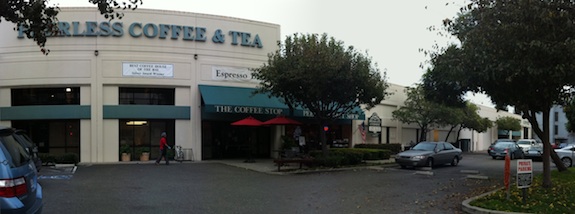
peerless-sm

Peerless Coffee is based out of a low-slung, light industrial building built in 1976. Established in 1924, the company has seen it all: wars, boom and bust cycles, and several sports teams. Three generations of the Vukasin family have helmed the company, and they are Oaklanders through and through. They have every intention and desire to continue being a pillar of the Oakland business community. How that can continue with a ballpark proposal lingering in the immediate future is uncertain.

As I approached the building, the aroma of roasting coffee nearly overwhelmed me. I sipped an au lait inside the store as I waited to interview George Vukasin, Jr., who runs the business, and George Vukasin, Sr., who left the company to his children and still is a major presence there. George Sr. is also well known as a major proponent of Oakland and East Bay sports, as he was pivotal in making the Coliseum complex come into being. I sat down in their front office and we talked for nearly two hours. I could’ve easily sat there for another two as George Sr. recounted stories of Oakland sports glories past, but I had to start writing. Maybe another time.

We first talked about how the Coliseum deal was struck. George Sr. happily took on the role of historian, recalling how the late developer Bob Nahas put together a coalition of civic and business interests, including the elder Vukasin, to get a sports showcase built in the East Bay. They quickly focused on a site in East Oakland. The land was undeveloped, with the major owners being the Port of Oakland, EBMUD, and PG&E. Deals were struck with both utilities to maintain easements at the complex while a land swap was negotiated with EBMUD for a parcel on High Street, where the utility’s maintenance yard now resides. The Port of Oakland handled the land deal, as George Sr. was a Port commissioner at the time. The process from first discussion to groundbreaking took 2 years and was unencumbered by CEQA laws or other red tape.

The Coliseum Commission ran the complex for close to three decades. They understood what it took to keep the complex in the black, such as the need for 130 event days at the complex every year. While that should be easy to do with 81+ baseball games, 7-10 football games (sometimes), and 41+ basketball games, occasionally things would run tight. One particular year, Vukasin couldn’t figure out what to do so he called rock promoter Bill Graham and asked for help. Graham magically produced 7 days of Grateful Dead shows at the arena, the proceeds of which allowed the Commission to take care of the debt service.

Around the same time, Amnesty International contacted the Commission about putting on a single concert, which would be held at the stadium. Walter Haas, who had put a good deal of money into renovating the Coliseum, was not particularly fond of having a large number of concertgoers trampling his pristine baseball field, as evidenced by the declining number of Day on the Green concerts during the Haas era. When Amnesty International inquired, Haas and Roy Eisenhardt unequivocally said no. Vukasin and others tracked Haas down at the Pacific Union building in San Francisco, where they asked him to grant permission face-to-face. Haas, ever the gentleman, relented on the spot and the concert was held, as long as there were assurances that the field would be kept in good condition. No contracts, no litigation, just a talk and a handshake.

We shifted topics to Victory Court, and that’s when George Jr. was able to speak more. He was contacted 18 months ago by Mike Ghielmetti and Jim Falaschi, who suggested that Victory Court would be a studied site for a ballpark, and that the Peerless Coffee property was one of the targeted parcels. That led to a meeting with Ghielmetti and the City of Oakland’s real estate manager, Frank Fanelli. Little happened during the meeting, and no direct contact has been made since. Once George Jr. caught a man surveying and measuring the property. The man couldn’t divulge who sent him, and George Jr. asked him to leave. The man got in his car and went around to the back of the property, which is accessible from both Oak and Fallon Streets. George Jr. saw him surveying that side and kicked him off the property for good. To this day the Vukasins don’t know who the appraiser was, let alone who sent him. They asked me who I thought it was, and I guessed that it was MLB, contracting the work as part of its “due diligence.”

I asked why the current site was so crucial, and George Jr. went into great detail about how the business worked. While the plant looks like a 70’s office building from the outside, the nondescript façade hides many unique features that are part and parcel of what makes Peerless Coffee run the way it does. Among the important features:

  • The floor is an extra thick concrete pad, which allows the company to stack huge bags of coffee from floor to ceiling without worrying about weight.
  • The plant’s location near the port lowers transportation costs.
  • Peerless rents out some surplus space in the back, with the knowledge that the space can be repurposed for a plant expansion if need be.

Perhaps the most interesting thing is the process of roasting coffee itself. Peerless does a lot of custom roasting for different clients, such as restaurants and hotels. This makes it important for the company to have extremely precise control over the variables that come into play, from humidity to the shape of the natural gas flame as the beans are being roasted. Roasting the beans an extra five minutes can severely change a coffee’s flavor profile, according to George Sr. George Jr. followed that up, saying that the process is so delicate, a transition period of 18 months would be necessary, including construction time. During that time, both facilities would be running (or under construction), allowing the new plant to work out the kinks and match the old plant’s flavor. The fact that coffee is perishable, coupled with the change of equipment and environment, mandates such a long transition. It’s possible that a lot of product will be wasted along the way. When another coffee roaster built a new plant to replace an old one, it supposedly took 6 months or more after it started operating to “dial in” the flavor properly. Essentially, the coffee is roasted based on the conditions in that exact location. Any changes would require a costly upheaval.

In preparation for what could happen, George Jr. and his sister, Kristina Brouhard, have done the necessary background work just in case. As I was talking with the two Georges, Kristina, an attorney who is also Peerless Coffee’s legal counsel, popped in for a moment and we exchanged pleasantries. They’re getting ready to (and I’m paraphrasing here) man the troops.

That’s not to say that manning of any troops will be needed. I asked the Georges if, as I had suggested last week, a ballpark land grab extended as far out as Fallon Street, instead of the taking of all land between Oak Street and Lake Merritt Channel. They both said they’d be fine with it, though no one has explained to them why all of the land was needed. They’re perfectly content to be neighbors to the ballpark, and their comfort with their specialized operation suggests that they aren’t in this just to hike up the price on their property. George Jr. doesn’t want anyone to feel sorry for the business, but he was very clear in saying, “This business is our family.” And right now it’s threatened by the ballpark. Already, customers are asking if Peerless is going out of business, which is clearly not the case. If you think that battling perception is hard now, just wait until the word gets out about a ballpark.

There were plenty of other anecdotes about Wally Haas, Herb Caen, Franklin Mieuli, Ken Hofmann, and strangely enough, former Warriors bust Chris Washburn, who George Sr. said had a “Rolls Royce grille on a Volkswagen.” George Sr. lamented how the revenue chase has made getting a fair stadium deal so difficult. We talked about how genuine Oakland’s (and Let’s Go Oakland’s) efforts were, and I was surprised how much we were all on the same page. There was a bittersweet moment in realizing that it is possible that Oakland, so defined by its sports franchises and full of history, could lose two or all three of them. George Sr. would’ve preferred a ballpark at Howard Terminal. George Jr. would’ve liked a downtown site. They told me how much they appreciated my work, and I thanked them for the time they gave me to discuss the issues. As I got up to leave, George Sr. had the most surprising parting words for me,

You never go over the owner’s head. If you call the commissioner, the first thing he’ll do once he gets off the phone is call the owner.

Coming from a man who has heard and seen it all – especially in Oakland and in dealing with pro sports teams – those are sage words.

Dolich supports a new “multi-use” stadium

A reader alerted me to Andy Dolich’s piece last week in the Biz Ball section of the CSN Bay Area/California website. Dolich goes back through the postwar history of stadia in America, going from the multipurpose bowls of yesteryear to the new single purpose venues of the last twenty years. He then summarizes the current difficulty experienced by California teams when it comes to getting stadia built. After that, he proposes an idea so strange it might have come out of the 60’s: the 49ers, Raiders, and A’s should all share one stadium where the Coliseum currently sits. In supporting this “multi-use” concept, Dolich cites major technological advances, such as the movable seating decks at ANZ Stadium and customizable LED displays used everywhere nowadays. While Dolich’s sense of history is sound, he left out a major factor that has sent both the NFL and MLB on different tracks. The Neo-Classical ballparks are much smaller in terms of capacity than their predecessors, while the new football stadia are much larger. 40,000 has emerged as a sweet spot for MLB, while 65,000 is preferable for the NFL. No amount of new technology is going to be able to mask or easily move 25,000 seats, not even tarps. The requirements for baseball and football have diverged so much that it’s hard to envision even attempting to make a multipurpose stadium work these days. Let’s take a look at how the two sports’ requirements differ:

  • Proximity to the field. In baseball, it’s customary to have the first row at the same level as the field, or perhaps a foot above the field. In football, the first row may be 6-10 feet above the field.
  • Quantity of premium seating. Football stadia tend to have 7,500 club seats and 100-200 suites. Ballparks have 3-4,000 club seats and around 40 suites.
  • Confinement. Colder seasons force football stadia to enclose their suites behind glass, whereas ballparks like to take advantage of the summer by putting the seats outside the glassed-in parts of the suites.
  • Surfaces. While Field Turf and other advanced artificial surfaces have gotten better at mimicking grass, they’re still far away from being truly comparable for baseball applications. The fake stuff is welcome in football, where there’s no need to worry about having a true ball bounce or roll. If a stadium were to utilize grass, the dirt infield problem emerges.
  • Environment aesthetics. In football, the stadium is the scene. In baseball, ballparks are frequently designed take advantage of a pastoral or urban backdrop.
ANZ Stadium's pitch. Note the tracks used to move the seats in and out.

ANZ Stadium’s pitch. Note the tracks used to move the seats in and out.

The technology that Dolich espouses does little to address the differences in fan experience that the single purpose venues achieve. For instance, ANZ Stadium‘s movable seating sections could be an inspiration. Prime lower deck seats are mounted on tracks that expand and contract based on each sport’s specifications. It sounds good until you realize that the difference in capacity between ANZ’s rectangular (rugby, soccer) and oval (cricket, Aussie Rules) is only 2,000 seats. As a cricket venue it is severely compromised in terms of dimensions, with far more cricket tests played at Sydney’s older Cricket Ground. Movable seating decks have been employed to mixed success in the United States, the most prominent examples being the Louisiana Superdome and Candlestick Park. Aloha Stadium and Mile High Stadium both had novel methods to move entire seating stands. At Aloha, four double-deck stands either pinched in for football or widened out for baseball. Eventually the stadium was locked into its football configuration, much the same way The Stick’s east stands have been kept in their football mode. LED displays are great replacements for signage. They make an excellent platform for disseminating game information. But they don’t address the capacity disparity. From a fan experience standpoint, it could be said that the displays are sometimes counterproductive since they are so distracting. Either way, they’re just window dressing. Dolich uses the current economic state as justification for building a multipurpose stadium. Why bother, if the fan experience will only be marginally better than the current stadium, and will always be compared to superior experiences at single purpose venues? Dolich worked for the 49ers as a consultant to help improve the experience at The Stick, and was not particularly prominent in the selling of the new stadium to Santa Clara residents. He was unceremoniously let go at the beginning of this calendar year, and now he’s practically endorsing an alternative to the plan. If this were the 60’s, when both baseball and football were played in 50,000-seat ashtrays, it might be feasible. Times have changed. Until someone figures out how to make 25,000 seats disappear, the idea is not really worthy of discussion.

Raiders Coliseum: The impact

Back in October, a new plan for the Coliseum complex was unveiled, and it had no traces of the old multipurpose bowl. The feasibility study released then was careful not to show a specific opening date or year for the Raiders’ new stadium. Instead, a 48-month project timeline was given, with 15 months for EIR preparation and 30 months for construction. Although sharing a Santa Clara stadium with the 49ers remains an option, it’s clear that team CEO Amy Trask prefers to have the Raiders in their own digs.

To understand what the impact of the new stadium would be on the Coliseum complex, I did a quick-and-dirty Photoshop overlay to see how the current and future pieces fit together. First, the new plan as drawn up for the Raiders:

Now the overlay:

The overlay isn’t exact, but it’s close. The big reveal is that the footprints of the new stadium and the old Coliseum overlap slightly. That indicates that some part of the Coliseum would have to be torn down in order to complete the stadium. A precedent for this already exists in Cincinnati, where the outfield chunk of old Riverfront Stadium was removed to make way for Great American Ball Park. The yellow stripe running through the area is the easement for underground sewer interceptor, which can’t have permanent structures on it. While it appears that part of the new stadium sits on the easement, the stadium could be constructed in such a way that the interceptor would remain accessible. (If you’re asking why the A’s haven’t asked about doing something like this at the Coliseum, stop right there. They have asked.)

Assuming that the Raiders can get all of its ducks in a row (a big if), it’s possible that construction could start as early as mid-2012. Which means, of course, that the existing Coliseum would be affected. Significant portions of the original structure might have to be torn down. Hemmed in by the old stadium and the interceptor easement, the new stadium designers will have to be clever to design it in such a way that minimizes such impact. Since there’s no final site plan or stadium design, there’s plenty of time to sort all of this out.

The biggest issue is the timeline. The plans call for a severe reduction of available parking during and even after construction. Most of the old Coliseum would be replaced by a large public plaza leading to the BART bridge. For the A’s and Raiders’ 2012 and 2013 seasons, I’m guessing that parking would be reduced by 3,000 spaces or more, roughly 30% of the complex’s available spaces. A parking garage and additional surface parking obtained by buying nearby properties would help make up the shortfall, but most of those spaces wouldn’t be ready right away. Cutting into chunks of the Coliseum would probably remove parts of the upper deck that the A’s don’t use right now. On the other hand, the Raiders need those seats. Chances are that if part of the old stadium has to come down, the Raiders would play in a reduced capacity stadium for those two years (the Tennessee Titans played at Memphis’ Liberty Bowl and 40,000-seat Vanderbilt Stadium while what is now LP Field was being built). The iceplant between Gates B and C might have to go.

If construction couldn’t start until 2013 or later, the impacts to the A’s and Raiders could be fewer. The A’s should hopefully have something going somewhere, with the need to endure the transition lasting only one season. The Raiders could play at the Coliseum throughout the entire construction period. The Warriors? They’re screwed.

Thoughts on the Winter Meetings drama

First up, Carl Steward just posted his last Chin Music update from Orlando. It includes the following:

In the Internet age, you get websites trying to establish credibility for themselves by throwing things against the wall to see if they might stick. We had one this week when a site called Ballpark Digest, which I must confess I don’t patronize, put out a report hinting that the MLB panel that will recommend the A’s future home might be prepared to anoint Oakland soon as the preferable choice over San Jose.

My dilemma: Do I even report such hazy conjecture?  Having followed this story pretty closely and understanding how commissioner Bud Selig operates, there are not likely any leaks of what this panel might recommend — at least to this kind of outfit. Ultimately, I chose not to report it at all because, quite frankly, I didn’t want to even legitimize Ballpark Digest’s “scoop” by publishing info from their non-bylined story.

And it goes from there. Let’s get something straight. Ballpark Digest and this site are bloggers. Most of the time we don’t break news. Often bloggers are lazy. There are also bloggers and other internet media who have, thanks to long-established credibility, elevated themselves to true subject matter experts. Good examples of this are guys like Maury Brown at Biz of Baseball and Larry Coon, the NBA salary cap expert who is so good that the NBPA links to his stuff. I don’t claim that I’ll ever reach either Brown’s or Coon’s internet rockstar status. This blog is 80% focused on the A’s stadium saga, which limits its scope. I’m fine with that. It’s also a place for a healthy amount of conjecture, thanks largely to the vacuum that MLB has created. That’s also fine and largely necessary, as long as the conjecture is within reason.

Aside from those subject matter experts, there’s also the regular media, which is basically split into the print or video version and the blog or blog-like section. Both have different standards due to editorial control. Who knows, maybe MLB will rule in favor of Oakland in the coming weeks or months? I doubt the news will break thanks to a questionably-sourced rumor. Still, all of the media, including us, will have to give it its due. When it’s real, it helps elevate the internet as a legitimate news medium. When it’s as difficult to verify as yesterday’s news, it’s difficult to take us seriously.

One thing you’ll notice about this site is that there’s no hit counter. I don’t keep too much track of traffic, and I don’t publish so-called “click bait” pieces that are designed to bring in visitors but have little real substance. Most click bait is intentional, some isn’t. BD’s “story” isn’t even click bait, it’s just a simple piece of guesswork that had an incredible snowball effect. Since I don’t care too much about volume of traffic as opposed to quality of readership, there’s no pressure to write click bait. This site also isn’t particularly SEO-optimized, which is also not a big deal. If people really want to find out what’s going on, a simple Google or Yahoo search will lead to this blog fairly quickly. We’re trying to cover one narrow topic well, and I stand by everything that gets published here.

We try to make educated guesses. We do our best to dig up what we can. We have sources. Sometimes we hear things that are real, and sometimes we hear things that are meant to gin up support. We do our best to get multiple sources for all rumors. That means that sometimes we’ll be wrong, and other times we’ll be right. Most of the time it means we won’t publish it, at least not until we’ve done our checks.

So I read the previous post’s comments thread with a bit of bemused detachment. San Jose supporters were probably looking for bridges to jump off – bridges that don’t exist in SJ, thankfully. Oakland supporters hailed the news as if the A’s were going to the playoffs. The truth is simple: WE DON’T KNOW. What was everyone getting all excited about? Was it that whiff of hope, that glimmer of daylight? There’s nothing wrong with that, but as expected, many people took the whole thing waaaaaayyyyyyyy too far.

When news breaks, we’ll report it and analyze it. Honestly, I had no idea where to go with what happened yesterday, and readers here and elsewhere ran with it. I checked with three different sources and heard nothing to confirm it. Yet it was there, and some attention had to be paid to it so I took it at face value. That’s all this blog can do. Whatever happens, we’ll link to it (unless it gets ridiculously repetitive like certain columnists). But really folks, relax. Understand that MLB’s process is born of inertia. It’s slow. It doesn’t change direction quickly. It appears to be extremely thorough – it has to be after all this time. The good news is that I’m working on some upcoming stories that will lead into the Christmas break. When we find out what the actual decision is, we’ll cover it thoroughly. Then everyone will have a real reason to get excited or depressed. Until then, take it easy.

Setting Oakland’s table

Update 12/8 17:23 – Susan Slusser has an update on the Ballpark Digest “report” and Lew Wolff’s reaction. Jane Lee filed something similar. From SuSlu’s update:

Ballpark Digest is reporting that the Major League Baseball committee investigating the A’s ballpark situation is favoring the new proposed site in Oakland; I am trying to determine the veracity of that, but there are no sources cited. The A’s have not heard that and – stop me oh oh oh stop me if you’ve heard this one before – team owner Lew Wolff told me in an e-mail, “Not to my knowledge. We have, as I have said when asked, exhausted all options in Oakland.”

If the A’s are not granted the territorial rights they want in San Jose, they are under no obligation to move to a site recommended by the committee. They can spend no money at all and stay at the Coliseum, or the owners can sell the team. I’m not sure there are many prospective buyers who believe the better market is in Oakland right now, either, but maybe Joe Lacob can take another look at the club and try to inject some of the enthusiasm he’s put into his new Warriors ownership. Lacob was part of a group that tried to buy the A’s when the Wolff group got them. I can state with certainty that the current group does not believe that the optimal market is in Oakland. It’s pretty obvious.

Note: When Lacob was interested in the A’s, he was going to partner with Billy Beane. When Peter Guber was interested, he was going to partner with Bob Piccinini. BTW, it’s wet and dreary today. I’ll go with SuSlu’s hint.

Update 12/8 11:15 – I asked Maury Brown, who is also at the winter meetings this week. His response?

RT Nothing. Owners meetings was last time @newballpark: Are you hearing anything regarding the A’s stadium situation this week?

Update 12/8 10:54 – Ballpark Digest (via The Drumbeat) has some juicy grist for the mill:

Indeed, the talk at the Winter Meetings is that an Oakland recommendation is now pretty much a done deal — with the additional spin (albeit accurate) that this proved the committee was right all along in waiting things out before making a recommendation.

Which is great, as long as MLB is setting Oakland up to succeed. Then again, they could be setting Oakland up to fail. At least The Town is getting a shot. This would also invert the situation in terms of how I perceived it: San Jose is the hedge, Oakland is the main option.

Robert Gammon does his best to equate Oakland’s stadium proposal to San Jose’s, but he misses a major, major point.

Before I get into that, there’s a bunch of good factual stuff.

  • Parking availability shouldn’t be a big issue because of the large inventory in downtown. Still, the City wants to build 2,500 spaces on site, which could prove problematic in that it triggers larger EIR impact for traffic and requires a large land acquisition, which could prove difficult.
  • Peerless Coffee doesn’t want to sell. Neither do its neighbors.
  • Among infrastructure upgrades, an extra lane from an 880 off-ramp (880 N to Oak St is my guess) would be needed.
  • A pedestrian bridge from JLS to Victory Court would also be needed. (Note – pedestrian bridges recently completed in Walnut Creek and Berkeley cost over $6 million)
  • 980 Park is being dismissed because of timeline/deadline issues, not site feasibility (this line by the City has been pretty constant).
  • “The league’s experts selected the Victory Court site as the most viable spot for a new ballpark.” That makes sense. Still doesn’t make sense why it took a year to get from four sites to one, when the number could’ve been two and whittled to one quickly.
  • Gammon projects which City Council members will be for and against the project, at least as far as the EIR funding is concerned.
  • As mentioned in the last post, the traffic study is moving forward. After that, it’s probably up to MLB.
  • Total price tag to make improvements and acquire land: $80-100 million. At A Better Oakland I speculated that $100 million would be a likely amount. The total could vary based the amount of land acquired, or the scale of certain land and infrastructure improvements.

The part I have to pick apart is this:

Under Oakland’s plan, the Central District of the city’s redevelopment agency would sell twenty- to thirty-year bonds to finance the land purchases and infrastructure upgrades. The bonds would then be paid back with property tax revenue generated by the ballpark and the surrounding planned development, which is to include housing, retail, and office space.

This is, of course, a classic TIF scenario. That’s not really a big deal procedurally since the site and surrounding area falls under one of two redevelopment districts. Gammon’s quick to equate what Oakland’s doing to what San Jose’s doing, but there’s a major difference, in that it’s $100 million of additional indebtedness to be incurred by the Oakland Redevelopment Agency. San Jose hasn’t had to raise any bonds and won’t have to raise any bonds for its project, so no additional debt there. If Wolff ponies up for the rest of the San Jose land, he may end up causing San Jose to forego a vote, the last remaining procedural hurdle. $20+ million for peace of mind and a green light from MLB? Not a bad investment.

While $100 million in RDA funds is not going to be up for voters to decide, it’s still not going to be a slam dunk politically. The big issue will be the cost of the land acquisitions and the possibility of eminent domain, which appears likely even in this early stage. If Oakland underestimates the amount needed to buy the properties, it will severely impact its ability to complete other parts of the project, whether it’s a parking garage or that pedestrian bridge. And given Peerless Coffee’s $30 million relocation estimate, acquisitions alone could break the bank. Legally, eminent domain proceedings can happen fairly quickly. Politically, they could prove difficult. And if Oakland lowballs as they did with Uptown? It could drag on for a while. Already another project in West Oakland is scaring landowners due to the potential use of eminent domain.

vc_with-buildings-sm

Not shown: Elevated Nimitz Freeway running through the area

Thankfully for Oakland, there’s a way to make it work within whatever the budget is. The easiest thing to do would be to scale things back a bit. This doesn’t mean that eminent domain can be ruled out, but it may be that Oakland won’t have to make lowball offers in an effort to stay under budget. It may even be able to pull off regular negotiations with affected landowners.

One thing that hasn’t been mentioned anywhere is that Oakland doesn’t need to acquire the Peerless Coffee parcel, or really anything else between Oak and Fallon Streets. It may want to pick up pieces of land at the northwest and southwest corners (Oak & 5th, Oak @ UPRR) to create nice public plazas for a ballpark, but it doesn’t need to grab all 20 acres. If you look at the way I’ve placed and oriented the ballpark in the above image, the footprint is well removed from Fallon St. Reduce the amount of land needed and it suddenly becomes much more feasible. Sure, there will still be the need to relocate a triplex, some warehouses, a storage facility, the fire training site (already acquired), and East Bay Restaurant Supply, but that’s a lot better than having to slog through negotiations with a dozen or more different landowners.  You may recall that San Jose’s land acquisitions started with 20-22 acres and were reduced to 14 in the end. The smaller ballpark requirement, less parking needed, and budget constraints all contributed to that eventuality. This is what awaits Oakland, though Oakland will create for itself hard limits on what it can spend. In San Jose, they can sell a piece of land here or there to shore up the fund, or  even depend on an old man’s kindness. In Oakland they’ll need to get it exactly right, or else it’ll fall apart. Quick note: Based on the numbers in the latest ORA budget report, this project would raise total TIF debt from $440 million to $540 million, an increase of 23%.

What I don’t understand is exactly why MLB is having Oakland put together 20 acres in the first place. I wonder what would happen if Oakland went to MLB and said, “Okay, we love the idea, but we’d like to scale it down to make it more feasible.” Would MLB be flexible, or would it have a hard line? If, as I’ve discussed previously, Oakland is a hedge, MLB should be pretty flexible in its requirements. If they aren’t, I might be a little suspicious…

Gammon ends with this:

In other words, for the A’s to move to San Jose, the league must conclude that Oakland’s ballpark plan is unviable. At this point, that doesn’t appear to be the case.

“At this point.” Well, yeah. No one’s had to work out the hard stuff yet. Clock’s ticking…