More end of season tidbits

Let’s roll it out, shall we?

  • New Twitter update (and article) from A’s beat writer extraordinaire Susan Slusser (@susanslusser): Beane feels optimistic about prospects for new stadium. He says team expects news sooner than later.  #Athletics. More on this from MLB.com’s Jane Lee.
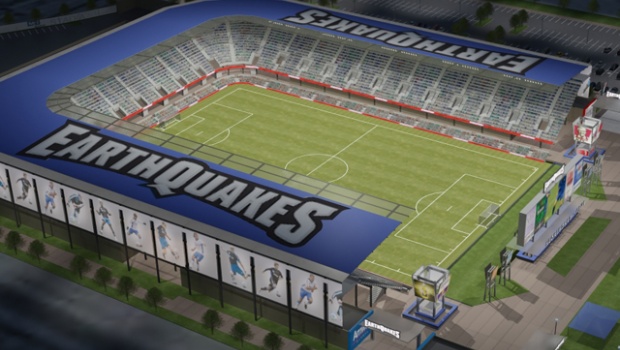
  • The Quakes named David Kaval as its new President. Kaval replaces Michael Crowley (the one who owns a piece of the A’s, not the journalist), who will be bumped up to Managing Director. Kaval’s previous gig was at the independent Golden Baseball League. Quick analysis: the Quakes need to make more headway with sponsorships, and Kaval’s experience indicates he knows the angles.

  • Target Field ended the regular season with the 3rd worst home run rate (1.35 HR/game) of any MLB ballpark, just behind Safeco Field (1.22) and yes, the venerable Oakland-Alameda County Coliseum (1.33). Some of that may be attributable to the half-season absence of Justin Morneau and Joe Mauer‘s almost inexplicable power dropoff, from 28 to 9 HR in one year. Mauer should be able to adjust, as David Wright did at Citi Field (10 to 29 HR from 2009 to 2010).
  • The Twins are criticizing the T-Wolves for placing a large ad sign at Target Center that will be visible from Target Field and Target Plaza. Seriously?
  • Home runs are down slightly at New Yankee Stadium, but it’s still the most HR-producing park in the majors.
  • MLB instituted new sky ground rules at Tropicana Field for the playoffs. The upper “A” and “B” compression rings/catwalks that hold up the dome are no longer in play, as balls that hit the rings are now automatic dead balls. Previously, balls that hit the rings were in play, and were ruled fair or foul based on where they landed. The lower “C” and “D” rings are home runs if balls hit them in fair territory.
  • Matier and Ross report that the 49ers are getting ready to open a sales office for their planned Santa Clara Stadium. The office will be in the Tech Center, which is adjacent to the Santa Clara Convention Center, which itself is across the street from the stadium site. No seat license prices yet, of course.
  • Mesa, AZ voters are mulling over Prop 420, a proposal to replace HoHoKam Park with a new city-owned ballpark complex with a bunch of ancillary development to help pay for it. If you’ve ever been to HoHoKam, you’ll know that the only thing ancillary to the park right now is a cemetery.
  • Firing up stogies in the clubhouse to celebrate the Reds’ first division crown since they opened their new ballpark is apparently verboten.
  • The nonprofit group that runs the Memphis Redbirds (AAA, Cardinals) has been struggling financially, causing them to consolidate a bunch of debt in an effort to stay afloat. What hurt them? The arrival of the Memphis Grizzlies, a blip of excitement for U of Memphis basketball when John Calipari was there, and bad projections for attendance at AutoZone Park. The team and ballpark will probably be sold in the near future.
  • The Giants are getting the late game slots (6:37 PM PT) for their first two home NLDS games, which is great for West Coast viewers, not so great if you’re a young Braves fan who has to go to school Friday morning. The Rangers are getting the crappy day slots that we as A’s fans have been rather familiar with.
  • Attendance at yesterday’s Raiders-Texans game was a scant 32,218. There are often comments about how whether or not the Bay Area is a two-team baseball market; are we sure it holds up as a two-team football market? They could’ve saved some money and left the tarps on!

Update: Tonight’s fresh articles by Susan Slusser and Jane Lee have done a better job of clarifying where management’s position is going forward than the quotes Slusser got from Lew Wolff last week. From Lee’s article:

“I was talking to one free agent last year, trying to tell him to concentrate on the field, that we had the best playing facility in the league, the best groundskeeper in the league. He said, ‘You’re right — until August.'”

“I think we’re going to be planning a new stadium at some point soon,” Beane said. “That’s just my own gut feeling. We have to at some point. I’m an optimist.

“I think it will allow us to start to plan around some of these guys here from a long-term standpoint. Hopefully, it’s not a revolving door, like it’s been the last decade. Hopefully, we could do some long-term planning, which we really haven’t been able to do. I think it would be pretty invigorating for everybody involved, and I think everybody would sort of be relieved having a direction for the franchise.”

Thing is, if MLB rules in Oakland’s favor, there’s an immediate quandary because I don’t think the owners have been planning on staying in Oakland.

The debt rule and you

When the current CBA was ratified in 2006, it was largely seen as little more than extension to the 2002 CBA. That is, except for one pretty important detail. Prior to 2006, all MLB teams had to conform to what was called the 60/40 debt rule (assets/liabilities). Enforcement of the rule was at best lax, allowing teams to make some really bizarre long term contracts without batting an eye. With the new CBA, the debt rule had radically changed. Instead of pinning available debt to franchise value under the 60/40 rule, debt was to be capped based on earnings. Here’s the initial language of the rule:

DEBT SERVICE RULE
Section 1.    The Rule. No Club may maintain more Total Club Debt than can reasonably be supported by its EBITDA. A Club’s Total Club Debt cannot reasonably be supported by its EBITDA if Total Club Debt exceeds the product of the average of that Club’s EBITDA over the most recent two years multiplied by the Cash Flow Multiplier applicable to that Club; provided, however, that a Club may elect, on or before April 1, 2007, to utilize, in both 2007 and 2008, the average of its EBITDA over the most recent three years.

To illustrate this, let’s look at Forbes’ 2010 financial profile of the A’s. In it, operating income (EBITDA) came out to $22.1 million. For 2009, it was $26 million. Averaged, it’s $24 million. To get the Total Club Debt ceiling, multiply that last figure by 10, and you get $240 million in debt ceiling. Also in the profile, the A’s have a 30% debt/value ratio, putting the team’s applicable current debt at $88.5 million. Every team gets a debt exemption of $36.5 million. Factored in, that puts the A’s debt at $52 million. That leaves $188 million under the team’s cap.

According to the listed definitions of what constitutes debt, just about anything that is borrowed or to be paid later falls in. This includes loans from MLB or third parties such as banks, non-player deferred compensation, stadium debt (only when the stadium opens), loans from related parties (ex.: partly or wholly owned regional sports networks), and any other debt except for a player compensation and an initial $36.5 million deduction (like the standard income tax deduction).

The 10x multiplier changes to 15x when a new stadium opens. This is important, because, as Jeffrey pointed out two weeks ago, MLB is ready to provide a loan of up to $150 million for construction. Assuming that EBITDA stays fairly constant, the A’s debt ceiling will move to $360 million. In the meantime, the A’s would likely pay down existing debt (either from annual profits or by bringing in additional partners) to get itself in the right position to get the stadium financing.

The kicker here is that while player compensation is not supposed to be part of the calculus, it is no doubt a considering factor. Selig has a mandate for mid/small market teams to get their houses in order prior to opening a new ballpark. Any number of punitive measures can be taken against a club if they go over their debt cap, including restrictions against future borrowing and even limits to new player contracts. If anything, this is the true spirit of the debt rule: to keep teams living within their means. (Big market teams such as the Dodgers and the Rangers under Tom Hicks benefited from selective enforcement.)

To understand how this affects the A’s moving forward, let’s take a look at where the teams stands in terms of payroll as of the end of the season:

Now let’s assume that certain housekeeping moves are made. Trevor Cahill is locked up through his arb years in a similar deal to what Brett Anderson received, plus Daric Barton is also secured. In addition, Mark Ellis is brought back, as well as Kevin Kouzmanoff. Jack Cust is gone, while Michael Taylor starts the season in RF. Gio Gonzalez, Dallas Braden, and Andrew Bailey are also back through short-term/non-arb deals. No one of note is traded, but a free agent slugger is brought in for a 2-year, $20 million deal with a third year team option. Here’s what that would look like:

If you’re Selig and you’re looking at the two tables, you’re thinking “That’s it. Give me your credit card.” It doesn’t matter that this kind of debt technically doesn’t count toward’s the CBA definition, it’s still debt. Salaries weren’t supposed to count under the old 60/40 rule either, but they did. It’s a terribly unfair way to run a competitive league, but them’s the breaks. By 2013, the payroll will head into the $80 million territory because of the normally occurring raises. As a team that is not yet fully capable of carrying its own weight, the A’s have their own de facto salary cap. Most of it is due to circumstance. Type A free agents aren’t going to sign 2-3 year deals here unless they have a problem that makes other teams balk at giving them 5-6 year deals (injury history, age, consistency). Yet that 2-3 year window is exactly what the team should exercise while costs are contained. Lew Wolff mentioned recently that the one-year rental idea doesn’t work that well, which is true at least historically. So what’s the best way to fill in the holes in the lineup? More Coco Crisps? Trade one or more of the pitchers for a bat?

Most importantly, how does this affect how you view the A’s future, or the league in general?

Note: If you’re wondering how the Yankees operate within the rules even though they’ve accrued billions of dollars of debt, the answer is simple. The team doesn’t “own” most of the debt. Its related parties do.

Larry Stone speaks, some won’t like it

KCBS Radio did one of their In Depth interviews with Santa Clara County Assessor Larry Stone (MP3 download). Stone has, of course, been a active, constant proponent of bringing MLB to the South Bay, and has used his easily won public office as a bully pulpit. Stone was asked about the history of now 24-year effort to get this done, plus fielded questions about whether his roles as assessor and developer are conflicts of interest. If you’re a South Bay partisan, you’re going to think what he’s saying is gospel. If you’re an Oakland partisan, your ears may bleed profusely. It’s over 27 minutes long and well worth the listen (thanks, I.C.).

Among the morsels from the interview:

  • Within the first two minutes, Stone makes the claim that the A’s can’t survive in Oakland.
  • Stone is (IIRC) the first public figure to say that the Giants are trying to drive the A’s out of the market. When challenged on this, his response is, “Anybody would try to do this.”
  • Apparently the Earthquakes are not considered a major pro sports team, at least according to Stone. He must’ve forgotten them.
  • He thinks the Giants could spend $2-3 million to defeat the spring ballot measure.
  • Stone dances around the idea that some of the owners might feel threatened by another team invading their respective territories.
  • SJRA has the money set aside for the last two parcels (AT&T and Aegis).
  • Stone claims that when he talked to Schott some time ago, Schott had 75% of the owners lined up for a vote for a move south.
  • Stone speculates that Selig gave the Giants a “10 year head start” for the SC Co. t-rights, in effect protecting the county for a decade.
  • Interviewer Jane McMillan characterizes the Diridon area as “suburban” in comparison to what would normally be considered urban areas for other ballparks. Where does urban end and suburban begin?
  • McMillan also asks if a deal is done, but unfortunately says that the ballpark will be shared with the Quakes (which it won’t), which got Stone’s response moving in the wrong direction.

It’s a good listen, though if you’re on the SJ bandwagon you’ve already heard many of the talking points.

BTW, on an unrelated note, the Rangers secured a 20 year, $3 billion extension to the current TV rights deal with Fox Sports Southwest. $150 million a year (Maury Brown thinks the numbers could be off). Guess they won’t have that big debt problem that could keep them from re-signing Cliff Lee and extending Josh Hamilton.

If You Got Any Money Left Over, Buy Yourself Something REAL Nice, Clark.

The headline is a quote from one of my favorite movies of all time, National Lampoon’s Christmas Vacation. It is spoken by Cousin Eddie as he loads up a shopping cart with dog food that his Cousin-in-Law, Clark Griswold, is expected to pay for. At this point in the movie, Clark is telling Eddie that he wants to make sure Eddie’s children have a nice Christmas and that he is willing to buy them some gifts if it will help. Eddie’s “gratitude” is clear when he pulls out a prepared list of things his children want for Christmas. What the heck does this have to do with the A’s and a new stadium?

The elephant in the room, the one everyone seems to be ignoring, is that the details of any financing plan for a new Bay Area stadium are murky, at best. We all hear “privately financed” bandied about in media reports. But what does that really mean? After all, with rare exceptions, MLB has played Cousin Eddie to just about every city that has seen a new stadium go up in the past 25 years.

The only real exception, though it was not entirely privately financed, is AT&T Park. Using this park as an example, 96% was privately financed, we can back into what “privately financed” actually means. Roughly half of that funding was provided through corporate support,  or the combination of naming rights (Pac Bell) and Charter Seat sales. The other half was in the form of a loan provided by Chase Bank, secured with MLB’s help. It seems clearer and clearer that this is, mostly, the model that MLB has in mind for the A’s.

So what evidence do we have that a ballpark in either Oakland or San Jose will follow a similar model? For one, we have the report that MLB has discussed a loan of $150M with folks in Oakland. We have the letter from Ron Dellums and Jane Brunner talking up deposits from 35 companies (amongst other things). We also have a recent letter from Silicon Valley power players to Bud Selig supporting a move down 880. Now we have the follow up Op Ed in the Mercury News, authored by two of those power players (Mike Klayko of Brocade and Tom Werner of Sun Power) pretty much restating the original letter. The key line from the Op Ed is:

Along with other respected and diverse organizations, we stand ready to offer any support needed to move this important project forward.

And from the SVLG 75 CEO/Other Important People Open Letter (Fourth paragraph, first sentence):

The Silicon Valley Leadership Group, along with other respected and diverse organizations, stands ready to offer any support needed to move this important project forward.

On the surface, these are clear statements meant to persuade Selig. In part, they are meant to show that the corporate support needed for both long term viability and a private financing scheme is there, in both cities. This is where the similarities end.

In the San Jose case, There are a few other Easter eggs that are not getting much mention.

I think MLB’s propensity for being Cousin Eddie, to (Insert City Name Here)’s Clark, is part of what the letters and Op Ed are about. Or, in other words, these messages are not only intended to allay Bud Selig’s fears (assuming he has them). They are also a signal to let citizens know that their “Corporate Citizens” are ready, willing and able to buy Charter Seats and sponsorships as part of any plan. We already know that Cisco is going to play Pac Bell’s role in a San Jose version of San Francisco’s funding scheme.

Another part of this message is, Miami is mad at you MLB for playing Cousin Eddie while the Marlins weren’t really living out of an RV, as they had claimed. If you come to San Jose, you don’t have to worry about that. We, the SVLG, will be Clark instead of the tax payers.

Additionally, there is the repeated mention of Giants fans within the SVLG communiques. This is meant to let Bud Selig know that there won’t be a mass exodus of Corporate support up in Baghdad by the Bay. That the Giants won’t become destitute, as Larry Baer wants us all to believe, provided the A’s move south. To undercut Bill Neukom’s argument for locking MLB out of San Jose.

There is one other thing hidden in the subtext. Watch this video, the important part comes up at 5:05.   When you combine John Chambers’ message (We won’t put our name on a Stadium in New York because we are in San Jose) with the fact that the SVLG letter and the Brocade/Sun Power Op Ed go out of their way to avoid mentioning the word “Oakland” and “new stadium” in the same context, the message is pretty clear. Bud Selig, we want the A’s in San Jose and will buy sponsorships and ticket packages for both the Giants and A’s if it gets us a stadium in San Jose. Not so much in Oakland.

I think it is fair to say that this what the messages are, don’t you?

What we don’t know, what the letters don’t tell us, is how much of any new stadium will be financed by corporations/presales and how much by loans, exactly. In the San Jose case, if 60 of those 75 companies bought some bundle of seats and advertising, and Cisco maintained $130M in naming rights, they would each need to pledge $1.7M of their Selling, General and Administrative budgets to Cisco Field in order for the combination of naming rights and Corporate sponsorships to cover half of the projected construction costs. As a point of reference, Yahoo’s S, G and A budget last year was $1.8B, which means this overly simplified $1.7M number represents less than one tenth of a percent of the budget where it would need to come from. There is a similar situation with Cisco ($9B), Brocade ($500M), Ebay ($3.6B), and so on and so forth.

Of course, we know that SVLG has well over 75 members and more members might be willing to chip in (while others, like the San Jose Giants, won’t be). I am guessing Bud Selig knows this, too. This is the biggest thing going against the possibility of Clorox Coliseum. If Oakland isn’t pledging public dollars for construction, how does the thing get paid for? If Oakland really is pledging pubic dollars (as I have been told) for construction, how long before pitch fork wielding citizens show up at City Hall?

The answer to this question (How does stadium construction get paid for?), not Larry Ellison’s attempt to buy the Warriors, not Bill Neukom’s Anti-Trust case won/loss record, and not 15 years of back and forth between the A’s and Oakland is what will, ultimately, decide where the A’s will play.

In short, it is “tradition and history” v. “a clear source of funding.” We can handicap this however we want, but it is what it is. I don’t know which will win out.

****(I am adding a table that shows the split between private and public funding at the most recent 21 MLB ballparks built for all of our info. It originally came for  the San Jose Economic Impact Analysis)

Funding Mix Private v. Public

SF Giants buy controlling stake of SJ Giants

The SF Giants bought a 25% share of the SJ Giants just as the 2009 regular season started. Now they are upping the ante by buying another 30% of the junior club, thus giving them a controlling stake in the High-A team. From Andrew Baggarly:

Baer said the Giants completed the transaction in June, adding a 30 percent stake to the 25 percent they agreed to buy in April 2009. He said little would change in the day-to-day management of the club, but the Giants would seize the opportunity to use the affiliate as a “testing ground for pilot projects” related to marketing as well as player development.

Baer denied that the investment is a reaction to efforts by the A’s to challenge their territorial rights to Santa Clara County. But if Major League Baseball’s ownership overturns those rights and allows the A’s to relocate there, the Giants’ interest in the San Jose club would provide an additional legal barrier. Minor league clubs must be compensated when they are forced to move.

Sure, Larry, it has absolutely nothing to do with the A’s. Looks like the folks at Progress Sports Management have decided to cash out, while the big club is readying itself for an even feistier defense of T-rights, or an even bigger payoff of its own.

A “testing ground for pilot projects” related to marketing? What would those pilot projects be? Expanded merchant nights? Radio and TV ads? Players going door-to-door? Keep in mind that the planned March election, if it occurs, would happen just prior to the start of the 2011 season – but also in the midst of spring training. That could give the Giants plenty of time to assert their “San Jose-ness,” whatever that means. Regionality strikes again.

As for further capital improvements to Muni, the question has to be asked, What were the SF Giants doing the last decade while Muni was going to hell? Do they honestly think they can broker some kind of deal? Or is it perhaps a consolation if T-rights are upheld? No matter what, San Jose is beyond settling for a consolation prize. I’ll paraphrase what they’re saying:

Baer/Neukom: We’re so sorry that you’re not allowed to have a major league team in your city. Really, it’s not our fault, we just have a “contract” and we need to uphold it. But while we’re talking, let me give you this watch, see it’s a real Rolex set of improvements to your tiny little Single-A ballpark. It’s a token of our appreciation. There now. Happy? Okay, gotta go.

I’m getting a beer.

Update 9:57 PM – In the comments, Sam S. points out that his household was pushpolled tonight. Lovely.

Question 1: Do you support an initiative for a new A’s stadium?

Question 2: Would you still support it if you knew that public money was being used for it at a time where there isn’t enough money for schools and public utilities.

I love this game?

The Miner and the Bomb

I have had the opportunity to talk to a few folks from Oakland over the past week about ballpark related items. It all started when I got a message to my facebook account that said something like, “There is a site in Oakland that no one is talking about.”

I made a few phone calls, spoke with a few folks (very excellent, forthcoming people who shall remain nameless as I have promised) with varying degrees of information and I came away with one conclusion. Oakland is playing Stratego while Oakland Boosters think they are playing chess.

Oakland’s strategy has three main points:

  1. Wait out MLB. Obstruct and keep from having a decision on TR’s made in San Jose’s favor.
  2. When Lew Wolff grows tired of waiting/TR’s are reaffirmed, recruit Larry Ellison to buy the team.
  3. Pledge public funds for a ballpark at Victory Court.

I know, I know. I teased you all with a “plan,” implying specific tactics, and came back with a high level “strategy.” Let’s delve into each of the points above a bit, shall we?

Territorial Rights Affirmation

To a man, everyone with knowledge I talked to said, “There is no way MLB will let the A’s into San Jose.” Almost that direct quote, almost like it was being read off a card.

“Why?”

The answer? Various versions of, “because the Giants owners told us so.” The main argument is that San Francisco floated bonds to fund 5% of AT&T Park based on the Giants existing territory (As Dennis Herrera said when threatening a law suit). They claimed there was a contract between MLB and San Francisco. I can only assume they are referring to the letter from former National League President, Leonard Coleman, sent in 1997. That is what Herrera referred to in his shot across the bow (PDF).

Recruit Ellison

I’ll be honest, this one baffles me. From what I can tell… the idea hasn’t been broached with Larry Ellison. It is an assumption that has been made by those who want a new owner. Larry Ellison wanted to buy the Warriors and lost out. The Warriors are in Oakland. Therefore, Larry Ellison wants a professional sports team based in Oakland.

It sounds crazy. The thing is, multiple people told me that Ellison is the guy that Oakland will try to persuade to buy the team. They didn’t say, “We will find a new local owner.” They said, “We will try to get Larry Ellison to buy the team.”

I am not sure if they realize Ellison also tried to buy the Seattle Sonics and move them to San Jose, before he tried to buy the Warriors. I am not sure if that is important.

As you can probably tell, this part seems really unrealistic to me. But what do I know?

Victory Court

We have all assumed this already, right? Victory Court is the site that Oakland refuses to confirm as the site. There are some challenges though, and I wonder if avoiding a spotlight on said challenges is the real reason for all the subterfuge.

Newballpark.org has obtained a series of letters from nearby neighborhood associations, most notably the Jack London District Association, urging the City of Oakland to consider an alternative to the alternatives presented to MLB. Here are the reasons as stated in the letter:

It is far too soon to actually endorse this plan vs. any other option, but the preliminary assessment is that it would create far less disruption to existing businesses and residents and create an environmentally preferable commute for many of the workers at the facility, who could walk from their West Oakland and downtown homes. In addition, there would be far fewer environmental mitigation issues, compared to the frequently toxic environmental conditions in much of the Port and Jack London District Areas. This new site proposal also has the advantage of requiring far less land acquisition, reducing cost and potential litigation, when compared to other suggested sites.

Those near Victory Court are concerned with a one thing in particular, in addition to those called out in the paragraph above. Traffic.

Even with BART about a quarter of a mile away, most folks will come to baseball games via automobile. Should only half of all spectators come by car there will be thousands of cars that aren’t normally there. The freeway infrastructure around Victory Court, and the surface streets in the area are not set up to handle a great deal of cars. There are basically two approaches, one coming West on Oak Street, which requires use of an off ramp with a sharp 90 degree turn. Or, coming up from the South on Embarcadero, which requires crossing train tracks. The combination of an inadequate off ramp and trains, that frequently pass through the area, have the potential to create a huge traffic nightmare. How huge? We won’t know until someone way smarter than me does a real traffic study for an EIR.

If my sources are correct, and I believe them, MLB has told Oakland that it will come up with a loan of about $150M for a ballpark in the city, if it is in the right place. That would leave Oakland CEDA on the hook for an estimated $150M for property acquisition, business relocation and environmental remediation. There is another $400M to be found somewhere in this calculus.

I am told, that some portion of this money is expected to come from City issued Bonds. Raiders, anyone?

In Summary

When I used to love to play Stratego, my favorite part was figuring out where to set my bombs and using my miners to defuse my opponents bombs. It was a slow, and painful progression at times. Sometimes, it worked and I captured the opponents flag. Sometimes it didn’t and before I defused enough bombs they had my flag. It seems to me that the City of Oakland is doing something similar. Lying in wait, watching the progress of San Jose from afar and banking on too many bombs blowing up in their path. Leaving Oakland with the only clear path to the flag. Is it a good strategy? I guess time will tell, but I can think of a better one.

This started with someone reaching out to me about a different potential site in Oakland, didn’t it? And didn’t the letter from JLDA above mention an alternative to consider?

Those are one in the same. Stay tuned….

Reaction to the SVLG letter

Before we get started, our thoughts and prayers go out to the victims of the San Bruno Crestmoor fire. I have relatives that live on the other side of the fire from 280, and they’re okay. Those affected were not so fortunate.

A few articles have come out in the last 24 hours since the soft pitch to Selig.

I’m in agreement with Ratto on the “MLB won’t be rushed” argument, but I’m not with him on how San Jose needs to show money and shovels. The City has already laid out its process for Selig. It acquired half the site, had the vote lined up for November, which would authorize eminent domain for the rest if negotiations got to that point. But Selig asked for a delay, which means that MLB is the party that needs to get its ducks in a row, not City.

Furthermore, Ratto is one of the few Bay Area writers who believes that the T-rights negotiation is a relatively trivial matter:

Oh, and whole you’re not wondering about that blue-ribbon committee, stop wondering about territorial rights, too. Territorial rights were, are, and will be a simple negotiation about how sizable a bribe the Giants will need to shut up. And if the Giants want to get cranky about it when the other owners are ready to move the A’s, they can be de-legged with a simple 29-1 vote. You know, the kind Bud specializes in at big moments like this.

While I think that a vote will probably come out 29-1 or 30-0, it’s getting to that point that’s the hard part. If, as Ratto argues, City and the A’s need to show more money and shovels, there’s a problem. A company like Cisco has already stated what it’s willing to do. Does Selig want to risk losing Cisco to the 49ers, who’d love to poach them for their own naming rights deal? By including the A’s in SVLG, they’ve created a sort of corporate solidarity. It’s up to Selig. The more he draws this out, the more he risks pissing off SVLG and its members. If he wants their business, it’s as much up to him as it is them, an argument from the letter that was made in an oh-so-subtle manner.

Update 9/13 11:00 PM: The CEO’s of SunPower and Brocade have reinforced the SVLG letter with their own opinion piece in the Merc.

SVLG makes plea to Selig

It’s best that I just post the contents of the letter sent by SVLG to Commissioner Selig today (Merc article), so without further ado…

September 8, 2010

The Office of the Commissioner of Baseball
Allan H. (Bud) Selig, Commissioner
245 Park Avenue, 31st Floor
New York, NY, 10167

Dear Commissioner Selig,

The Silicon Valley Leadership Group strongly supports a new home for the Athletics baseball team in downtown San Jose. We were encouraged to learn of San Jose Mayor Chuck Reed’s positive conversation with Major League Baseball President Bob Dupuy regarding the timing of a possible election next spring should the A’s be granted approval to pursue the construction of a baseball-only state of the art Ballpark in downtown San Jose.

By way of background, the Silicon Valley Leadership Group was founded in 1977 by David Packard and has grown to become the largest organization of its kind in Silicon Valley with more than 300 member companies. Combined member companies employ more than 250,000 local workers – nearly one of every three jobs – and generate more than $2 trillion worth in global revenue.

We, the undersigned CEOs and senior executives, are committed to bringing jobs, revenue, a rich culture, and a thriving business climate to Silicon Valley. We believe that an intimate state of the art ballpark located on a prime downtown San Jose parcel, close to mass transit and major highways will be a catalyst for economic development in our region. We also believe downtown San Jose offers a compelling location for the advancement of Major League Baseball in the 21st Century. Silicon Valley is well known throughout the world as the cradle of innovation and the leading incubator of new ideas and new possibilities for human kind. There is no better location than San Jose, located in the heart of Silicon Valley, to advance the Major League Baseball brand on a global basis.

San Jose is a world-class community, and the ballpark proposal not only secures a quality Major League Baseball team for America’s 10th largest city, but also creates jobs, strengthens our economy and enhances the cultural opportunities for our workers and their families. According to an economic study commissioned by the City of San Jose, a new ballpark will generate thousands of construction jobs and permanent positions at the ballpark and surrounding area.

The Silicon Valley Leadership Group, along with other respected and diverse organizations, stands ready to offer any support needed to move this important project forward. The Silicon Valley Leadership Group is comprised of both devoted A’s and Giants fans and we will continue to enthusiastically support both teams. We strongly believe that both teams will thrive in a vibrant two team market anchored by San Francisco and the Bay Area’s largest city, San Jose. Today, the Bay Area is the only two team market in Major League Baseball where the teams don’t fully share their common geographic territory. The divided territory was imposed at the request of San Jose baseball boosters in 1992 in a previous attempt to secure a Major League Baseball team. We can only hope moving forward that the Bay Area can be restored to a shared marketplace for the two teams in a manner similar to Chicago, Los Angeles and New York.

It is integral to our mission that we support and promote opportunities to improve the quality of life for families who live and work in Silicon Valley. A new A’s ballpark will provide a great entertainment and community asset that will capture the essence of Silicon Valley. It will be a tremendous benefit to our region, with a wide appeal that can help to promote Silicon Valley – and Major League Baseball – on a national and international level. The new venue will be a great source of pride for our innovative region, and deserves your consideration and approval to move forward.

Please call on us to help make this decades old dream to attract a Major League Baseball team to Silicon Valley a reality in the near future.

John Chambers
CEO, Cisco Inc.

Carol Bartz
CEO, Yahoo!

Tom Werner
CEO, SunPower

John Donahoe
CEO, eBay

Mike Klayko
CEO, Brocade Inc.

John Doerr
Partner, Kleiner Perkins

Carl Guardino
CEO, Silicon Valley Leadership Group

Shantanu Narayen
CEO, Adobe

Other signatories include Lew Wolff, former mayor Ron Gonzales, the publisher of Silicon Valley/San Jose Business Journal, the presidents of Santa Clara University, UC Santa Cruz and Foothill-De Anza Community College District, the CEO of Palo Alto Medical Foundation, and the head of Goodwill Silicon Valley, who happened to be head of the Valley’s largest beverage distributor a couple years ago. Just about everyone else on the second page is either the head of a tech firm or a bank. Including the main heavy hitters, that’s 75 companies and organizations, and the vast majority of them are not small businesses.

The crux of the letter is the request to share the Bay Area the same way New York, Los Angeles, and Chicago are shared. My guess is that this won’t happen because of certain long term implications. Unlike those other three markets, the Bay Area is uniquely set up for a game of franchise musical chairs once any lease ends and a team wants a new stadium. The others aren’t. If a T-rights compromise were to occur, the definitions would look much more like Washington-Baltimore just because of the decades of history there (and here) that can’t be easily wiped away. That said, the letter’s soft pitch does have one statement that has some hidden teeth.

We strongly believe that both teams will thrive in a vibrant two team market anchored by San Francisco and the Bay Area’s largest city, San Jose.

Something’s missing from that declaration.

360 Architecture does package deal for A’s & Quakes

A while back, I had postulated that construction of both the A’s and Quakes’ stadia would be done together, sequenced to take advantage of lower combined materials costs and labor. Little did I know back then that this sort of packaging extended to stadium design as well. That’s exactly what has happened as Wolff/Fisher put out a press release revealing the combined effort.

The timing of the release is obviously to capitalize on 360’s involvement as principal for New Meadowlands Stadium, which is due to have its first regular season NFL game next Monday. Print media reviews should be flooding in over the next several days, allowing for further mentions of 360’s past and future projects, the latter of which should include whatever they’re doing in the Bay Area.

Beyond the possible PR mini-coup, I figure that this was also a smoke signal sent up to say, “Hey, we’re still here and we’re working on it.” In fact, they’ve been working on it for a while. While we figured that ownership had 360 on retainer while all the political mess was sorted out for the ballpark, it was expected that Rossetti would be the firm of choice for the soccer stadium, since they had done several others over the past decade. And since the Quakes’ renderings are basically the same ones from last year’s EIR draft, it’s clear the 360 has been working on the Quakes project for some time.

Try as they might, however, this doesn’t mean that MLB is any closer to getting anything done. Even if that were the case, we wouldn’t hear about it until at least November or the winter meetings.

Stadium4

On the technical side, the Quakes’ stadium and the A’s ballpark are a study in contrasts. The Quakes have their club seats at field level, whereas the A’s have theirs at the top of the stadium. The A’s will have luxury suites, the Quakes may not have any to start. The Quakes will have a planned development right next to their stadium. Something like that at Diridon for the A’s is much further down the road, and the A’s may have little to no control over it. The Quakes will have plenty of parking on the premises. The A’s won’t.

I suspect that this is by design. By offering certain amenities in one facility and not in another, they’re inviting the public to experience both in a mix-and-match fashion. If you’re looking at it from the perspective of a corporate seat buyer, you may have the ability to pick from different combinations of accommodations. It would take Jeffrey’s regionality idea and give it a twist, in that it bridges multiple leagues from a selling standpoint, not just business operations. And if the Quakes are still struggling to get corporate sponsors to commit to the Quakes stadium, it would make sense to leverage the A’s ballpark as a valuable selling point in the form of a package sponsorship deal. Combine that with, say, a future investment in the teams by the Sharks’ ownership group (SVSE), and the potential for further integration is huge. Now, I have no idea how the accounting would work with all of that, but we’re talking about an accountant as the managing partner – he probably has a few ideas. If you’re the Giants, this is most certainly something to watch. The Giants would love to be able to grab additional revenue streams by building a new SF arena for the Warriors, and this kind of flexibility has to be part of the game.

Postseason Ticket Prices

Yesterday I got an envelope in the mail from the A’s regarding postseason tickets. As fans in the 2000’s, we got used to getting a bit of price gouging, with bleacher seats often going for as much as $35. Imagine my surprise, then, when I took a look at the pricing table and saw no change from existing season ticket prices. Keep in mind that the season ticket prices listed below are for non-premium games. Shocking, really.

Parking for all 10 games is $191. Broken down by round, that’s $17 per game for the ALDS and $20 per game for the ALCS and World Series.

A couple of conditions:

  • Deadline is September 15 to pay for tickets
  • If you buy a full game strip, credit for unplayed games can either be applied to 2011 season tickets or refunded. Those buying less than full strips must accept credit towards 2011 season tickets.

Would the pricing strategy be different if the A’s were in first place, instead of 8.5 games out as September begins? Who knows? Whatever the motivation, this is a great gesture towards fans.