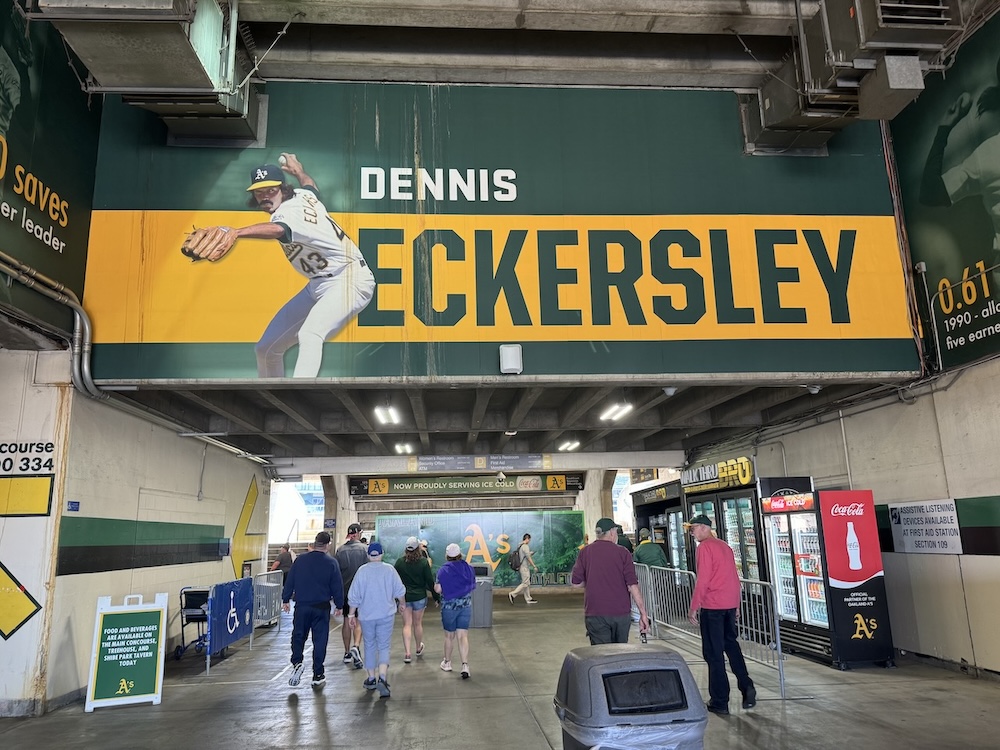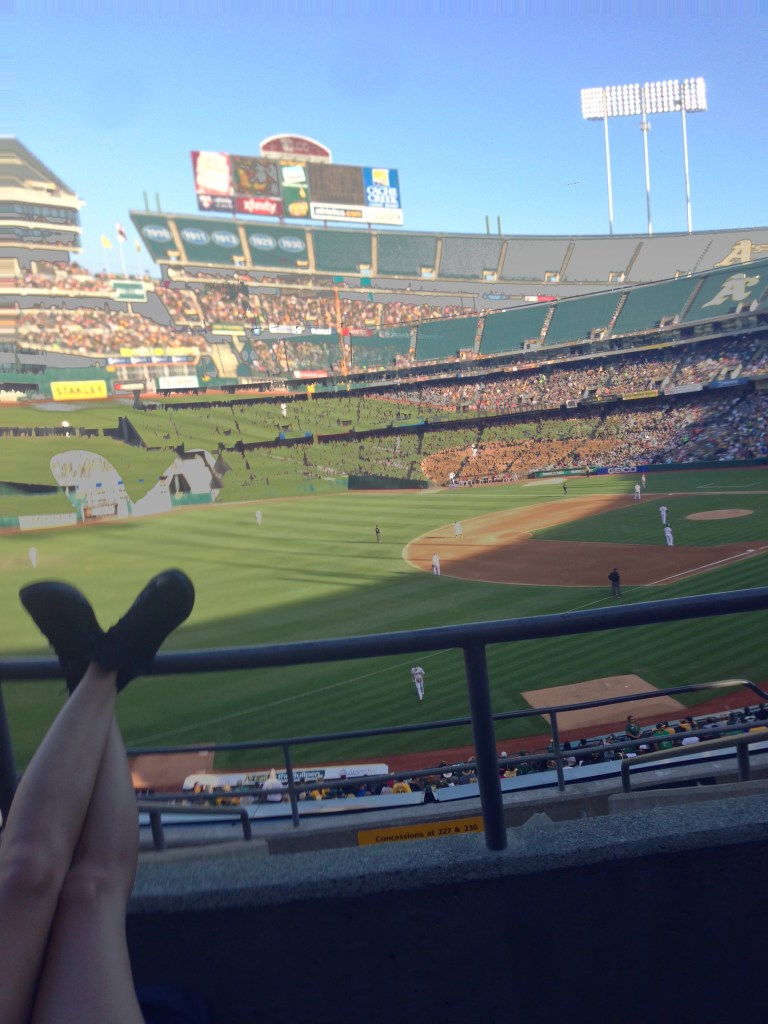
Oakland: From Dust to Dust

Truth be told, I’ve been putting off writing this post for weeks. Something always came up. First I was going to comment on Sutter Health Park reverting to grass instead of a turf field in 2025. Next I was going to talk about the Athletics stripping any city designation from their team name during these three or four interim years. The election removed Sheng Thao as Oakland mayor, followed by at least two interim mayors. The A’s dipped into the free agent market to snag Luis Severino to fill a rotation spot*. Then we were hit by the sudden death of Rickey Henderson (RIP GOAT), which made the social media rounds for a nearly 24 hours before an official acknowledgment, apparently at his family’s behest, and finally the announced departure of A’s team president Dave Kaval, who spent most of the last eight-plus years navigating political corridors, eventually arriving on the Vegas Strip. After the Kaval news struck I realized that everyone would be best served with a year-end recap that could also serve as a coda to the Oakland Athletics era. 

The Oakland A’s were effectively the middle child among the three major pro sports teams that called Oakland home (the Seals and Invaders were too short-lived to count). As the middle child they experienced many highs and lows and were proportionally ignored within and outside the Bay Area. They were the second team to come to the Coliseum complex and stadium. They were overlooked when it came time to upgrade the facilities, screwed as East Bay leaders desperately brought back the Raiders at the A’s expense. The A’s were also the subject of mostly half-hearted and ultimately failed attempts to keep the team within city limits. So the fact that they ended up staying the longest of all three teams is less a testament to A’s ownership’s resolve than a lack of options. If not for the Giants, the A’s would already be in San Jose. Or perhaps Fremont or somewhere else in Alameda County. Or even Oakland if the parties involved were reasonable about the process. What got lost is a simple practical reality of major pro sports: Cities play for 25-30 years, not forever, and they have to renew and rebuild to keep their teams.

Alas, 2024 is not the year of reason in California. Neither was 2023, 2022, or 2021. With Oakland not agreeable to the A’s terms in mid-2021, the A’s looked to Vegas and announced they were on parallel paths. For whatever reason, neither Thao nor her predecessor, Libby Schaaf, looked at parallel paths as a competitive situation, which set Oakland on its own path to oblivion. You could say that Oakland chose to compete by going along with John Fisher’s grandiose plans for two sites, the Coliseum and Howard Terminal. That worked for a short period when everything seemed to be economically healthy in the Bay Area. After the pandemic hit the money well went dry and Oakland was left with an incomplete process and little to show for their efforts.

Contrast that with what happened recently in St. Petersburg. As recently as spring 2023, St. Pete was considered an also-ran, with the Rays running out the clock on their lease at Tropicana Field. After looking across the bay in Tampa for several years, the Rays and St. Pete started working on a ballpark deal at the Trop site in September 2023. Progress came in fits and starts thanks to uncertainty about the site’s prospects and the Rays’ willingness to build there. Yet St. Pete stayed in the game, got their ducks in a row at the City, County and State levels, and got something done despite an actual hurricane that destroyed the Trop’s roof, leaving the Rays homeless. The eventual face of the effort was Pinellas County Commissioner Chris Latvala, who spent eight years as a State House member before terming out and running for the County post. Latvala brought a perspective that is entirely foreign to the A’s efforts in that he’s a Republican who made his name as a fiscal conservative. He’s also a big Rays fan as evidenced by last week’s interview with Locked on Rays. Latvala was against the Rays ballpark and redevelopment plan at first, then came around when he saw that the future of the Rays in Tampa Bay was at stake. In choosing to support the ballpark, he cited Rob Manfred’s support, which may very well prove a terrible mistake. At least now the onus is on the Rays to follow through on their end. Stu Sternberg has to come up with the money, like John Fisher pledged to do in Vegas. Oakland never got to the step of putting the ball in Fisher’s court. They equivocated, hemmed and hawed, and repeatedly sounded out of their depth when trying to deal with baseball. As the last two Oakland mayors have been women you may think that’s a sort of misogynist, old-boy take on things. It’s more about knowing ball and understanding what the ball club, which is a major constituent, needs to be successful. Without a proper grasp of that, any proposal is likely to turn into a big grab bag of initiatives that is fragile enough to fall apart like a house of cards. Latvala and others in St. Pete even pointed to the Vegas deal as an example of something more fleshed out that should be done in St. Pete, a completely alien sentiment for Oakland. Towards the end of the Oakland era, pols and fans were left to pull stunts to try to get Manfred’s attention. They knew what would it would really take.

In hindsight, it was probably best for all involved that Oakland and the A’s didn’t come to a deal. Because given the state of affairs now, how exactly would they come up with their hundreds of millions of dollars for infrastructure or other promises like community benefits? A bunch of the money meant for the Port has already been assigned to other projects and was never fully pledged towards the Howard Terminal project. Oakland’s current fiscal dire straits is going to involve some painful cost-cutting, which would undoubtedly come at the expense of a not-quite-finalized ballpark project – that’s how clawbacks work. And that would cause the A’s to look for a reason to escape Oakland for good, not that they weren’t already looking.

Times like this I’m reminded of one of my favorite bands of the last twenty years, The Civil Wars. A country duo that started out as a Nashville songwriting partnership, The Civil Wars went on to make two incredibly passionate, perfectly written and produced albums before breaking up (and breaking many fans’ hearts along with it). They were good enough to co-write a song with Taylor Swift to be included on the Hunger Games soundtrack. Whatever the reasons for their breakup, the situation seems as likely for a reunion as the A’s coming back to Oakland. In 2012, when the video below was recorded, everything still felt hopeful for Oakland, The Civil Wars, the world. Worlds can fall apart fast though. At the very least some fans got a year to appreciate the A’s before they were gone.
Note the date of the recording: October 1, 2012, the Monday before Game 162 of the A’s 2012 season

What’s next for Oakland? Hopefully the Ballers will keep playing at Raimondi Park for some time to come. The Ballers didn’t get the happy ending they wanted when the other team that was brought in to prop the Ballers up, the Yolo High Wheelers, won the 2024 Pioneer League championship, then folded their tents to move to a hopefully more permanent home in Marysville. That wasn’t in the script! The Roots are finishing their soccer transformation of the Oakland Coliseum, their sights still set on an interim park next door at the Malibu site, a new interest in Howard Terminal now that the A’s won’t be there, or most likely, a protracted stay at the Coliseum when the other two options prove infeasible or too costly. It’s better than having to crash couches like they’ve been doing for a few years. In Neil Young parlance, is Oakland burning out of fading away? We won’t know the answer for some time. Until then, I hope Oakland can get its act together. There’s nowhere to go but up.

* – The Severino contract was obviously done to pull up the A’s payroll to a minimum amount based on their increased revenue sharing receipt. That’s the system right now, and if you’re looking for a floor/cap system to make things more fair, nothing’s going to keep Steve Cohen or the Yankees/Dodgers from running circles around any A’s payroll, whether in Vegas, Oakland, or Timbuktu. Baseball still pays proportionally less to its players than the other sports that have caps and floors, so they are fine through the current CBA’s expiration in 2026. And now they are deferring the crap out of huge money deals to the point that they’re creating Bobby Bonillas left and right. All on Manfred’s watch nonetheless.
Let’s Play Two for the Last Time

Last fall, when the 2024 schedule was released in preliminary form, I immediately circled May 8 on my calendar. As you probably saw on Wednesday, on May 8 the baseball version of an eclipse took place: a natural doubleheader. Not a doubleheader that included a makeup game from a previous rainout, or the dreaded day-night or split doubleheader that requires two separate admissions. No, this was old school single ticket double-dip, the second game coming thirty minutes after the first game ends. For me, it offered a satisfying coda to my time as an Oakland A’s fan. My first A’s game was itself a doubleheader in 1988 in which the A’s dominated the Cleveland Indians. And while the 2024 A’s is not the dominant force the Bash Brothers-era A’s were, they are showing promise after a couple of severe rebuilding seasons.

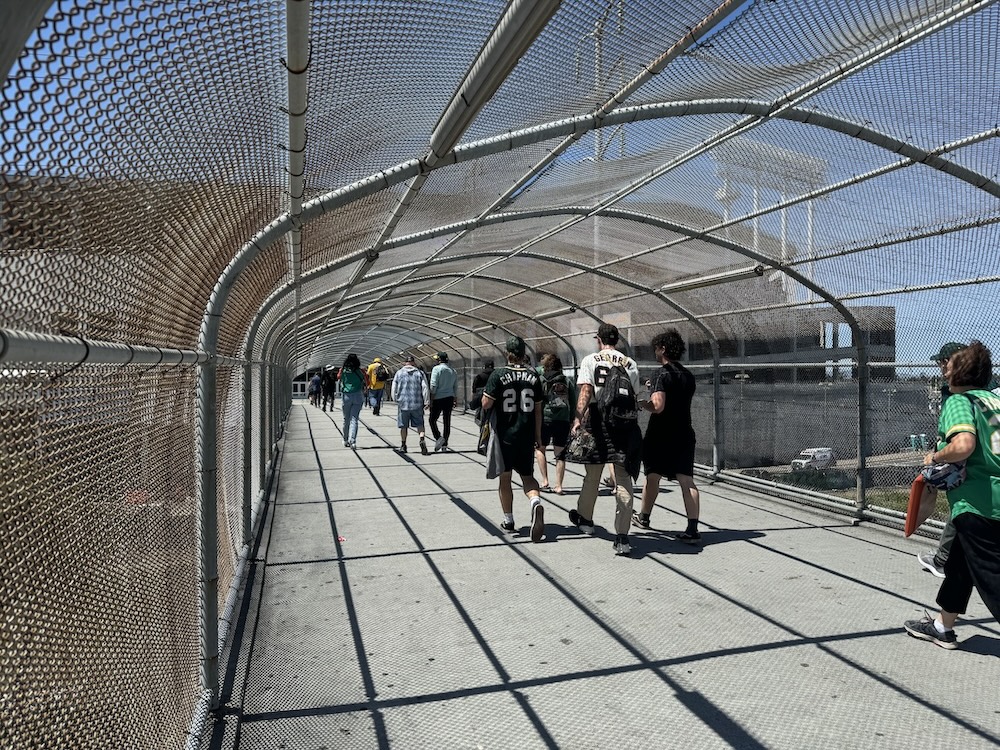
I left my house in Glendale at 6 AM, bound for a 8 AM flight to SJC. I chose to fly into SJC instead of OAK because I wanted to capture the experience of taking my old route from the South Bay. If BART was running all the way to Santa Clara, that would’ve been the choice. Alas, the downtown San Jose extension is still in turmoil, so I went with the Capitol Corridor train out of the Santa Clara station instead. As usual that experience was quite smooth, including a few lovely moments on the platform with an elderly woman who was traveling to Sacramento. I got off at the Coliseum station and took a few pictures of the old haunt from the Amtrak BART ramp. I also noticed an A’s security person stationed at the top of the ramp as it met the BART bridge. That didn’t strike me as particularly notable, but as I found out later, was something to consider as the season progresses.

Warm weather and a double dip are perfectly good excuses to head out to the yard

A half hour before first pitch, there was a good stream of fans headed to the game. I didn’t expect a very large crowd even with the doubleheader, but it was nice to see some turnout. The announced crowd was 8,320. It was clear that there were plenty of no-shows because of the muted reaction to some of the announced groups that supposedly purchased tickets. On the other hand, there was a 2-for-$20 promotion on the field level which brought a number of casual fans, and there was actually a line for walkups at the BART plaza ticket window. 

I figured I had plenty of time to get concessions if I was hungry, so I went straight to my seat in 119, next to the Diamond Level section. I was perched above the A’s batting circle, with a great view directly down the first base line. That afforded me a “great” view of Mount Davis, which got me thinking about how the A’s announced a series of giveaways throughout the season, culminating with a replica model of the Coliseum on the final regular season home date ever in Oakland on September 26. Which version of the Coliseum will be given away? The 1966-1995 version with the ice plant in the outfield, or the 1996-present version with the hulking 10,000-seat eyesore? I decided that I wasn’t going to travel all the way to the Bay Area to get the crappiest version of the thing I loved so much. I wasn’t going to proudly place that thing on a mantel or shelf for posterity. While that game will allow for a sort of wake for the club’s time in Oakland, I’ve personally done enough grieving over the years.

Try as you might to minimize it, Mount Davis is immense and unavoidable

To understand my stridence about this, you’ll have to consider my past as a young man covering his childhood love the A’s and the Raiders in the media when the Raiders first came back in 1995. I was working through college, hired by a freelance Bay Area photographer to provide rudimentary copy along with pictures he sold outside the normal wire services. I read enough of the great columnists and the young upstart reporters in the Bay Area papers to provide a reasonable facsimile, so I eagerly took the gig, a wide-eyed 19 year-old sitting in the back row of every press box, but with an assigned seat and a printed name plaque nonetheless (shout out to the greats Al LoCasale and Debbie Gallas, btw). Those first couple of years were a whirlwind, as the Coliseum was in a constant state of upheaval. Were you aware that there were two seating configurations for Raiders games depending on whether the A’s season was still on? During the baseball season, the football field was configured to run from home plate to center field to limit field damage by the temporary football seats. After October, the field was reconfigured to run from foul pole to foul pole in order for the bank of football seats to be installed in the baseball outfield. That was never the most ideal situation for either team, so I was curious what the renovated Coliseum would look like. A month ago, Travis Danner posted a page from the A’s magazine touting the improvements:

In case you can’t read the bullet points, I listed them below
  1. Two large family and corporate picnic areas
  2. Additional rest rooms and specialty food service stands
  3. New BART walkway and entrance plazas
  4. New ticket box office and retail areas
  5. 20,000 square foot family entertainment center concourse
  6. Center field corporate club with outfield seating 
  7. New outfield seats to replace benches
  8. New computerized matrix scoreboards
  9. Two new high resolution video screens
  10. Improved access to the upper deck
  11. Additional plush Luxury Suites and renovated Suites
  12. Diamond level seats in two areas adjacent to dugouts
  13. New club seating – premier seating in an outdoor setting
  14. 20,000 square foot private air-conditioned baseball club with dining areas and two-story bay windows overlooking the field
  15. Six new elevators to all levels
  16. New and enlarged press box and enlarged media elevator
  17. All new armchair seating throughout the entire stadium
  18. Television monitors under overhangs for instant replays
  19. Improved sound system
  20. Premium catering for the Clubs and Luxury Suites
  21. Enlarged clubhouse for A’s players
  22. Refurbished visitor locker room
  23. New media interview room for players
  24. Indoor batting tunnel and pitcher warm-up mounds
  25. Enlarged weight room
  26. Expanded field storage
  27. Club concourse connecting eastern addition with existing stadiums

In hindsight it’s easy to see how the A’s and A’s fans were so thoroughly screwed by these largely football-centric improvements. More seats, more suites, and more clubs in the wrong places, plus no mention of how the baseball experience would be compromised, it was soon to be disastrous for everyone involved from the pols to the teams to the put-upon fans. Back in 1995, that wasn’t so obvious. The retro ballpark craze had just started with only four such ballparks open by the start of the season (Camden Yards, Progressive Field, Coors Field, and New Comiskey if you want to count that). At that point, the retro craze was still a nascent one. It wasn’t until the millennium approached that the trend became a craze.

Back in 1995, I still believed in the utility of the multi-purpose stadium. SkyDome was conceived as a multi-purpose dome (MLB & CFL) and was huge and glitzy. Mostly I was mostly excited that the Coliseum would get an expanded press box. During that early period the auxiliary football press box was set up in one or both of the open Loge areas beyond the original luxury suites in the outfield. There was still overflow press seating for baseball, such as the repurposing of section 317 for visiting writers during the postseason. For the most part, the bigger press box was an enormous improvement – and it wasn’t yet overrun by critters. I saw the image in the A’s magazine and thought that they were fully enclosing the stadium like some of the cookie-cutters (Busch II, Riverfront, Three Rivers). Unfortunately, fans and press were bamboozled. Even when Opening Day 1996 came we didn’t see the full effect of what would become known as Mount Davis, as they hadn’t fully poured all of the concrete for the upper deck. Remember, the A’s had to spend the first week of the season at Cashman Field in Vegas. The video below captures  the mix of joy and unease that came with seeing the monstrosity looming over everything else. (Among the other notable things from that video: it was Charlie Finley Day with Monte Moore handling the proceedings, and the otherwise infallible Roy Steele mispronouncing Jeff Reboulet’s name). As Mount Davis fully rose, all A’s fans got were some security guards doing the YMCA dance late in the season.

All of my coverage on this blog and elsewhere has been viewed through the lens of someone who witnessed first hand the short and long-term effects of Mount Davis. I’m aware of how ironic it is that I got my shot through covering the Raiders coming back and that someone else recognized something in me. I’m not now and never have been a Raiders fan, though I had no reason to hate them up to that point. Nearly thirty years later, the Raiders are obviously THE catalyst for killing pro sports in Oakland because the East Bay never properly recovered from the experience, even after the Warriors’ dynasty. I’m often viewed as an enemy of the East Bay, at least on social media. In fact, Steven Tavares wrote an article about it. Criticizing Oakland is not the main focus of this site. Instead it became a chronicle of the litany of missteps and strategic errors made in trying to get a ballpark for the A’s built, by both politicians and ownership. Some were in Oakland, others in San Jose or Fremont, more are destined to come in Las Vegas. In the end, I look at all of these moments as simple matters of timing and execution. Oakland got an AFL franchise because the AFL needed a second West Coast location, and Oakland pitched itself as a good landing spot. Similarly, the A’s came to town because Finley saw more opportunity in the Bay Area than he did in Kansas City. The Warriors were nearly doomed to barnstorming by Franklin Mieuli until the gleaming Oakland Coliseum Arena was built. When East Bay power brokers brought back the Raiders and didn’t tell A’s ownership, baseball noticed but they couldn’t do anything about it. The early 2000’s birthed a renewed effort to give the A’s a proper home. The timing was poor there because there was no support by then-mayor Jerry Brown. Subsequent mayors lacked either the gravitas or the drive to see a ballpark project through, or they were somehow convinced that they could accomplish the same thing at the Coliseum 40 years in even though prevailing trends were pushing teams away from each other. At the same time, post-Haas ownership groups were often focused anywhere but Oakland, to the point that Oakland’s only legitimate shot to retain the came only 6-7 years ago.

Think I’m blowing the Mount Davis effect out of proportion? Take a look at the dwindling number of Coliseum-themed collectibles that are available for sale on eBay or MLB Shop. Posters and photos often set their perspectives to minimize the visual effect of Mount Davis as much as possible. It remains an ugly reminder of how failure can last generations. It’s impossible to deny how East Bay stadium proponents were cowed from making big public investments asks as they squandered all of their political capital on both the Raiders (horrible deal) and the Warriors (a good deal that had a rough ending). That made any and all Oakland efforts focused on the A’s a race against time, a test of MLB’s patience. It’s not that the East Bay suddenly got religion about the folly of publicly-funded stadium projects. The problem was that they knew they couldn’t ask. It’s like trying to fight with one arm tied behind your back.

Mason Miller retiring Marcus Semien to end Game 1

After the A’s won the first game (including a surprise Mason Miller six-out, non-save exhibition of dominance), I made my rounds throughout as much of the Coliseum as I could. I traveled both the field and plaza concourses, went up to the View level, visited the Hall of Fame area, the bleachers, everything except the closed upper decks of Mount Davis. And that’s just fine. I used one of the trough urinals. I used a regular urinal behind left field, though I noticed that entire wall of urinals there hadn’t been flushed. Everything seemed darker and dingier than I remember in previous visits. On the bright side, I noticed that outside one of the concession stands there was a dispenser of various sealed cups of dips and sauces. I immediately thought that was a brilliant bit of convenience. Then I realized that if more fans were here those dispensers would be cleaned out by the second inning. It’s just human nature to take free stuff because it’s there. I have no idea what the vibe will be on September 26, the final game at the Coli. I can imagine that a lot of stuff that isn’t properly bolted down will quickly become souvenirs. That’s more than fair in a sense. Taxpayers paid for this, they might as well get something back. After all, the Coliseum’s not going to need all of those seats for an occasional Ballers or Roots/Soul game. The Coliseum is destined to go the way of RFK Stadium, which was finally cleared for demolition only last week. Then again, DC might bring the Commanders back from the wilderness in Landover/Raljon. Is a major team coming to Oakland anytime soon? Maybe, but first Oakland will have to spend some time in the wilderness. Brooklyn eventually got one, so it’s possible.

P.S. – On the way back to the BART station I noticed a pile of trash strewn on the BART bridge. In 36 years of going to the Coliseum I’ve never seen that. That brings me back to the A’s security guy I saw at the Amtrak ramp. It used to be there were either A’s staff at the BART station entrance, sometimes with a golf cart to take mobility-impaired fans in either direction. I saw golf carts circling the Coliseum itself as one of the drivers nicely offered me a ride, but none on the bridge. The Coliseum is not the epicenter of the Bay Area’s apparent doom spiral. The way things are going, it can’t help but get caught up in the cycle.

P.P.S.The origin of “Let’s Play Two.”

Some other pictures:

D Gate
Honestly, how often are you going to a trough urinal in the wild?
Bangeliers having a record day
You can’t steal all of the free sauce when there isn’t anyone around to take it
Mount Davis, minimized in a poster