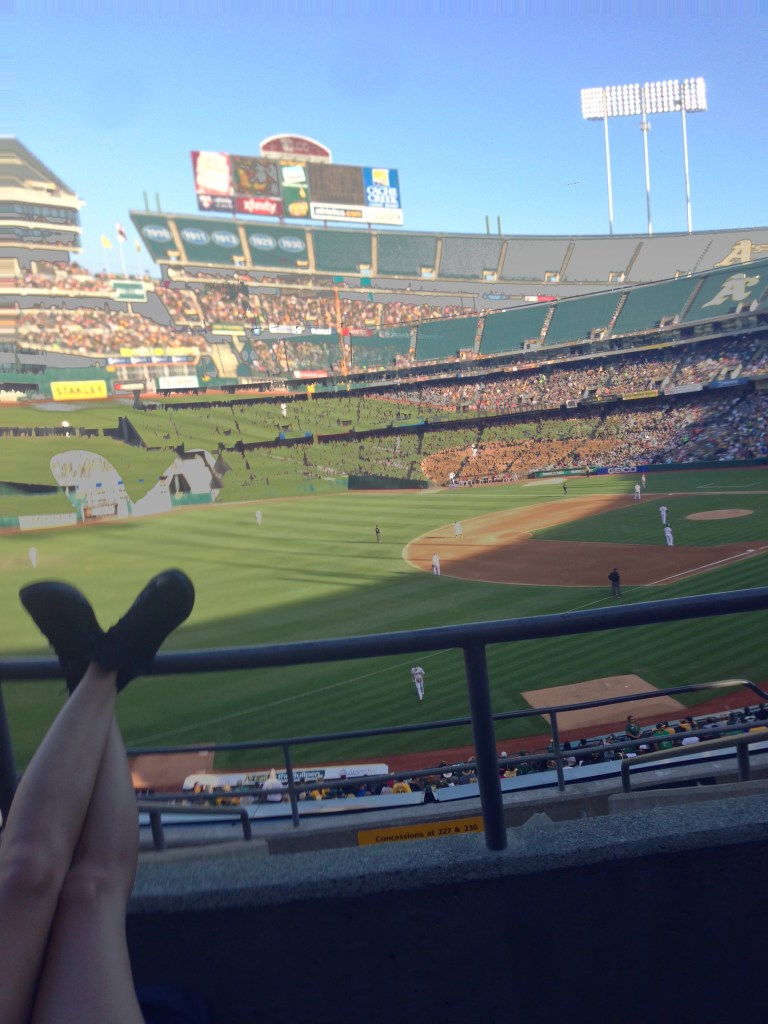
Truth be told, I’ve been putting off writing this post for weeks. Something always came up. First I was going to comment on Sutter Health Park reverting to grass instead of a turf field in 2025. Next I was going to talk about the Athletics stripping any city designation from their team name during these three or four interim years. The election removed Sheng Thao as Oakland mayor, followed by at least two interim mayors. The A’s dipped into the free agent market to snag Luis Severino to fill a rotation spot*. Then we were hit by the sudden death of Rickey Henderson (RIP GOAT), which made the social media rounds for a nearly 24 hours before an official acknowledgment, apparently at his family’s behest, and finally the announced departure of A’s team president Dave Kaval, who spent most of the last eight-plus years navigating political corridors, eventually arriving on the Vegas Strip. After the Kaval news struck I realized that everyone would be best served with a year-end recap that could also serve as a coda to the Oakland Athletics era.
The Oakland A’s were effectively the middle child among the three major pro sports teams that called Oakland home (the Seals and Invaders were too short-lived to count). As the middle child they experienced many highs and lows and were proportionally ignored within and outside the Bay Area. They were the second team to come to the Coliseum complex and stadium. They were overlooked when it came time to upgrade the facilities, screwed as East Bay leaders desperately brought back the Raiders at the A’s expense. The A’s were also the subject of mostly half-hearted and ultimately failed attempts to keep the team within city limits. So the fact that they ended up staying the longest of all three teams is less a testament to A’s ownership’s resolve than a lack of options. If not for the Giants, the A’s would already be in San Jose. Or perhaps Fremont or somewhere else in Alameda County. Or even Oakland if the parties involved were reasonable about the process. What got lost is a simple practical reality of major pro sports: Cities play for 25-30 years, not forever, and they have to renew and rebuild to keep their teams.
Alas, 2024 is not the year of reason in California. Neither was 2023, 2022, or 2021. With Oakland not agreeable to the A’s terms in mid-2021, the A’s looked to Vegas and announced they were on parallel paths. For whatever reason, neither Thao nor her predecessor, Libby Schaaf, looked at parallel paths as a competitive situation, which set Oakland on its own path to oblivion. You could say that Oakland chose to compete by going along with John Fisher’s grandiose plans for two sites, the Coliseum and Howard Terminal. That worked for a short period when everything seemed to be economically healthy in the Bay Area. After the pandemic hit the money well went dry and Oakland was left with an incomplete process and little to show for their efforts.
Contrast that with what happened recently in St. Petersburg. As recently as spring 2023, St. Pete was considered an also-ran, with the Rays running out the clock on their lease at Tropicana Field. After looking across the bay in Tampa for several years, the Rays and St. Pete started working on a ballpark deal at the Trop site in September 2023. Progress came in fits and starts thanks to uncertainty about the site’s prospects and the Rays’ willingness to build there. Yet St. Pete stayed in the game, got their ducks in a row at the City, County and State levels, and got something done despite an actual hurricane that destroyed the Trop’s roof, leaving the Rays homeless. The eventual face of the effort was Pinellas County Commissioner Chris Latvala, who spent eight years as a State House member before terming out and running for the County post. Latvala brought a perspective that is entirely foreign to the A’s efforts in that he’s a Republican who made his name as a fiscal conservative. He’s also a big Rays fan as evidenced by last week’s interview with Locked on Rays. Latvala was against the Rays ballpark and redevelopment plan at first, then came around when he saw that the future of the Rays in Tampa Bay was at stake. In choosing to support the ballpark, he cited Rob Manfred’s support, which may very well prove a terrible mistake. At least now the onus is on the Rays to follow through on their end. Stu Sternberg has to come up with the money, like John Fisher pledged to do in Vegas. Oakland never got to the step of putting the ball in Fisher’s court. They equivocated, hemmed and hawed, and repeatedly sounded out of their depth when trying to deal with baseball. As the last two Oakland mayors have been women you may think that’s a sort of misogynist, old-boy take on things. It’s more about knowing ball and understanding what the ball club, which is a major constituent, needs to be successful. Without a proper grasp of that, any proposal is likely to turn into a big grab bag of initiatives that is fragile enough to fall apart like a house of cards. Latvala and others in St. Pete even pointed to the Vegas deal as an example of something more fleshed out that should be done in St. Pete, a completely alien sentiment for Oakland. Towards the end of the Oakland era, pols and fans were left to pull stunts to try to get Manfred’s attention. They knew what would it would really take.
In hindsight, it was probably best for all involved that Oakland and the A’s didn’t come to a deal. Because given the state of affairs now, how exactly would they come up with their hundreds of millions of dollars for infrastructure or other promises like community benefits? A bunch of the money meant for the Port has already been assigned to other projects and was never fully pledged towards the Howard Terminal project. Oakland’s current fiscal dire straits is going to involve some painful cost-cutting, which would undoubtedly come at the expense of a not-quite-finalized ballpark project – that’s how clawbacks work. And that would cause the A’s to look for a reason to escape Oakland for good, not that they weren’t already looking.
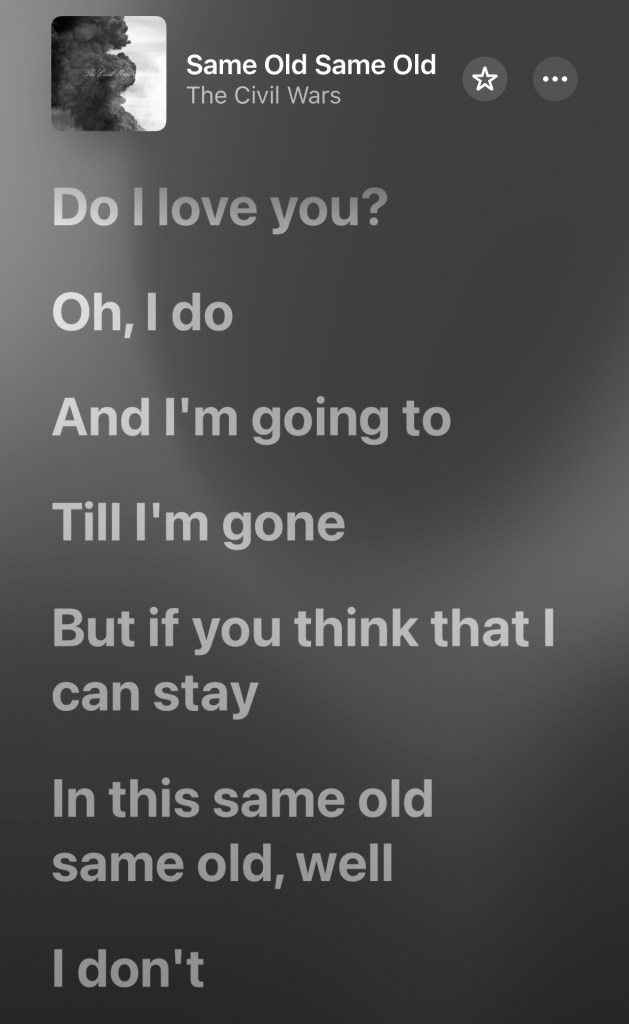
Times like this I’m reminded of one of my favorite bands of the last twenty years, The Civil Wars. A country duo that started out as a Nashville songwriting partnership, The Civil Wars went on to make two incredibly passionate, perfectly written and produced albums before breaking up (and breaking many fans’ hearts along with it). They were good enough to co-write a song with Taylor Swift to be included on the Hunger Games soundtrack. Whatever the reasons for their breakup, the situation seems as likely for a reunion as the A’s coming back to Oakland. In 2012, when the video below was recorded, everything still felt hopeful for Oakland, The Civil Wars, the world. Worlds can fall apart fast though. At the very least some fans got a year to appreciate the A’s before they were gone.
What’s next for Oakland? Hopefully the Ballers will keep playing at Raimondi Park for some time to come. The Ballers didn’t get the happy ending they wanted when the other team that was brought in to prop the Ballers up, the Yolo High Wheelers, won the 2024 Pioneer League championship, then folded their tents to move to a hopefully more permanent home in Marysville. That wasn’t in the script! The Roots are finishing their soccer transformation of the Oakland Coliseum, their sights still set on an interim park next door at the Malibu site, a new interest in Howard Terminal now that the A’s won’t be there, or most likely, a protracted stay at the Coliseum when the other two options prove infeasible or too costly. It’s better than having to crash couches like they’ve been doing for a few years. In Neil Young parlance, is Oakland burning out of fading away? We won’t know the answer for some time. Until then, I hope Oakland can get its act together. There’s nowhere to go but up.
—
* – The Severino contract was obviously done to pull up the A’s payroll to a minimum amount based on their increased revenue sharing receipt. That’s the system right now, and if you’re looking for a floor/cap system to make things more fair, nothing’s going to keep Steve Cohen or the Yankees/Dodgers from running circles around any A’s payroll, whether in Vegas, Oakland, or Timbuktu. Baseball still pays proportionally less to its players than the other sports that have caps and floors, so they are fine through the current CBA’s expiration in 2026. And now they are deferring the crap out of huge money deals to the point that they’re creating Bobby Bonillas left and right. All on Manfred’s watch nonetheless.
 newballpark.org
It’s a good analysis, but I don’t think the “women mayors” part is fair. Dianne Feinstein had her planning director Dean Macris work to find a site (genius on Macris’ part to see that SP’s old rail yards could be converted) and worked hard on it before Willie Brown finally brought it over the finish line.
I wouldn’t give Feinstein or her staff too much credit. They couldn’t predict the future. All they could do was balance out the city’s portfolio of land and (re)zone in anticipation of trends, natural disasters, etc., and let the chips fall where they may.
Great writeup! Any chance in hell that we see a cap or even a soft cap like system that we have in the NBA where you can go over the cap to resign homegrown players that came up through your minor league system?
I remember 1994 very well. The union said that under no scenario would we see any type of salary cap but that was a long time ago. Donald Fehr is gone and the demographics of baseball have changed. Or is it still DOA?
I think the players as a group are more focused on getting the first Billion-dollar contract for its superstars. There’s a lot of uncertainty about the future of media revenue for MLB that will probably tamp down any huge reform efforts going into the next CBA talks. Baseball’s current system is effectively a soft cap in practice.