MLB and MLBPA burned the midnight oil the last couple of days to get a CBA approved before tonight’s midnight deadline. Though the talk did not include the same kinds of contentious items other leagues normally argue over (salary cap, players’ percentage of revenue), the sides still worked hard to avoid any kind of work stoppage. As of this post, both sides are touting a tentative agreement with much of the fine print to be worked out over the coming weeks. Like the last CBA, the new one will run for five years through the 2021 season. Major items that were up for grabs, such as the international draft and 26-man rosters were left by the wayside in order to get the deal done. What did apparently get through was a tweaking – if not an overhaul – of baseball’s revenue sharing system.
That news got started by Jeff Passan:
And was built upon by Ken Rosenthal:
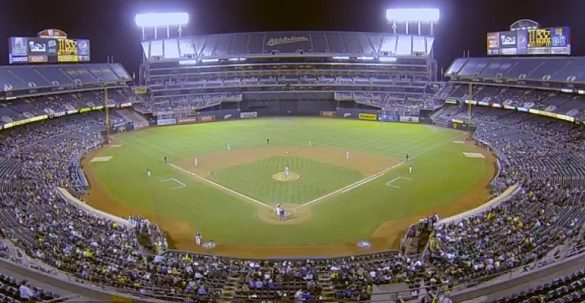
Okay, let’s start with the Rosenthal scoop. As a way to “motivate” the A’s to build a new ballpark, they will be phased out of revenue sharing. This was the plan under the last agreement too, except that the A’s were given an exemption as long as they continued to play at the Coliseum. Since that didn’t net a change in the A’s venue, the owners (with the union’s help?) may have decided to light a fire under A’s ownership to build that. Nevermind that the A’s would already be in a new home in San Jose if MLB actually supported the A’s plans in 2012, that’s water under the bridge. Now John Fisher has the reins of the efforts to build in Oakland. And by phasing out the A’s revenue sharing check over the life of the CBA, the A’s won’t realize up to $90 million over the five years. That’s just as well for many A’s fans and rival owners who believe ownership has been pocketing those checks for years. The A’s weren’t spending it on payroll anyway.
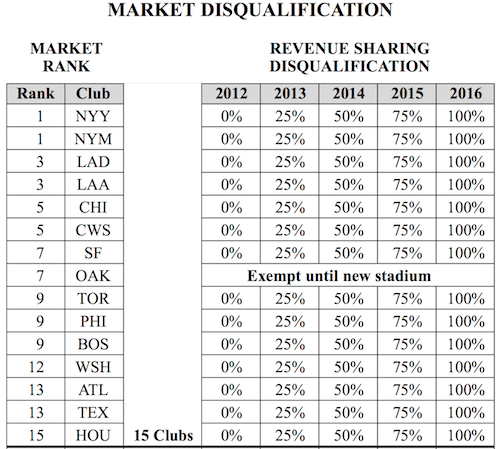
As you can see from the table above, the previous CBA called for revenue sharing to be phased out for all of the Top 15 “Big Market” teams. The A’s are in a big market, but they are a relatively low-revenue franchise thanks to the dilapidated Coliseum. MLB carried over the last agreement while it also more-or-less imposed a deadline to complete the ballpark of 2021 or 2022. There’s always another side to the story, which makes me wonder what MLB will offer to the A’s to make the stadium project worth Fisher’s while. After all, if Fisher’s going to take all the risk while not getting monetary help from either MLB or the City of Oakland, what’s in it for him? The A’s aren’t guaranteed to get a
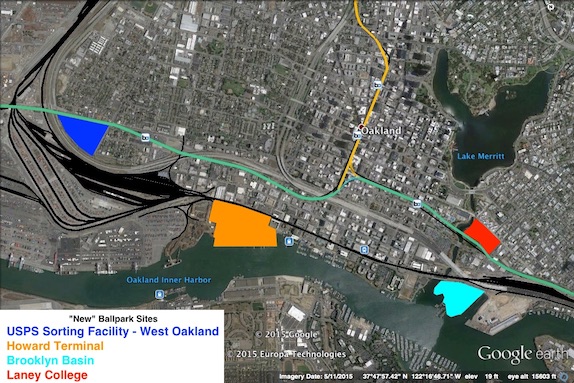
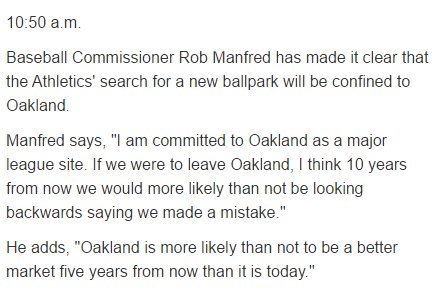
Rob Manfred called for the A’s to be more proactive in the stadium pursuit. The recent ownership change and other moves indicate that the A’s are serious. Still, the Raiders are the biggest obstacle to getting the Coliseum site as well as a competitor for scarce infrastructural funding should both teams get Oakland projects going. MLB’s pitch to Fisher may be “Once the Raiders and Warriors leave you’ll have the East Bay all to yourself. We’ll throw our weight behind your plans when that happens.” Will MLB provide funding to the A’s to get through lean years? Will Manfred finally play the heavy when it comes time to negotiate with the City?
Now about that performance factor. Performance factor is a key feature of the revenue sharing scheme. There are two parts of the scheme, the 34% straight pool Base Plan and the (14%) Supplemental Plan. The Base Pool plan is simple: every team contributes 34% of their local revenue after deductions regardless of how little/much that is. All teams above the average (mean) amount lose the difference between the mean and their contribution. Those below the fold receive the difference between their respective contributions and the mean.The Supplemental Plan takes the aggregate of 14% of local revenue for all teams, pulls from the Top 15 teams based on each team’s Performance Factor and sends that to the Bottom 15 based on their PF’s. It’s unclear whether MLB got rid of the Supplemental Pool altogether or calibrated revenue sharing by folding the Supplemental Plan into the Base Plan. That would make the whole plan a 48% straight pool Base Plan, one that would penalize rich teams for being rich less than before. Elements of the new plan may be released in the coming days. Eventually we’ll know what it is and what the A’s have to deal with.
A’s brass were hoping revenue sharing would stay intact, but the writing’s on the wall. The business model should stay intact, in that they plan their payroll limits and roster makeup based on regularly-sourced revenue (stadium, TV/radio, streaming) not including the revenue sharing receipt, which is received in December after the usual rash of free agent signings. I always figured that if the A’s needed that last piece for a championship roster, they’d dig into that receipt. Now Fisher will have to make a cash call to himself. The dynamic of trying to field a more competitive team to hopefully help sell a new ballpark vs. the need to save pennies for the ballpark by reducing costs is plenty fascinating on its own. Which way Fisher will turn will show us what his priorities are.






 newballpark.org