Last year the Raiders’ stadium funding gap was $400 million.
Today? Still $400 million.
And that may be the undoing of Coliseum City, just as was predicted many times since the start of the process.
BANG’s Matthew Artz got ahold of a letter written by Marc Badain to Floyd Kephart in April. Despite Kephart’s spin, the letter is incredibly damaging. The crux of it is this:
What is not clear is what the Developer, City, and County are willing to contribute. The Raiders’ $500,000,000 contribution leaves a funding gap of at least $400,000,000 required to build a new stadium. Simply put, the “terms required for the Raiders to commit to remaining in Oakland” are a plan that fills that funding gap without stripping revenues from the stadium and preserves the current level of surface parking. We have seen no progress toward understanding what the Developer, City, or County is willing to contribute and have received no proposals. As a result, there are no “terms” for the Raiders to evaluate nor are there “terms” for the Developer to communicate to the City and County.
You may come away from that thinking that the Raiders demands – all revenue, protected parking, capped contribution – are ridiculous, and in a sense you’d be right. The problem is that it is now abundantly clear that Badain and Mark Davis are comparing proposals, and whatever Oakland is putting forth is being compared to what is being offered in Carson. And Oakland so far is offering… nothing specific. Land? Not really anymore. Infrastructure? Depends on how much. Due to circumstance, Oakland has regressed in terms of what it can offer, a point that Eric Grubman famously made in the spring.
Ridiculous or not, Badain has a point that the G-4 loan money is tied to various team and stadium revenue streams. Fans tend to gloss over the reality. G-4 is a loan program, not a grant. With ties to luxury seating and TV money set in stone, any team receiving G-4 funds is naturally going to fight any attempt to repurpose any other stadium revenue for paying for the stadium, especially if the Raiders have their own projections. Thankfully for the Raiders, exploding league revenue has expanded G-4 to the point that a nearly $2 billion mega-stadium is more than merely plausible.

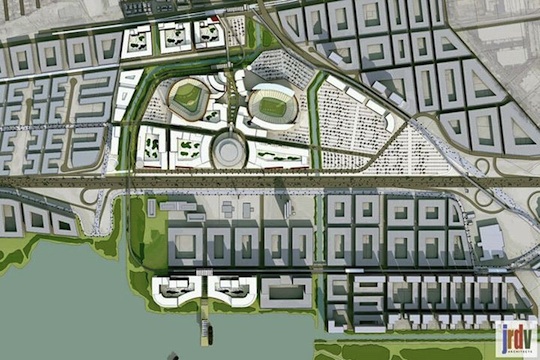
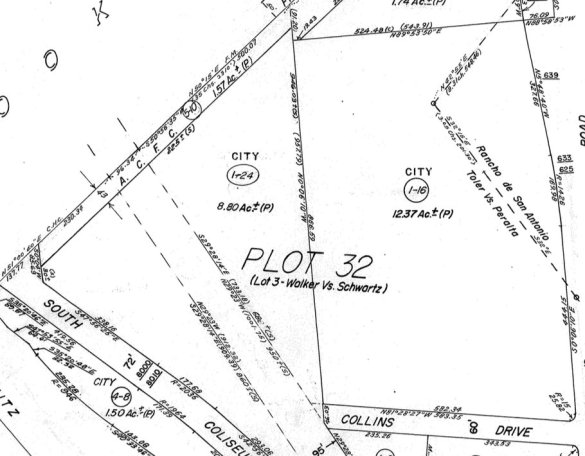
Chances are whatever gets built at the Coliseum won’t look like this
Throughout the rest of the letter, Badain offered plenty of examples of how the Raiders have cooperated with the process. They met with developers. They laid out their demands wish list. They met with Kephart, and they continue to meet with Oakland on another track. They haven’t taken the lead on any specific stadium proposal. Then again they haven’t done that with Carson or San Antonio, and they surely won’t be leading the pack on Inglewood. Davis appears to be content to play second fiddle, as long as he gets a good deal for his team. That shouldn’t be too difficult since Davis isn’t going for quite as ostentatious a new home as what Stan Kroenke or Dean Spanos are trying to build. Yet since Davis isn’t driving the bus, he doesn’t get to say much about how nice it should be. FUD is emerging about Davis not being able to afford Carson just as he couldn’t afford to do more in Oakland, but remember, selling a piece of the team is his ace-in-the-hole. In the letter Badain admits that equity in the team is available, but only as a way to bridge the funding gap. Whatever the size of that limited stake, whether 10% or 20%, it’s worth perhaps twice as much in LA as it is in Oakland.
The parking situation also seems to be a nonstarter. It was during the spring that both Davis and Lew Wolff indicated that they wanted to preserve surface parking, even if that means severely curtailing development. Even the final proposal from Kephart does little to address the teams’ parking demands, filling half the space with garages and commercial buildout.
By the end of this project, some $5 million will have been spent on Coliseum City, only to find out that the Raiders’ and A’s stadium goals run counter to the broader planning objectives of Oakland pols. A stadium surrounded by parking is not the kind of high-density, constant-use plan envisioned for the Coliseum. Of course, so far we’ve barely scratched the surface of the other side of the debate: fear of gentrification. With so many bargaining chips taken away over the course of the last several months, how much is left to offer? More importantly, is that enough to get a football stadium deal done? My guess it’s not even close to enough. A ballpark is less expensive and gets used more. It’s getting close to the time when Oakland will need to shift the conversation. They’ve done a good job stalling so far. We can only hope that what remains isn’t scorched earth.






 newballpark.org