Mayor Quan shows up late to Raiders/NFL presentation

According to Matier & Ross, Mark Davis and the NFL held a meeting last week with East Bay pols to talk new stadium. Apparently things got off on the wrong foot when Oakland Mayor Jean Quan showed up late.

People at the meeting – none of whom would speak on the record, because the session was supposed to be private – say their efforts to convince the NFL that there’s still hope in the East Bay weren’t boosted by the tardy entrance of Oakland Mayor Jean Quan.

‘She arrived 20 minutes late,’ said our attendee. ‘he apologized, saying she was held up by a phone call.’

M & R also pointed out the elephant in the room, the lack of funds on either side, and the political reality surrounding the potential for public funds.

And while no one said it at the meeting, everyone knows the chances of voters helping out with a new stadium deal – while they are still paying off $20 million a year for the 1990s renovation of the old one – are slim to none.

Ah, maybe the pols can keep repeating the “no vote needed” mantra. Because that’s helpful.

I don’t know if Mark Davis and Lew Wolff have ever talked about their respective stadium issues. They both live in LA, so they could have lunch without Bay Area gadflies noticing if they wanted to. Even if they haven’t, Davis is doing Wolff a favor by forcing the issue with Oakland and Alameda County. By getting the public side to start moving, we’re finally seeing their level of commitment to the Raiders, and downstream to the A’s. As far as Mayor Quan goes, it’s at best token effort, which is what we’ve come to expect.

Roger Noll declaration

Economist and Stanford Professor Emeritus Roger Noll made a declaration in support of the City of San Jose’s antitrust lawsuit against Major League Baseball. He also provided a (presumably paid for) analysis of the issues at stake. The following is Professor Noll’s complete statement. A PDF version is available here.

DECLARATION OF EXPERT WITNESS ROGER G. NOLL

1. My name is Roger G. Noll. I reside in Palo Alto, California. I am Professor Emeritus of Economics at Stanford University and a Senior Fellow at the Stanford Institute for Economic Policy Research, where I am Co-Director of the Program on Regulatory Policy. My educational background includes a B.S. in mathematics from the California Institute of Technology and a Ph.D. in economics from Harvard University. My complete curriculum vita is attached as Appendix A.

2. My primary area of scholarship is the field of industrial organization economics, which includes antitrust economics and the economics of specific industries. I have taught antitrust economics at both the undergraduate and graduate levels. I am the author, co-author, or editor of thirteen books, and the author or co-author of over 300 articles. Many of these publications deal with antitrust economics. I also have published extensively on the economics of sports, including Sports, Jobs and Taxes, co-edited with Andrew Zimbalist, which deals with the economic impact of sports teams and facilities and for which Professor Zimbalist and I wrote a chapter on the implications of the economic impact of teams and facilities for antitrust policy.

3. I have served as a consultant in antitrust litigation, including matters pertaining to sports. I have served as an economic expert for the players’ association in all major U.S. team sports (baseball, basketball, football, hockey, and soccer) on the economic effects of restrictions on competition in markets for the playing services of professional athletes, including testimony at trial in Freeman McNeil, et al., vs. National Football League (U.S. District Court, Minnesota) and John Mackey vs. National Football League (U.S. district Court, Minnesota). In Bernard Parrish, et al., vs. National Football League Players Association (U. S. District Court, Northern District of California) I testified on behalf of the players’ association about the value of licensing rights for retired NFL players.

4. Other cases in which I have testified at trial in recent years are the following:

• In re Application of MobiTV Related to U.S. vs. ASCAP (U.S. District Court, New York City);

• Reggie White, et al., v. NFL: Lockout Insurance & Lockout Loans (U.S. District Court, Minneapolis);

• SmithKlein Beecham d/b/a GlaxoSmithKline vs. Abbott Laboratories (U.S. District Court, Northern District of California, Oakland);

• Novell vs. Microsoft (U. S. District Court, Salt Lake City);

• DVD CCA vs. Kaleidescape (Superior Court, San Jose); and

• In the Matter of Adjustment of Rates and Terms for Pre-existing Subscription and Satellite Digital Audio Radio Service (Copyright Royalty Board, Washington, D.C.).

5. In addition to the cases in which I have testified at trial, I have submitted expert reports and/or been deposed in numerous matters. I have also testified before the U.S. Congress on antitrust and sports matters on numerous occasions.

ASSIGNMENT

6. Attorneys for Plaintiffs have asked me to analyze Plaintiffs’ allegations in this matter to determine the economic evidence and analysis that would be used to prove liability in support of their claims. In undertaking this task I have read the Complaint, which was filed on June 18, 2013. I also have read Defendants’ Motion to Dismiss, filed on August 7, 2013. Finally, I have made use of information that has been collected from other public sources and my four decades of research on the economics of sports.

7. The purpose of this Declaration is to provide a preliminary analysis of the economic issues in this litigation before discovery has taken place. Hence, I reserve the right to revise my analysis and amend my conclusions on the basis of new information that has not yet become available. In particular, I understand that this Declaration is being submitted in connection with settling of the pleadings and that I am not being asked to opine on the merits of the claims. I would like to have the benefits of the complete discovery record before reaching my conclusions on the merits.

ANALYSIS

8. The objective of an antitrust economics analysis of liability is to determine whether conduct by Defendants caused harm to the competitive process. Ultimately, harm to the competitive process means harm to consumers, in this case sports fans. My main conclusion is that preventing the Oakland Athletics baseball team from moving to San Jose causes harm to competition because relocating to San Jose would substantially increase the potential fan base and attendance of the team.

9. Major League Baseball (“MLB”) is made up of thirty teams. These teams are economic competitors in many markets, including markets for players, coaches, regional television rights, and product licenses. If teams are geographically close, they also compete for attendance among sports fans in a local area. Presently MLB has local teams that compete for attendance in Baltimore-Washington, Chicago, Los Angeles, New York and the Bay Area.

10. Economics research and prior litigation have concluded that each major professional sports league in the U.S., including MLB, possesses market power in the provision of major league games in its sport in North America. Among the ways that MLB exercises its market power is by controlling the number and geographic location of major league baseball teams in North America. MLB has adopted rules that define the “home territory” of each team in the league and that place restrictions on franchise relocation. For now irrelevant historical reasons MLB has placed San Jose in the home territory of the San Francisco Giants, even though a team in San Jose would be less of a direct competitor to the Giants than is a team in Oakland because San Jose is much further than Oakland from the Giants’ home stadium.

11. One domain of competition in MLB as well as other professional sports is competition among cities to attract or to retain a team. Economics research shows that the financial success of a baseball team depends on the economic and demographic characteristics of its home territory, the quality of its home stadium, and the financial terms and other arrangements concerning the stadium. Cities actively compete for baseball teams on the basis of agreements that they offer to a team concerning a home stadium. The alleged anti-competitive conduct in this case is Defendants’ inhibition of competition and restraint of trade through the application of restrictions on team relocation which are preventing the City of San José from competing with the City of Oakland for the Athletics Baseball Club (Athletics).

12. Economists who have studied the location of teams in a league have concluded that in some circumstances a league has a reasonable business justification for restricting relocation. In particular, because the success of a league depends on the financial success of each team, leagues have a valid interest in assuring that each team will enjoy sufficient popularity in its home territory to be financially viable. This pro-competitive justification does not apply to MLB’s refusal to allow the Athletics to move to the City of San José.

13. San Jose is much more attractive than Oakland as a home location for a baseball team for several reasons. First, San Jose has a much larger population base, and so substantially greater potential home attendance for a local team. Second, San Jose is located in the Silicon Valley, which is the corporate home to many of the world’s leading high technology companies. This feature of San Jose is important because an increasingly important component of the revenue of a major league sports team is the sale of luxury boxes and other reserve seating to corporations, law firms, and wealthy individuals. Third, San Jose has identified and made available to the Athletics a location for a new stadium that will be a substantial improvement over the facility and location where the Athletics currently play. For these reasons San Jose is a much more attractive home territory for the Athletics than Oakland. Moreover, relocation to San Jose is financially attractive to the Athletics precisely because it increases total economic output, which in sports is the number of fans in attendance.

14. Competition in the local market for major league baseball would be enhanced if the Athletics relocate to San José. By increasing the potential revenue of the Athletics, relocation to San Jose would increase the financial incentive of the Athletics to field a team of higher quality. Making the Athletics more competitive would intensify competition between the Athletics and the San Francisco Giants, the other Bay Area major league baseball team.

15. MLB has not yet set forth its complete business justifications for preventing the movement of the Athletics to San Jose, so a full analysis of this issue is not feasible at this time. In antitrust economics, a restriction on competition can be justified only if it is reasonably necessary to achieve a pro-competitive objective, which is defined as an improvement in performance that benefits consumers. Given that San Jose is substantially more economically attractive than Oakland as a home location for the Athletics, the only plausible reason for preventing relocation of the Athletics to San Jose is to protect the Giants from more intense competition from the Athletics.

16. Protecting an incumbent firm from losing business to a more efficient competitor is never a reasonable business justification for a restriction on competition. In this instance, such protection is especially unwarranted. Since moving to their new stadium in downtown San Francisco, the Giants are among the most successful teams in MLB. Indeed, the success of the Giants since relocating to a new and much superior stadium illustrates why the quality and location of a stadium is extremely important to the success of a team. While the Giants will experience more intense competition from the Athletics if the latter move into a much better stadium in San Jose, historical experience with stadium improvements demonstrates that increased attendance at home games of the Athletics will not come at the expense of the Giants, just as the Giants’ improved attendance since relocating to downtown San Francisco has not come primarily at the expense of the Athletics.

I declare that the foregoing is true to the best of my knowledge and belief. Executed on September 6, 2013 at Stanford, California.

ROGER G. NOLL

Coliseum/Airport BART Station to be renamed

The Merc’s Mike Rosenberg reported today that BART station we all know and love (and some outsiders fear) servicing the Oakland Coliseum will be renamed.

Why? It has to do with the Oakland Airport Connector, the 3.2-mile, $484 million people mover which is scheduled to open in fall 2014. You’ve probably seen construction of the OAC’s metal guideway along Hegenberger, or the terminal just across the street from the BART platform.

Route from Oakland International Airport to the Coliseum

In order to avoid confusion among air travelers, the BART station will simply be named “Coliseum” while the OAC station at the Airport end will be named “Airport“. BART Train operators have long had the practice of announcing the transfer method to the airport when approaching the stop. Expect that practice to continue with a longer explanation (no, the airport didn’t disappear!).

On the other hand, the OAC will not have train operators at all. It uses automated people mover technology, similar to SFO’s AirTrain or driverless shuttles at other airports (Denver, Atlanta, Tampa, New York JFK). The technology comes from Austrian firm Dopplmayr. In Australia I rode the Katoomba Scenic Railway, a cable car funicular that’s one of the steepest in the world. It’s also a Dopplmayr installation.

Like the recently opened Airtrain JFK, the OAC (a brand has not been announced yet) will require a fee, just like its AirBART bus predecessor. BART estimates that the fare could be up to $6 each way, twice as much as the old bus. By comparison, AirTrain JFK costs $5 and runs a longer route, 8 miles to the Jamaica transit hub in Queens.

OAC-1-Airport

Airport Terminal Station of the Oakland Airport Connector

OAC was highly controversial at its inception because of its high cost and limited usage, but the argument that it was better to have a more efficient route not tied to surface traffic won out. Hopefully the fares will be able to cover operating costs.

Besides the Coliseum and Airport terminals, a third station is under construction at Doolittle. A fourth station at Hegenberger and Coliseum Way was considered at one point, but was slashed due to cost. Given the high fare that’s probably a smart move, though it’s also something of a lost opportunity should Coliseum City come to fruition.

Raiders want to build at current Coliseum site, whither the A’s?

Absent a short or long-term lease at the Oakland-Alameda County Coliseum, the Raiders made an unusual request of the Coliseum Authority (JPA): they want to build a new stadium on the site of the current Coliseum.

That’s a departure from the commonly held belief that the Raiders wanted a stadium next to the current one, in the Coliseum’s B Lot. Should the JPA take up the Raiders’ request, both the Raiders and A’s would be unable to play in the Coliseum as the old one was torn down and a new one built. Of course, this isn’t necessarily a problem for the Raiders, since they could become roommates with the 49ers in Santa Clara for a few years while all of the upheaval occurred. As for the A’s, they’d be out of a place to play.

Of all the different ways we all considered how this dance could play out, the Raiders wanting the Coliseum to themselves in this way did not climb to the top of the list. If you think about it for a minute, it makes sense. What the Raiders want is what many teams want at their stadium sites – full control of the complex. All parking revenues, all signage, all ancillary event money, all of it. And I don’t blame them. If they say they’re going to put up $300+ million for the stadium, they want to ensure that they’ll get that back. Pushing the A’s out of the complex is the best way to do it because there’s much less chance of the legal (and revenue-sharing) love triangle between the Raiders, A’s, and JPA that Mt. Davis wrought.

Lame duck JPA board Vice Chair Larry Reid knows what this means for the A’s and MLB.

Lew Wolff would be happy if that was the scenario that played out. He could tell Major League Baseball, ‘See, they didn’t want us. Look what they’re doing for the Raiders.’

Exactly. The JPA knows this and they don’t want to be caught throwing more good money after bad, in this case, a second Mt. Davis. We don’t know yet what commitments Oakland and Alameda County are willing to make, yet the Raiders are making demands. At least the Raiders have put some cards on the table. The City/County haven’t. And the A’s have no interest in playing.

Funny thing is that there’s still doubt about what revenue the Raiders could generate to back a new stadium that could cost upwards of $800 million to build. Yet they don’t have to prove anything at the moment. This is about getting the JPA to commit to one team over the other. This won’t make the A’s respond with a different stance in the least. They sent a lease offer to the JPA that accounted for this. And that puts the JPA in a very, very tough position.

The Raiders have options and they’re playing this like they’re ready to exercise any of them. They could go to Santa Clara. Mark Davis is in talks with LA, despite how unlikely that move sounds. They’re giving the appearance of a team that wants, but does not need, Oakland. I told all of you about a reckoning earlier in the summer. It’s starting.

—–

Update 9:15 PM – In an ESPN interview today, Mark Davis laid out more specifically what he wants. Most interesting is the news that he confirmed the 58,000-seat capacity stadium concept.

I’ve come to the conclusion that a 53,000-seat stadium, that we played in from the 60’s and all that, is basically what our market is. We’re not an 80,000-seat stadium, we’re not a 65,000-seat stadium, really, unless you’re winning every game and all that stuff. But those aren’t the hardcore fans that are there … for us the 53,000–seat stadium is good and maybe 5,000 club seats bring it up to 58,000 seats.

Like I said, Davis is laying down his cards.

Kawakami interviews Mark Davis about Coliseum plans

Say what you will about Tim Kawakami, but he’s the only local columnist talking Raiders’ (and Warriors’) stadium issues. He got a little time in with Raiders owner Mark Davis, who didn’t crack. Davis did, however, reveal some of his motivations for moving the way he has.

Davis continues to not consider Santa Clara as an option after 2013. He said that the team is still only talking to the JPA (Coliseum Authority) about a lease extension, with no actual negotiation yet on a long-term deal – which he prefers. Asked why he prefers a long-term deal, he replied:

(A short-term extension) doesn’t seem to be something that I want to do. I don’t see where that does any good.

If you go back and look at when we did the three-year extension last time, and you look at the quotes from the politicians and the people around, they said, ‘Great, now we’ve got an opportunity to work on a long-term deal with the Raiders.’

If we do it again, then it’s, ‘Great, now we’ve got a long time to work on a long-term deal with the Raiders.’ I think we’ve got to get a little more urgency about it.

Pretty subtle dig at the JPA and Oakland/Alameda County pols there. It’s a good move for Davis strategically, since it will eventually force the JPA to make commitments to a timeline and some minimal level of funding if they really want to keep the Raiders in town. If they’re reticent to make a deal, Davis can turn to Roger Goodell and say, See, I tried. Davis certainly sounds sincere about his stance, though it would be crazy if he didn’t take calls from interested municipalities. He also revealed that he was able to buy out a minority partner, bringing the family’s share of the team to above 50%.

Kawakami brought up Cal’s Memorial Stadium as a temporary venue option. Davis didn’t discount the possibility, but his response showed that he hadn’t considered it much either:

Sure. I mean, if they’d want us. We’ve done it before. There’s some… things about Berkeley that wouldn’t be optimal–the parking and all of that stuff is always tough.

But at the same time, if it’s (there’s a need to play elsewhere for a while) for a new stadium… and we like Berkeley. I think what they’ve done with the new stadium is great.

The issue at Memorial Stadium is a legal one. Neighbors who fought the stadium renovation project hard got a settlement in 2010 that placed a cap on the number of high-capacity events at the stadium and prohibited NFL games as well.

Contrast the Davis’s and Wolff’s positions on lease extensions at the Coliseum. Davis wants a long-term deal that includes a replacement Coliseum with untold amounts of public and private money. Wolff prefers a five-year, short-term extension that allows him to build a privately-funded stadium in San Jose. Neither owner has lashed out at the other or the team, instead calling the shared-stadium situation something their respective teams have to suffer through.

At the moment it doesn’t look like the two teams’ extension will be wrapped up before the end of the baseball season, at the very least. That will only put more pressure on the JPA to make commitments. The timeline will also coincide with a building Oakland mayoral race, which has gone from having few challengers to incumbent Jean Quan to several. It’ll be interesting to see how the sports teams are treated and cited on the campaign trail. Sports may be the one of the highest profile things about the City, but it’s also one of the trickiest to manage.

Talking bobbleheads, giveaways, and expectations

The A’s held a 1973 team reunion on April 27. A raft of greats from that repeat championship team were on hand, including Sal Bando, Blue Moon Odom, Bert Campaneris, and Reggie Jackson, who was honored with a commemorative bobblehead.

While the weekend-long reunion went well, the bobblehead giveaway didn’t. Only 10,000 bobbleheads were available for the 31,292 in attendance, which left many who had waited long hours sans souvenir. It’s becoming a common theme: schedule a bobblehead day, line up a bunch of fans, someone inevitably goes home unhappy. Subsequent bobblehead days for Coco Crisp (in June) and Yoenis Cespedes (yesterday) attracted sellout crowds, leaving even more fans without a souvenir. It’s gotten to the point where if a fan is not in line several hours before first pitch, chances are he’ll go home empty handed.

A’s marketing guys Troy Smith and Travis LaDolce invited into the business offices in Oracle Arena before today’s game. I spoke with them for 90 minutes about all manner of giveaways and marketing strategy. Smith admitted that Reggie Jackson day was a debacle and that there was major room for improvement. To that end they bumped up the orders for both the Crisp and Cespedes giveaways from 10,000 to 15,000, a move they had to make months ahead of time in order to ensure prompt delivery. It’s all part of the guessing game the A’s front office constantly has to play regarding demand.

Collectible pins, which get far less attention than bobbleheads

Collectible pins, which get far less attention than bobbleheads

For instance, take yesterday’s game. Now that we’ve come to expect sellouts on bobblehead day, it’s natural to want greater quantities of items. Because of the parking situation associated with the circus next door at the arena, it was decided that the gates should open at 2:30, 90 minutes before the normal time. Throughout the day A’s marketing staff including Smith and LaDolce were monitoring the situation. D Gate, which appeared to be most heavily impacted, ran out of bobbleheads at 3:27 PM. However, by that point lines had fully dissipated so if you had walked up prior to 3:30, chances were good you’d get one. Chances were even better at the season ticket entrance, which usually is stocked well enough to handle giveaways past the point when other gates run out.

What wasn’t known about the game was that the A’s had only sold 25,000 tickets to the game 24 hours prior to first pitch. An incredible 10,000 tickets were sold as either walkups or online during that period. That’s rather typical these days due to the rather predictable number of advance tickets sold. Some additional amount were sold after Cespy won the Home Run Derby. The problem is that the A’s have to plan everything for each game well ahead of time, including staffing and giveaways. Staffing can be handled with some flexibility. Because of the lead times associated with giveaways, bobbleheads have almost no flexibility (well, except for the actual bobblehead itself).

Two other examples of this phenomenon occurred in the last several weeks. The first was on Grant Balfour Gnome Day (June 16), which was a full standing room only sellout. Walkup sales were so high that in the week prior to the game, the front office worried if only 25,000 would show up. On the Fourth of July, less than 27,000 showed up for a picnic blanket giveaway, which left the marketing crew (and me) baffled because the annual fleece blanket giveaway day typically goes gangbusters.

Now think about the leadup to yesterday. All sorts of things could’ve dampened attendance. Cespedes could’ve been eliminated early in the HR Derby. He could’ve been injured early in the season. The team might not have been in postseason contention. All of this comes into play, and if you’re working off a steady base of about 10-15,000 attendees, it can be difficult to justify bumping it up more. The easy thing to say is to order 30-35,000 right off the bat. Because of the team’s limited marketing budget, 35,000 bobbleheads would’ve negatively impacted some other promotional day, potentially getting rid of a promotion altogether. I asked about other teams that sell 40,000 or full capacity quantities such as the Brewers or Dodgers. Those teams can afford to do it because marginal tickets they sell in the leadup to the game are usually very expensive ($100 or more), so they have headroom to make up for it. The A’s have dynamic pricing, but even then prices might go up only 20-30% in the process. Sponsors attached to each giveaway have little say over the quantity since the giveaways have to be planned as early as November prior to the following season, and they generally don’t directly fund giveaway purchases. I pressed on with 35,000 items. Smith countered that the last thing the team wants is to have 5,000 left over. When I said the items could just be sold in the team store, he said (I’m paraphrasing here) that if that’s the case, they’re not a good promotional tool. The whole point is of giveaways is to get people in the park and to give them a special memento. Sell overstock in team store would defeat the purpose (though I suppose it would give the naming rights sponsor an avenue, hint-hint). Judging from the response at the Coliseum, it’s working whether the quantity is 10,000 or 15,000. He admitted that there may be room for more in the future, but it would all be linked to ticket sales since everything flows from there.

jamesvenes-bobblehead_chart

James Venes’ June chart showing different teams’ bobblehead giveaway figures

The chart above, put together by the inimitable James Venes independently from this article two months ago, shows the wide spectrum of bobblehead quantities for the various teams. The Brewers and Phillies give to capacity, the Giants and Dodgers are pretty close. Then again, those four teams surpass 3 million in attendance annually. The A’s are in the middle of the pack as far as the bobblehead-to-capacity ratio goes. Last weekend I attended the Ken Griffey Jr. day at Safeco Field. Despite a sure sellout crowd (47,000), they had only 20,000 bobbleheads. Like it or not, giving items to around 40% of the house is standard practice.

Over the years the A’s have tweaked the types of giveaways they’ve done. Gone are the cheapo caps of yesteryear as few people care about those. Smith showed me a commemorative back-to-back World Series champs pennant from 1974, to which his mother added “1974” in pen. I asked why there aren’t giveaway pennants anymore. Smith replied that people don’t seem to hold them in any value. I imagine the same thing could be said about the old end-of-season baseball card giveaways (remember how those were sponsored by Mother’s Cookies?). LaDolce had a similar pennant commemorating the A’s 1992 division crown, a moment that reflected the true end of the Haas era. Nowadays the stuff people want are collectibles, with bobbleheads at the forefront.

Troy Smith's assembled scorecards from The Streak. Note the attendance figures from each.

Troy Smith’s assembled scorecards from The Streak. Note the attendance figures from each. Game 20 isn’t there because Smith he was working the scoreboard that day.

When I was asked for future giveaway suggestions, I only had one: an A’s fan. Preferably an action figure or figurine with a gold jersey if that can be done. He/she might be donning a green cape or a Reddick luchador mask. I can’t speak to how racially non-specific it should be or to anatomical correctness. I’m sure it can be done. It would be a great acknowledgement of how faithful the hardcore A’s fan is, a kind of olive branch disguised as an in-joke. I’m no marketing genius, but I think it’d be cool. Accessories could be given away at future games. Besides, if the marketing folks have to order these before knowing what will happen with the notoriously volatile A’s roster, a good bet would be one thing Billy Beane can’t trade: a fan.

Yours truly posing with the three straight American League Championship trophies

Yours truly posing with the three straight American League Championship trophies

We talked about a great number of topics including the upper deck tarps, ballpark sites, the Josh Reddick effect, crossing over from being a lifelong fan to working for the team (as both Smith and LaDolce are), what it means to move from an old stadium to a new ballpark, and other matters. They showed me a prototype Green Day trucker hat to be given away at the end of the month, along with a hint about surprise guest they’re hoping to secure in time for the next Star Wars fireworks night. We didn’t talk about costs to produce items, though some of that information can be found elsewhere. I don’t know if our talk or the feedback from this article will effect change. The team has a fan committee that it listens to regularly. Smith and LaDolce were happy to talk to me at length. They read this blog, as do others around the league. Hopefully the kinks can be worked out to a happy medium. Maybe they can institute a ticket system like the kind employed for concert ticket sales or iPhone/iPad launches. There are ways to get these things in the hands of people that really want them. Until then, we’ll keep waiting in line. Thanks to Troy Smith and Travis LaDolce for inviting me into the inner sanctum for a little bit. I’m sure we’ll have more to chat about in due course. Maybe we’ll be talking action figures.

—-

P.S. – The team and bobblehead manufacturers can take months to work on items and still not get them exactly right. Case in point:

Battle: Field

Raiders owner Mark Davis was interviewed during Friday’s home exhibition opener at the Coliseum against the Cowboys. Davis left no doubt about how he felt about sharing the Coli with the A’s, calling the situation a “travesty“.

Just as the A’s and MLB complain about the state of the field when the Raiders invade the Coliseum every August, the Raiders and the NFL complain about the dirt infield dominating the football field. While that has proved to be something of a home field advantage because of Sebastian Janikowski’s well-developed skill in kicking off the brown stuff, the Polish cannon is not going to be around forever. Every other team has either a pristine grass or fake grass field, and frankly the Raiders should have the same conditions in today’s era.

081313-notbad

The baseball configuration 96 hours after the first Raiders game doesn’t look that bad.

Three more conversions to the football setup are planned through the rest of the baseball regular season. Another two or three could occur if the A’s reach the postseason and go deep. There’s an especially tricky period from September 29 to October 6, which will have two Raiders home games sandwiching an indeterminate number of A’s home postseason games. The home dates could be a division tiebreaker, wild card game, part of the best-of-five divisional series.

NFL commissioner Roger Goodell and the other franchise owners are monitoring the Oakland situation continually, with the knowledge that the Raiders’ lease expires at the end of the season. The ratcheted up rhetoric by Davis and the Raiders’ broadcast team is no coincidence. The state of the field is a wedge issue in lease negotiations for both tenants at the Coliseum, with both teams basically saying that they’d rather have the field in their preferred condition. Of course, the only way to truly get that is to get the other tenant to leave. The A’s and Raiders have a friendly and professional relationship so you won’t see them going after each other. Instead they’ll send their gripes the JPA’s way.

At the moment the Raiders have an advantage over the A’s in their respective lease talks due to their ongoing dialogue with the JPA over Coliseum City. However, the A’s need the field ready sooner because their season starts in April. In fact, lease decisions will have to be made in the fall because decisions have to be made about when to start growing grass and rebuilding the infield, a process that usually starts in late January or early February. And you can bet that MLB, which has stayed hands off for the moment, will have no choice but to get involved if there’s a threat of the A’s being “homeless” for 2014.

Davis has said previously that even a temporary lease at the Coliseum is tied to development of a new stadium at the Coliseum complex, which only serves to make negotiations even more complicated. Perhaps the Raiders can commit with only a tentative agreement on how to move forward with Coliseum City. The feasibility study should be complete in a month or so, whereas an EIR is still ongoing.

With all of the lease factors in play, let’s talk about what has to happen next. A Raiders lease extension will need to be finalized well before the end of the season, probably as early as November. The same goes for the A’s because of the earlier start. If the teams are forced to share, there may be a way to minimize the conversion impact. That would probably include the A’s playing late season games at AT&T Park, allowing for the “permanent” football conversion to commence earlier, or the Raiders playing preseason games in Santa Clara (which makes more sense for the A’s). The JPA has to be careful not to appear as if they’re playing favorites, considering that both tenants don’t need much impetus to bolt. Davis may not have formal discussions with anyone in LA, but he’s probably getting a lot of whispers. We know that Lew Wolff only wants to stay long enough to get a San Jose ballpark built.

For now, let’s shelve the possibility that one of the tenants will move. We’ll have the chance to talk about the more drastic scenarios in posts I’ve scheduled for the weekend. Let’s assume that both will stay for now. What do you think the JPA, Oakland, and Alameda County will need to do to keep the teams happy?

News for 7/24/13

A lot of smaller items this week that I felt should go into a single post.

  • Added 7/25 1:48 PM – Cowboys Stadium will now be known as AT&T Stadium, at a rate of $17-19 million per year (length unknown). For reference, Levi’s bought the naming rights at the 49ers stadium for $11 million/year, while AT&T Park’s deal was for roughly $2 million/year through 2024. Oracle Arena and SAP Center have deals worth $3 million/year.
  • Added 7/25 1:40 PMReally good interview on Athletics Nation with A’s Sales & Marketing veep Jim Leahey about how hard it is to sell tickets for the A’s at the Coliseum.
  • Added 8:40 PM – Completely forgot that the A’s have changed the gate opening schedule on Fridays to 4:30. Normally the gates open 90 minutes before first pitch on weekdays, 2 hours before first pitch on weekends. This is to accommodate a request by many fans (including me) to observe home team batting practice, featuring Derby winner Yoenis Cespedes. Home BP is usually held a little over 2 hours before first pitch in most ballparks. For now the time change is only for Fridays. It could change, but remember that for day-after-night games many teams choose to cancel BP. As luck would have it, I’m flying into OAK from Salt Lake City at 3 on Friday, so I’ll have a chance to watch Cespy do his thing.
  • The Chicago City Council approved a controversial $500 million renovation of Wrigley Field, which will include a big electronic scoreboard, increased signage and advertising, and the development of a hotel and office complex across Clark St from the ballpark.
  • The Port of Oakland’s settlement with SSA was approved and accompanied by a celebratory press release by the terminal operator. Though there’s an interesting bit at the end:

The settlement agreement “has nothing to do with the baseball park,” (Port Board President Ces) Butner said. “We have not determined what we are going to do with Howard Terminal yet. We are going to have to figure out what it will be.”

Tim Kawakami also tweeted this:

Kawakami went on to talk about different uses and configurations for the land. Oakland wanted two downtowns with Coliseum City. I guess they can also explore two Coliseums (Colisea?). It’s all fun to think about until somebody has to pay the bill.

  • According to an annual Harris Poll, the A’s are tied for last (27th) in terms of team popularity in MLB. The poll was conducted in mid-June with 2,210 American fans. Predictably, the Yankees and Red Sox are at the top. The Giants rank 10th in the survey, though they’ve moved around a lot over the years.
  • The Giants played a rare doubleheader at AT&T Park, which occurred thanks to a prior rainout in Cincinnati. While the first game was played as a regularly scheduled home game, the second game had the Reds playing as the home team and batting last. A different type of doubleheader is scheduled for this weekend, with the A’s playing the Angels at 12:05 (national Fox TV game) and the Giants hosting the Cubs at 6:05. I’m seriously considering going to both as I’ve done this doubleheader the past two years.
  • SF State professor and longtime Oakland political scenester Joe Tuman is expected to announce that he is running for Mayor today. An announcement is coming at Oakland City Hall at noon. Earlier today I had said something about San Jose’s antitrust lawsuit and MLB’s leverage, which aroused this response from Tuman:
  • Not to be forgotten, Oakland City Councilman Larry Reid has been waiting for a “sign from God” to put him in the race, though his increasingly snarky commentary at public meetings suggests that this is a mere formality. Having both Reid and Tuman in there could make the race entertaining, to say the least.
  • Sacramento arena proponents have accused anti-arena petition gatherers of lies and dirty pool in making claims about the ESC plan. Neither side looks great, as the anti-arena group may have out-of-town support and the “facts” that the pro-arena group are citing are projections, not facts. Yeesh.
  • Despite the City of Detroit officially filing for bankruptcy, it’s likely that $283 million in TIF-based funding for a new downtown Red Wings arena will go through. All sorts of wrong with that.

More if it comes.

Radio interview with 1010 AM SoCal, talking Raiders & A’s stadium issues

I’m still in Pittsburgh. While resting at The Church Brew Works (a must-see if you’re ever in Steel Town), I did an interview with Julie Buehler and Geoff Bloom of Team 1010, an AM sports talk station in Palm Springs. Normally when I do when of these, I hem and haw a little on the “percentage chance something happens” game. This time I didn’t. Take a listen.


Video streaming by Ustream

Thanks to Julie and Geoff for having me on, and the Trib’s Matthew Artz for linking us up.

Coliseum City Football Stadium Revenue Study (Updated with analysis)

As planned, the study is out. It’s brief. A series of component updates are due over the next couple of months, with the final presentation(s) to come in September.

First, the part that seems to be contention is data that comes directly from the Raiders:

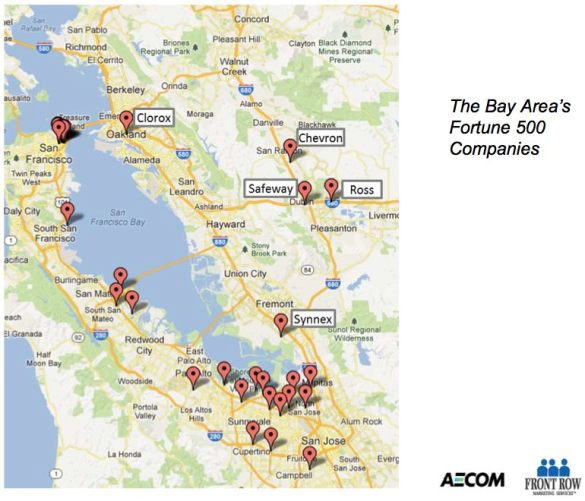
– Little corporate support in the market
– PSL program could potentially generate approximately $100 million
– Anticipated demand could justify approximately:
•  50,000 seats
•  85 to 95 suites
•  6,000 club seats
•  400 to 600 loge seats

The study is vague, perhaps intentionally so on both capacity and cost estimates. The numbers above are only demand, which is important. It’s subject to change based on various factors including team performance, price, and the general attractiveness of the stadium. That doesn’t mean the stadium is set for 50k, 56k, or 60k seats right off the bat. If anything it’s an indicator of two things:

  • What the Raiders feel the market can support right now
  • How low that is compared to other healthier markets (SF being the direct comparison)
map_of_fortune500s

Map of Fortune 500 companies provided by consultants

One surprise coming out of this is that the Raiders revealed that they feel they can pull in $100 million worth of PSLs. Assuming that’s in the same form as PSLs for the 49ers & Cowboys, those are better than nothing, but also short of what the bigger revenue teams use to support their stadia.

For now the study assumes that all forms of financing are on the table: PSLs, NFL G-4, team equity, public. Chances are that by the September presentation, some of these will be pared down. The study doesn’t include some of the back room discussions that have been ongoing, such as the Raiders’ perhaps declining G-4 (if it’s even available) due to a lack of club seat demand. The study also touches on the impact of limited or zero public funds, but doesn’t assess what will happen if they are (not) available.

Keep in mind that while this report is being prepared for Oakland and Alameda County, the Raiders are doing their own study for themselves and more importantly, the NFL. These reports are not just about how to build and finance a stadium at Coliseum City. These studies are also about determining how viable the Oakland/East Bay market is. That’s the real question here. For now the NFL has not rendered a long-term judgement about the reduced capacity at the Coliseum or the possibility of a much smaller-than-normal Coliseum replacement. When these reports are completed, the NFL will most certainly tell Mark Davis exactly what it thinks about the East Bay as a NFL market long-term, and chances are if these demand numbers don’t improve at the end of this season, the owners and Roger Goodell may look outside the East Bay entirely whether that means Santa Clara or Los Angeles.

The big wildcard is the status of the Raiders’ extension at the Coliseum. We had heard that the extension was “weeks away” from being done as early as last summer. If the Raiders and the Coliseum Authority are still struggling with the extension, that’s because the JPA wants to better link the extension to Coliseum City. Moreover, ongoing tensions with the A’s can’t be helping things, since both teams are bargaining with the JPA for many of the same cuts of revenue (signage, concessions). Oakland/Alameda County have also been pushing hard to get both teams to take on more of the remaining debt at the Coliseum. This is the exact situation that everyone should’ve seen coming long ago. With both teams having no lease after 2013, they’re both free agents. At least the Raiders can crash in Santa Clara for a few years while they try to figure it out. The A’s have no such luxury.

Oakland has an even tougher task ahead of them. The September report should show what Oakland will be expected to put up for Coliseum City. Sure, they can levy new hotel and rental car taxes or create a community facilities district. All of those measures will require some kind of vote. Even more challenging is that Oakland/Alameda County has to take a gamble on what development can be brought in with the Raiders as the only anchor. This is the assessment:

  • 40-60,000 square feet retail
  • 35-70,000 square feet office
  • 150-250 hotel rooms
  • 400-700 residential units

The non-residential component is only around 250,000 square feet, about the size of Hegenberger Gateway across the Nimitz, with retail only a quarter of the total. Patriot Place in Foxborough, MA started out as a strip mall and gained momentum as the team did well and the stadium area became attractive. Now it’s 1.3 million square feet and doesn’t need the football stadium as an anchor. Santana Row (640,000 SF) or Bay Street (400,000 SF) are good comparisons in the Bay Area for what Oakland is aiming for. Oakland is severely under-retailed, but will that be enough to attract the private capital necessary to build the mall? No one can say with any certainty at this point. Plus it’s strange to juxtapose the image of Black Hole dwellers tailgating against what would be an urban/suburban mall landscape. The Patriots made it work because Robert Kraft owned the land and financed everything. He could afford to be patient. Mark Davis doesn’t have the funds to do anything like that. As far as we know, Davis is only interested in a stadium and little else. The retractable dome idea (championed by Mayor Jean Quan) appears to be properly scuttled. But if Oakland gets limited ancillary development from the Raiders’ stadium, what’s in it for Oakland besides pride? Does Oakland need another Hegenberger Gateway?

There’s a reckoning coming. It may be slow. It’ll get here soon enough. We’ll finally have some answers. Brace yourself.