Could Beane leave if San Jose is not approved?

After Ken Rosenthal (and Scott Boras) took a whack at the A’s murky future, Fox Sports colleague Bob Klapisch took his turn today. In his piece, Klapisch claims that unless things turn around from a revenue standpoint, Billy Beane may not be with the organization much longer:

In fact, Beane’s friends say this is his last go-round — if the A’s aren’t allowed to move to San Jose, he’ll officially pass the baton to assistant David Forst and look for a Plan B for the rest of his professional life. It’s anyone’s guess what would be next for Beane; remember, this is the same executive who turned down what should’ve been a dream job, controlling the Red Sox.

Beane’s record isn’t spotless. Like any GM not named Ruben Amaro, Jr., he’s made plenty of mistakes over the years regarding personnel. Yet he’s still among the top GMs in the game, and along with David Forst they once again have the A’s back on an upswing. That said, frequent talk of the A’s being small market – or more appropriately low revenue – sounds like whining after a while, and constantly bemoaning one’s station while being the only GM to own part of a team is not going to engender sympathy.

Thing is, Beane can only play Sisyphus for so long. Other GMs have a much larger margin of error when it comes to putting together teams and payrolls. We all know that pinning the franchise’s hopes on Eric Chavez set the team back for years. High revenue teams can have two or three Chavez contracts without suffering too much. Even the Giants got away with Barry Zito being a parasite last year, and his contract alone is worth two Chavys. It’s not hard to see how Beane could see that proverbial rock rolling back downhill and choose to walk away.

One of the things I think we’re seeing from the national media who’ve chimed in on this (Klapisch, Rosenthal, Gammons) is that they, like us, want to see what Billy can do when he has all of the tools the other GMs do. We all want to see a culmination to Billy’s story, because frankly, even with Moneyball, the story isn’t finished. So while some of the pro-Oakland crowd might look at the national media as ganging up on Oakland, it’s losing sight of the big picture. In the end the A’s need to be able to compete and the best economic chance to do so comes in San Jose, not Oakland. That observation comes in contrast to much of the local media (Newhouse, Ratto, Cohn, Killion), who have often been against ownership’s stadium wranglings, holding up the legacy of the team over all else – a valid argument but not one firmly planted in reality.

At 48, Billy Beane is still a reasonably young man for a GM. Even if he stays with the A’s, it’s not hard to see him being booted upstairs to a CEO/President type of position where he no longer does any day-to-day work with the ballclub. Whether he leaves or not, he’s not going to be a GM for the next 20 years. If he leaves before he and we feel his work his done, it’ll be a huge blow psychologically since it’ll be an admission that the A’s, as they currently stand in financial limbo, cannot compete long term. It won’t be easy to be a fan if that day comes.

Nuggets from the Tittle-Wolff interview

Thanks to David for alerting me and others to the Wolff interview on Rick Tittle’s second hour today.

On Lew’s opinion of Victory Court as a site:

I’d like to answer that a little obtuse… With the same kind of detail the committee is going into, we don’t think we have any options available there. It has nothing to do with the fanbase or the City of Oakland. It’s just that our exploration is perhaps deeper than soundbites in the newspaper.

If the A’s can’t move to San Jose, would they move or threaten to move out of state?

I think what we’ve tried to do is to be one of the few teams in the history of baseball not to leverage by “you know we’re gonna move if you don’t do this for us”… So we have not sat around and thought about what our options are. We want to stay in the Bay Area. Our ownership doesn’t want to own a team in Omaha or someplace. We’re gonna make every effort to stay in the Bay Area and truthfully do not measure these other options.

On Oakland Mayor Jean Quan’s suggestion that Lew’s in it for an ancillary real estate deal in San Jose:

I haven’t spoken to her – if I have it’s been once in seven years, so I don’t know what she’s thinking – but as far as the San Jose parcel there is no ancillary development right for us. My ownerships in San Jose are a small piece of the Fairmont and one lot where we have a racquetball club. I’m hoping if we go down there it’ll stimulate development but it won’t be our development.

Any updates on the status of XTRA Sports 860 (KTRB)?

We may be – I don’t have the details – the party selected for further negotiations so I think that’s happening right now.

Do you find the tarps have/have not been a success?

I think they’ve worked out fine. Maybe it’s my fault – we still don’t fill out the ballpark… I think the tarps was a plus in terms of obscuring a lot of empty seats. Is it a great thing? No. Is it a terrible thing? I don’t think so.

What are you and Billy referring to when calling the A’s a small market team?

I think we’re referring to revenue. In other words, if we had a new ballpark – I don’t want to use that as the only reason – when you have huge revenues even though you share them as the Yankees and Red Sox do – it takes revenue to pay and retain players. I don’t like the term small market. I just want to be able to have revenues close to the Giants, for example. When you trace the change in the teams from 2000, every statistic we have from advertising sales, sponsorships and so on, we started to fall way behind. Some of it has to do with revenue, some of it has to do with Barry Bonds.

Is it impossible to find that revenue in Oakland as opposed to San Jose?

Nothing’s absolutely impossible, but the answer is that demographics have changed tremendously, the corporation bases. We’re in a region here. It’s not like we’re not moving to another country or another state. If you landed tomorrow from Mars and said, “I’m looking to locate a ball team, where should I put it?” You might opt for the South Bay in the current economic and demographic environment.

On the Quakes stadium and the A’s ballpark being separate or related:

They would both be in separate venues. We don’t think we should combine them. Baseball, which is more dominant (in the US), needs to be in a baseball-only facility.

A very good interview by Tittle in which he asked numerous clarifying questions without antagonizing Wolff (it might help that Wolff may be Tittle’s boss’s boss’s boss in the near future). In any case, it covers a lot of ground that we frequently cover here at the blog, and other than the rather pat answer about Victory Court the answers were reasonably genuine. Discuss amongst yourselves.

Could San Jose A’s and Giants coexist?

The cover story in this week’s San Jose/Silicon Valley Business Journal discusses multiple scenarios in which the A’s (subscription required, written by Eli Segall), should they move to San Jose, would have to indemnify the San Jose Giants, the High-A affiliate of the San Francisco ballclub. The parent club bought controlling interest in the team last year, which could lead into a handsome payoff just for the minor league team in addition to whatever is agreed upon for the SF team. In the article, Roger Noll estimates that the A’s would have to pay the SJ Giants $4 million, which would be in addition to $20-30 million for the parent club Noll estimated a year ago.

The worry for the “little” Giants is that the A’s will siphon away sponsorship dollars, which in a large city such as San Jose is a goldmine for a mere Class-A club. The rest of the California League cities can’t hold a candle to San Jose in terms of corporate sponsorship potential. Despite the looming A’s threat, SJ Giants CEO Jim Weyermann isn’t worried much about losing attendance since the fan demographics are different, and there’s a chance that sponsors could be retained.

A sidebar mentions the fact that $14.5 million in renovations to San Jose Municipal Stadium are on hold pending the fate of the SJ Giants, which is of course tied to the A’s. Should the A’s move to SJ it’s likely that the SJ Giants would be forced to move. But that isn’t a given as Lew Wolff signaled that he’d be fine with the Giants staying there. Going this route would change the eventual terms of compensation, since Wolff and his partners wouldn’t have to go out-of-pocket for relocation costs. Instead they might have to foot part of the bill for compensation and for renovations to Muni – still not cheap but definitely cheaper.

Last month, Pacific Baseball Partners head Chris Lee made news when he admitted that the SF Giants’ refusal to do anything regarding T-rights has put his ballpark project in jeopardy. After I made my post I got this clarification from Lee:

“…note that the request to the (SF Giants) is not to move their affiliate to Sonoma County, but to relocate some other team, whatever its affiliation may be.”

It is possible that one of the other Cal League teams, perhaps Bakersfield, could relocate to Windsor, though given the circumstances, the frontrunner would still be the San Jose Giants. For that change to happen, the A’s move would have to be the first domino to fall.

If the San Jose Giants can stay in town, great. The parent Giants could choose to keep the team there in order to keep its foothold, though that would work against any idea that they bought into the little Giants to raise potential compensation. Keeping the SJ Giants in town would undoubtedly be the cheapest option for the A’s from a bottom line standpoint. From a strategic standpoint, it would make much more sense for the Giants to take advantage of an opening in the North Bay if the A’s go south. The SF Giants aren’t exactly greatly accessible from Sonoma County, with an hour drive from Santa Rosa to Larkspur just to catch the ferry. Still, it’s not as if common sense has prevailed in these matters so far. Why think it would happen now?

It’s a buyer’s market: SJRA land bidding short of target

The Merc’s Tracy Seipel has the scoop on the six downtown property sales, and it’s not as good as expected. SJRA had the cumulative appraisal of the properties at $26 million, whereas the combined bids submitted (deadline 4 PM Monday) was $19.6 million. The lower sum may be enough to acquire the remaining ballpark site, but it won’t cover the Autumn Parkway project or mitigations, which are just as important to the execution of the project.

Lew Wolff did not have any of the winning bids:

One bidder who won’t be considered: A’s owner Lew Wolff, a prominent developer, who made an offer for the annex and parking garage at the Fairmont hotel, which he already owns. But instead of bidding on each property separately — as required — Wolff made a combined offer for an undisclosed price that the agency won’t consider, agency chief Harry Mavrogenes said.

Was Wolff only in there to get the bidding up? In any case, SJRA reserves the right to pull any of the parcels off the market if it feels the highest bid isn’t high enough, which may be the case for the Fairmont garage. Hopefully they won’t have to dip into existing cash reserves to get everything done.

Among the highest bidders are the biggest builders in the South Bay, specifically Barry Swenson and Sobrato. The good news is that they have proven track records of delivering on big projects in and around downtown San Jose. And it wouldn’t be surprising if they were pulling for the ballpark effort since the ballpark’s success could have an indirect effect on their ability to further develop and sell in the area.

There’s some question as to whether or not SJRA should hold off completely until the market improves, but there’s no telling when that will happen. Besides, does anyone remember how much the land was supposed to cost when the agency started acquiring land? There’s a fair price and then there’s a fair price.

Redevapocalypse What-If Scenarios

Now for the “fun” part.

Last night I described the fate of redevelopment in a California where the concept no longer works within the budget framework. Today it’s time to discuss all of the great/terrible fates that await our favorite local sports franchises should RDA funding sources dry up.

49ers Bond Rush
It all starts not with the Oakland Athletics, but rather the San Francisco 49ers. The linchpin to the Santa Clara stadium plan is $114 million in public funds, $42 million of it from the RDA (the 49ers would provide a partial advance). This money would have to be raised before any RDA dissolution or cutbacks take place, so the deadline would presumably be sometime in the next 4-5 months. This means that Santa Clara would have to go to the bond market three times for the stadium project:

  • $42 million from the RDA
  • $35 million from the newly assembled Mello-Roos district (hotel taxes)
  • $330 million from the Stadium Authority

If the RDA doesn’t get the bonds by the deadline, there’s no chance that the hotels will even tax themselves for their piece, let alone fund a RDA shortfall. The agreement between Santa Clara and the Niners would have to be reopened so that an alternate funding source could be inserted, and that source couldn’t be tied to the general fund in any way. The Stadium Authority couldn’t get started because there’d be no certainty of the project getting off the ground until the funding package worked itself out.

$40 million doesn’t seem like a big deal as it’s less then 5% of the project cost. It’s still a lot of money to raise and a big enough gap to throw a wrench into the works. There’s a chance that both parties could figure out a way to bridge the gap but it’s not going to happen immediately, and unless it’s the team pledging to cover it completely, any contractual details will require renewed scrutiny.

Should the team find the sledding too rough, there’s always a Plan B. They can run to Oakland, where the Coliseum Authority and the Raiders will be waiting with open arms.

The Coliseum Authority has bonding authority and capacity through its joint powers, the City of Oakland and Alameda County. There’s that nagging problem of ongoing debt burdening both parties through 2026, which can be looked at one of two ways: Should the JPA endeavor to get a new two-team NFL stadium built in the hopes that helps cover the debt or cut its losses and keep paying the debt even though the Raiders could be long gone before it’s retired? (Not that amassing more debt is favorable as the current bonds were downgraded to BBB last month.)

The problem Oakland and the JPA has going forward is the fact that the new Raiders stadium plan had integrated redevelopment along Hegenberger, including a new conference center, hotel and retail. With the well run dry, none of that stuff could get built unless some new taxation/indebtedness occurred, or unless the stadium project’s funding coved it. So what you’d be left with is in all likelihood an updated version of the stadium and arena complex, surrounded by parking. Sounds familiar, eh?

On the other hand, if Santa Clara is able to get the funding ball rolling, it’ll prompt the Raiders to move more quickly in order to leave Oakland. Al Davis isn’t going to live forever, and Roger Goodell is a take-no-prisoners negotiator who has been clamoring for the two teams to share a stadium. Whatever the location, expect an agreement between the host city and the two teams sooner rather than later. Otherwise it might be too late for both.

Which Way Warriors
We’ve discussed the Warriors and the Lacob-Guber group’s interest in San Francisco. The Port of SF owns land to the south of AT&T Park that could be well suited for an arena. This is important as the money’s already spent, no new funds required. In order for a new arena to be built, it would have to be privately financed and it would make the most fiscal sense if two teams shared the arena, not just one. This model has worked well in Chicago and Dallas, where both cities’ representative hoops and hockey teams created partnerships to build their venues. The Giants being the developer has only limited impact since they couldn’t materially impact which touring acts or other events came to town. Two teams means two major winter sports teams, not just the W’s and a minor league franchise.

Can it be done? The Giants/Warriors would have to attract the Sharks or a second NHL team, neither of which seems likely. SVSE would probably entertain the offer as a way to extract lease concessions from San Jose, but it wouldn’t move beyond that. It’s much like trying to get the W’s to move south permanently – it’s technically doable but highly unlikely. Lacob-Guber could also use the SF arena as a stalking horse for improvements to the Arena.

Again, any new arena in SF is only possible if it is privately financed. The good news? There will be so little big project construction in the future (save for public facilities) that the labor could be relatively cheap.

It was nice knowing you Cowtown
Unlike some of the whispering about MLB contracting two teams, there actually has been talk about contracting the Kings. And it will only get louder as the current season draws to a close later this summer. The woes of the Kings and the Maloofs have been chronicled here and elsewhere for some time now, and there doesn’t seem to be a light at the end of the tunnel for them. Mayor Kevin Johnson is playing this like he has to walk the ball up the floor and dump it into the post every possession instead of being able to do anything dynamic like this. Being a mayor is a tough job. I want to see the Kings stay in Sac, but it’s hard to see long term with every proposal linked to some kind of redevelopment. The NBA probably won’t buy them as it did the Hornets, which leaves the Kings in some sort of limbo for years to come.

San JosA’s
The landbanking strategy San Jose has used for years has never been more wise than right now, as it works to cobble together the remaining land at Diridon. As I understand it, the money is basically untouchable at this point and SJRA can do whatever it wants as long it takes care of its housing set-asides (25%). If SJ and the A’s are given the green light, the vote this summer or fall won’t be about ballparks vs. schools since the money will already be spent. The debate will be about baseball vs. other housing or commercial developers in a time of a glut of both housing and office space. And yes, the decision could drag on for another several months or even a year.

Oakland mayor Jean Quan has been publicly silent on what the death of RDAs could mean for the Victory Court project, and that’s not a good sign. When the mayors went up to the Capitol last week, the most quotable guy there was Chuck Reed, not Quan. There should be a greater sense of urgency there if Oakland’s various supporters want the donut hole strategy to come to fruition, but it’s not happening publicly, perhaps by design. Should the EIR be delivered at the beginning of April, there will be ample opportunity to go over every detail of the document, and it’s that thoroughness baked into the CEQA process that could eventually kill MLB in Oakland. The way I see it, Bud Selig is looking for a politically expedient opportunity to declare support for San Jose, and that could come in the form of a 400-page EIR that brings up more questions than answers. Why? Because Lew Wolff has to have been in his ear constantly about this redevelopment business, and opportunities are running out fast. Maybe the day of reckoning wont occur immediately, it might occur well along in the process as it did in Fremont. Either way the clock is ticking as it is for AT&T in that commercial for the Verizon iPhone.

Of course, if Let’s Go Oakland had declared Victory Court as its site in December 2009 instead of 2010, Oakland might not be in such a bad position. Oakland’s only saving grace now is something out of its control: the continued difficulty with T-rights negotiations. That’s like basing your retirement plan on an upcoming shared inheritance – will you get a good enough piece, or will it mostly go to the more favored child/mistress/charity? It’s not a real investment strategy.

Wolff steps up as potential Downtown SJ land buyer

Someone’s eager to wrap things up. And his name is Lew.

Tracy Seipel reports that Lew Wolff has emerged as a potential buyer for some property in downtown San Jose that the RDA just put up for sale. This shouldn’t be a surprise, I hinted at this last Friday. Again, this seems like a form of quid pro quo, with Wolff benefiting in the end as AT&T did with their Santana Row land deal. It’s ugly, and it’s not the way things should be done. However, Wolff himself said he was willing to go to great lengths to make this happen. From October:

While he and agency officials both said no details of a possible land purchase by Wolff had been discussed, the team owner pledged: “Whatever issues we run into, we will figure out how to get them done. We will not let anything stand in the way of getting the ballpark done.”

Noted.

In the last week, the deadline to get everything done for a ballpark deal has shrunk from 18 months to 12 to 9 to 6 and now possibly 2-3 months, which is straight crazy. I’m not going to blame the Giants for this, they did what they felt was in their best interest. It’s the continual, inexplicable delay on Bud Selig’s part that has led the A’s to this being what may be their last chance at a ballpark anywhere in the Bay Area or Northern California. As ever, we have no idea what’s going on within The Lodge. With both Wolff and Mayor Chuck Reed regularly in touch with Selig regarding the rapidly changing redevelopment landscape in California, Selig may finally have the proper impetus to… act. Which sadly fits him to a tee.

With the demise of big city redevelopment near, Merc columnist Scott Herhold took the time to assess how San Jose, with the second largest RDA in the state (behind LA), has fared in its redevelopment initiatives. While he considered it a mixed bag, he felt it was better to be large and audacious with the money than for the city to stagnate and eventually crumble. He also linked to a 2006 pictorial presentation (PDF) made by the RDA, which shows how downtown looked in 1975 (the year I was born) and now. They’ve managed to turn a decaying urban center that was more famous for night cruising by local youths down First Street into a place that has stuff to visit, like fantastic library shared with SJSU, a world class arena, several good museums. Yesterday I was strolling through Paseo de San Antonio (between the Fairmont buildings) and I noticed Sharks fans mingling with attendees at the annual Furries convention. Well, maybe they weren’t actually mingling. At least they were in fairly close proximity. Anyway, who’d ever thought that was even possible in 1975?

Below are two pictures of the Plaza de Cesar Chavez area (Park Ave & Market St), first the 1975 photo and then the 2006 photo.

City Hall was once in the park

The ground level part of the curved building is part of what Lew Wolff may purchase, he already owns the upper floors

San Jose may be forever sleepy, but it has still come a long way.

Olney has a silly idea

In Buster Olney’s blog (Insider accout required), he floats an idea that, unfortunately, Craig Calcaterra thinks has legs.

It’s been awhile since Bud Selig formed the committee to study the Oakland ownership situation, with no resolution in sight for his longtime friend and former fraternity buddy Lew Wolff, the Athletics current owner. What Wolff and the Athletics want is a ballpark in San Jose, and Selig might feel as though he can’t give that to him.

But if McCourt eventually has to sell the Dodgers, providing Wolff — who lives in L.A. — an opportunity to buy the Dodgers would be a heck of a compromise move for Selig, who is, above all else, a deal-maker. In a similar way, he ushered John Henry and Tom Werner — previously connected with the Marlins and Padres, respectively — into control of the Boston Red Sox.

And Wolff, of course, could bring along GM Billy Beane, who could leave the Athletics in the hands of the next owner and heir apparent David Forst.

It’s all speculation. But it all could make a lot of sense, depending on which way the dominos fall with the Dodgers.

First of all, Wolff doesn’t have the scratch to buy the Dodgers. Most owners don’t, and with the valuations of teams as high as they are, they’d be foolish to buy teams on their own. Wolff certainly could partner with people in LA, but really, does anyone think the Dodgers will have a problem attracting extremely wealthy buyers when the time comes?

Besides, Wolff’s share of the A’s has diluted over time. The vast majority of ownership of the A’s are highly entrenched Bay Area people, whether it’s John Fisher in SF, Wolff’s friends and family in the South Bay, or Guy Saperstein in Piedmont. When a team sale happens, the turnover of an owner or ownership group is usually complete. We don’t hear much about a major partner cashing out of an ownership group all that frequently, and when we do it’s often because the partnership was somehow broken.

While Wolff lives in LA, he has children and grandchildren here. There have been plenty of video shots of him sitting in the Coliseum with a young child decked out in full A’s regalia over the years. For him it’s not just about real estate, or getting the stadium done, even though that is his charge. There’s a real emotional attachment there, and it’s gotten to the point that the team is family. If anything, the man is too invested in multiple ways to just let this go. Have you noticed how much more defiant he has gotten the last few months? Despite the challenges and mistakes, he’s a man who generally sees things through, and that’s what he intends to do.

KTRB purchase still possible?

There may yet be a future for the A’s and KTRB together. Chronicle beat writer Susan Slusser has the tasty news from the dead tree edition:

— According to two team officials, the A’s are deep in negotiations to buy radio station KTRB, which is in receivership. KTRB is expected to continue to carry A’s games, whatever the outcome of the sale.

and in The Drumbeat…

Also in today’s paper, I had a little snippet about the A’s quest to buy KTRB. I’m told that some progress has been made, and personally, I think it’s likely to happen, although it sounds as if the process of purchasing a radio station that is in receivership is an odd one. In fact, it sounds a lot like the Japanese posting process: from what I understand, bidders don’t know who they’re bidding against or what the other bids might be. We could know within a week. Let’s hope this goes better than the Hisashi Iwakuma business.

Even though it’s not a done deal, it sounds a lot better than what Rich Lieberman was reporting before Christmas. Crossing my fingers.

P.S. Compare the A’s plight to that of the NFL, which is close to a renewal of ESPN’s television rights for Monday Night Football, the NFL Draft, etc. The deal is potentially worth a whopping $2 Billion per year for up to a decade. Think about that. Each team would get around $60 million per year just from ESPN, which broadcasts only 17 games every season. The A’s 2010 payroll on Opening Day was just a shade over $58 million. Good luck to Roger Goodell on his quest to convince the public that the league is in financial peril.

End of 2010 news

To celebrate the holiday season, the Marlins have sent out a virtual greeting card showing a time-lapse of the construction of their new ballpark. It’s scheduled to open in 2012. Impressive, right? Maybe not when you take a look at this cross-section (via Autodesk/Hunt-Moss), in which all of the luxury suites have been stuffed behind the plate:

Craig Calcaterra thinks Oakland is wasting $750k on the EIR study. His rationale at the end may be more spot on than you might think.

Jeff Moorad and partners finally completed their purchase of the Portland Beavers. The team will play in Tucson for at least the 2011 season, with the idea of playing in Escondido as soon as 2012.

The San Diego Reader’s business/finance writer, Don Bauder, considers Petco Park a failure and considers it a cautionary tale for those who may want a downtown SD football stadium for the Chargers.

At Biz of Baseball, Maury Brown has a slew of new articles:

Lancaster is adding solar panels to its ballpark, which will make it 98% self-powered.

The ballpark for the now relocated Omaha Storm Chasers (Royals) is already having the team move in, even though construction started only in August. Called Werner Park, the new digs are expected to open in April.

A cup of Joe with the Georges

2/22/16 – George Vukasin Sr. passed away last week at the age of 82. George Jr. informed me of this sad news earlier this morning. SFGate and BANG covered the man’s life. I only met George Sr. once. Fortunately, I wrote about it. Apparently he liked the article, as did many other readers. So in honor of George Sr., I’m reposting my article from December 13, 2010 (was it that long ago?). RIP George Vukasin Sr. Wherever you are, I’m sure the coffee just got a lot better.

peerless-sm

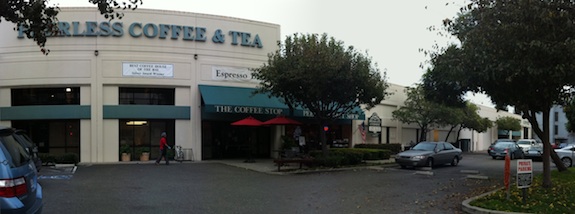
Peerless Coffee is based out of a low-slung, light industrial building built in 1976. Established in 1924, the company has seen it all: wars, boom and bust cycles, and several sports teams. Three generations of the Vukasin family have helmed the company, and they are Oaklanders through and through. They have every intention and desire to continue being a pillar of the Oakland business community. How that can continue with a ballpark proposal lingering in the immediate future is uncertain.

As I approached the building, the aroma of roasting coffee nearly overwhelmed me. I sipped an au lait inside the store as I waited to interview George Vukasin, Jr., who runs the business, and George Vukasin, Sr., who left the company to his children and still is a major presence there. George Sr. is also well known as a major proponent of Oakland and East Bay sports, as he was pivotal in making the Coliseum complex come into being. I sat down in their front office and we talked for nearly two hours. I could’ve easily sat there for another two as George Sr. recounted stories of Oakland sports glories past, but I had to start writing. Maybe another time.

We first talked about how the Coliseum deal was struck. George Sr. happily took on the role of historian, recalling how the late developer Bob Nahas put together a coalition of civic and business interests, including the elder Vukasin, to get a sports showcase built in the East Bay. They quickly focused on a site in East Oakland. The land was undeveloped, with the major owners being the Port of Oakland, EBMUD, and PG&E. Deals were struck with both utilities to maintain easements at the complex while a land swap was negotiated with EBMUD for a parcel on High Street, where the utility’s maintenance yard now resides. The Port of Oakland handled the land deal, as George Sr. was a Port commissioner at the time. The process from first discussion to groundbreaking took 2 years and was unencumbered by CEQA laws or other red tape.

The Coliseum Commission ran the complex for close to three decades. They understood what it took to keep the complex in the black, such as the need for 130 event days at the complex every year. While that should be easy to do with 81+ baseball games, 7-10 football games (sometimes), and 41+ basketball games, occasionally things would run tight. One particular year, Vukasin couldn’t figure out what to do so he called rock promoter Bill Graham and asked for help. Graham magically produced 7 days of Grateful Dead shows at the arena, the proceeds of which allowed the Commission to take care of the debt service.

Around the same time, Amnesty International contacted the Commission about putting on a single concert, which would be held at the stadium. Walter Haas, who had put a good deal of money into renovating the Coliseum, was not particularly fond of having a large number of concertgoers trampling his pristine baseball field, as evidenced by the declining number of Day on the Green concerts during the Haas era. When Amnesty International inquired, Haas and Roy Eisenhardt unequivocally said no. Vukasin and others tracked Haas down at the Pacific Union building in San Francisco, where they asked him to grant permission face-to-face. Haas, ever the gentleman, relented on the spot and the concert was held, as long as there were assurances that the field would be kept in good condition. No contracts, no litigation, just a talk and a handshake.

We shifted topics to Victory Court, and that’s when George Jr. was able to speak more. He was contacted 18 months ago by Mike Ghielmetti and Jim Falaschi, who suggested that Victory Court would be a studied site for a ballpark, and that the Peerless Coffee property was one of the targeted parcels. That led to a meeting with Ghielmetti and the City of Oakland’s real estate manager, Frank Fanelli. Little happened during the meeting, and no direct contact has been made since. Once George Jr. caught a man surveying and measuring the property. The man couldn’t divulge who sent him, and George Jr. asked him to leave. The man got in his car and went around to the back of the property, which is accessible from both Oak and Fallon Streets. George Jr. saw him surveying that side and kicked him off the property for good. To this day the Vukasins don’t know who the appraiser was, let alone who sent him. They asked me who I thought it was, and I guessed that it was MLB, contracting the work as part of its “due diligence.”

I asked why the current site was so crucial, and George Jr. went into great detail about how the business worked. While the plant looks like a 70’s office building from the outside, the nondescript façade hides many unique features that are part and parcel of what makes Peerless Coffee run the way it does. Among the important features:

  • The floor is an extra thick concrete pad, which allows the company to stack huge bags of coffee from floor to ceiling without worrying about weight.
  • The plant’s location near the port lowers transportation costs.
  • Peerless rents out some surplus space in the back, with the knowledge that the space can be repurposed for a plant expansion if need be.

Perhaps the most interesting thing is the process of roasting coffee itself. Peerless does a lot of custom roasting for different clients, such as restaurants and hotels. This makes it important for the company to have extremely precise control over the variables that come into play, from humidity to the shape of the natural gas flame as the beans are being roasted. Roasting the beans an extra five minutes can severely change a coffee’s flavor profile, according to George Sr. George Jr. followed that up, saying that the process is so delicate, a transition period of 18 months would be necessary, including construction time. During that time, both facilities would be running (or under construction), allowing the new plant to work out the kinks and match the old plant’s flavor. The fact that coffee is perishable, coupled with the change of equipment and environment, mandates such a long transition. It’s possible that a lot of product will be wasted along the way. When another coffee roaster built a new plant to replace an old one, it supposedly took 6 months or more after it started operating to “dial in” the flavor properly. Essentially, the coffee is roasted based on the conditions in that exact location. Any changes would require a costly upheaval.

In preparation for what could happen, George Jr. and his sister, Kristina Brouhard, have done the necessary background work just in case. As I was talking with the two Georges, Kristina, an attorney who is also Peerless Coffee’s legal counsel, popped in for a moment and we exchanged pleasantries. They’re getting ready to (and I’m paraphrasing here) man the troops.

That’s not to say that manning of any troops will be needed. I asked the Georges if, as I had suggested last week, a ballpark land grab extended as far out as Fallon Street, instead of the taking of all land between Oak Street and Lake Merritt Channel. They both said they’d be fine with it, though no one has explained to them why all of the land was needed. They’re perfectly content to be neighbors to the ballpark, and their comfort with their specialized operation suggests that they aren’t in this just to hike up the price on their property. George Jr. doesn’t want anyone to feel sorry for the business, but he was very clear in saying, “This business is our family.” And right now it’s threatened by the ballpark. Already, customers are asking if Peerless is going out of business, which is clearly not the case. If you think that battling perception is hard now, just wait until the word gets out about a ballpark.

There were plenty of other anecdotes about Wally Haas, Herb Caen, Franklin Mieuli, Ken Hofmann, and strangely enough, former Warriors bust Chris Washburn, who George Sr. said had a “Rolls Royce grille on a Volkswagen.” George Sr. lamented how the revenue chase has made getting a fair stadium deal so difficult. We talked about how genuine Oakland’s (and Let’s Go Oakland’s) efforts were, and I was surprised how much we were all on the same page. There was a bittersweet moment in realizing that it is possible that Oakland, so defined by its sports franchises and full of history, could lose two or all three of them. George Sr. would’ve preferred a ballpark at Howard Terminal. George Jr. would’ve liked a downtown site. They told me how much they appreciated my work, and I thanked them for the time they gave me to discuss the issues. As I got up to leave, George Sr. had the most surprising parting words for me,

You never go over the owner’s head. If you call the commissioner, the first thing he’ll do once he gets off the phone is call the owner.

Coming from a man who has heard and seen it all – especially in Oakland and in dealing with pro sports teams – those are sage words.