Earthquakes Stadium opening delayed until 2H 2014

If you’ve been following the (lack of) progress in getting the Airport West/FMC site ready for an 18,000-seat soccer stadium, you’d know that they been finding some interesting and unusual things in the excavation process. Just about everywhere there have been thick foundation work, underground facilities, and in keeping with the site’s previous life as a munitions manufacturer, bomb shelters. Both President Dave Kaval and Lew Wolff have been backtracking in recent months about opening the stadium in time for the 2014 MLS season, and today’s announcement makes it official.

Unfortunately, the news creates a bit of confusion for fans, who until now have been sold on the prospects of a brand new stadium opening in March of next year, not June or July. Quakes management has a bit of a mess to deal with at the stadium site and at Buck Shaw Stadium, whose capacity is barely more than half of the new venue’s. Kaval will have a Google Hangout at 3:30 today, in which he’ll field questions from fans.

Several other MLS stadia have also experienced opening delays, including StubHub Center (LA Galaxy home, formerly Home Depot Center), Sporting Park (Kansas City), Saputo Stadium (Montreal), PPL Park (Philadelphia), and Toyota Park (Chicago). Utah’s Rio Tinto Stadium didn’t open until the end of the 2008 season, and even the first soccer specific stadium, Columbus Crew Stadium, was delayed long enough (mid-May 1999) to have the team embark on a lengthy road trip to start the season.

It just goes to show that having a site considered “shovel-ready” isn’t enough. Sometimes you need more than shovels.

Giants propaganda invades A’s airspace

Normally when I see a plane in or around the Coliseum I tune it out, because it’s always an ad. I’m not interested.

During today’s game, apparently Budweiser went a bit too far with their plane-flown banner…


The plane and banner were courtesy of Anheuser Busch/Inbev, not the Giants directly. I suppose they got a two-for-one deal by flying the plane a few hours later over AT&T Park, if that happened. Whatever happened, I’m not outraged by it. I appreciate the moxie required to get that ad in the air. This after Budweiser opened one of its signature “Bowtie Bar” locations inside the Coliseum.

That said, I hope y’all don’t mind if I continuously laugh at the Giants’ current foibles. “Defending” World Champs in name only, not in effort, assholes.

Well, I guess it’s a good thing that the concept of territorial rights only applies to building ballparks on a site, not airspace, radio or TV airwaves, placing team stores, or any other extension of a team’s marketing machine.

One other thing – Support local craft beer!

When aesthetics give way to $$$

Rob Neyer recently made the case for five eras of ballparks. Chronologically he ordered them:

  • Utilitarian era (1876-1908), early days
  • Classic era (1909-1960), first true ballparks as we know them
  • Multipurpose era (1964-1988), cookie-cutters and the like
  • NeoClassical era (1989-2009), retro ballparks with modern amenities
  • Commercial era (now), parks more geared towards revenue generation than watching baseball

Neyer defined the commercial era as a nod towards crass commercialism, with overdone signage and far too many premium spaces/facilities that detract from the game experience, especially for Joe Fan. While I agree with the sentiment, trying to separate ballparks into specific eras is a lot tougher. New Comiskey has the prominent sandwich of suites and club seats, and Jacobs Field opened in 1994 with a massive triple tier of suites down the third base line. Angel Stadium has a quadruple tier of enclosed spaces behind home plate, as does Marlins Park 15 years after the Big A was redone. Signage will forever have varying degrees of obnoxiousness. The least obnoxious park, Wrigley Field, is set to have a lot more blinking lights and electronic signage starting next year. Some people mind that a lot, I don’t.

That’s why for me, the picture below represents the best arrangement conceived in the last 25 years. It’s simple, elegant, inexpensive to build, fan-friendly, and more important than anything, fair.

The grandstand at PNC Park

The grandstand at PNC Park

Now compare that the other two examples I cited today.

Angel Stadium grandstand

Angel Stadium grandstand

Marlins Ballpark grandstand

Marlins Park grandstand

A full review of PNC Park is due later. For now, let’s discuss what we want in a ballpark, and how to balance those desires with what a team may want to improve their revenues (to help pay for the ballpark). While we’re at it, refer back to my review of the Cisco Field (Diridon) renderings from 2010.

TV rights wave brings A’s along for the ride

When the A’s made the move to basic cable full-time, it was considered to be a solid, though not groundbreaking, improvement for the A’s in terms of revenue. More games would be broadcast (still not all games), and peripheral coverage would would improve via CSN California’s revamped local programming. While the second part would prove true, it wasn’t clear what financial benefits the A’s were getting. As late as last fall the rights fee being paid by Comcast to the A’s was kept hush-hush. I had heard the rights fee started at $15 million with escalators for improved ratings. Whatever the figure truly was, it wasn’t supposed to be terribly competitive within the new TV rights bubble, let alone the mega-deals signed by the LA teams and Texas.

Well, turns out that Lew Wolff and Ken Pries worked out a pretty good deal after all. In Wendy Thurm’s latest post on Fangraphs there’s a table that shows updated TV rights deals (courtesy of Sports Business Journal). The A’s are in pretty decent shape with a deal that works out to $43-48 million per year, which is a lot more than previously speculated or earned in the previous contract. $43+ million still pales in comparison to the Rangers’ or Angels’ $150 million, but those teams were playing a different game from the A’s anyway. The boost is enough to help the team competitively, not enough for management to start making a bunch of stupid personnel decisions. The annual rights fee puts the A’s at 11th or 12th depending on how you’re counting, squarely within MLB’s CBA-defined Top 15 markets.

Of course, the downside is that what looks good now could look puny a decade from now, when the A’s can exercise their first option to renegotiate or extend the CSNCA deal. Several teams will have the opportunity to renegotiate their deals or start their own RSNs before the end of the decade. Chances are good that they’ll do just that. Look for the A’s to follow suit a years later.

How the A's TV deal stacks up against division and crossbar rivals

How the A’s TV deal stacks up against division and crossbay rivals

Despite the added revenue, let’s be clear about something: the A’s are still last in the AL West in terms of TV revenue (and probably radio as well). I suppose that no A’s fan will care as long as the team keeps leading the division in the standings.

—–

Note: The SBJ article dates back to Opening Day. Either I missed it completely or I skipped over the updated figure. Apologies.

News for 7/24/13

A lot of smaller items this week that I felt should go into a single post.

  • Added 7/25 1:48 PM – Cowboys Stadium will now be known as AT&T Stadium, at a rate of $17-19 million per year (length unknown). For reference, Levi’s bought the naming rights at the 49ers stadium for $11 million/year, while AT&T Park’s deal was for roughly $2 million/year through 2024. Oracle Arena and SAP Center have deals worth $3 million/year.
  • Added 7/25 1:40 PMReally good interview on Athletics Nation with A’s Sales & Marketing veep Jim Leahey about how hard it is to sell tickets for the A’s at the Coliseum.
  • Added 8:40 PM – Completely forgot that the A’s have changed the gate opening schedule on Fridays to 4:30. Normally the gates open 90 minutes before first pitch on weekdays, 2 hours before first pitch on weekends. This is to accommodate a request by many fans (including me) to observe home team batting practice, featuring Derby winner Yoenis Cespedes. Home BP is usually held a little over 2 hours before first pitch in most ballparks. For now the time change is only for Fridays. It could change, but remember that for day-after-night games many teams choose to cancel BP. As luck would have it, I’m flying into OAK from Salt Lake City at 3 on Friday, so I’ll have a chance to watch Cespy do his thing.
  • The Chicago City Council approved a controversial $500 million renovation of Wrigley Field, which will include a big electronic scoreboard, increased signage and advertising, and the development of a hotel and office complex across Clark St from the ballpark.
  • The Port of Oakland’s settlement with SSA was approved and accompanied by a celebratory press release by the terminal operator. Though there’s an interesting bit at the end:

The settlement agreement “has nothing to do with the baseball park,” (Port Board President Ces) Butner said. “We have not determined what we are going to do with Howard Terminal yet. We are going to have to figure out what it will be.”

Tim Kawakami also tweeted this:

Kawakami went on to talk about different uses and configurations for the land. Oakland wanted two downtowns with Coliseum City. I guess they can also explore two Coliseums (Colisea?). It’s all fun to think about until somebody has to pay the bill.

  • According to an annual Harris Poll, the A’s are tied for last (27th) in terms of team popularity in MLB. The poll was conducted in mid-June with 2,210 American fans. Predictably, the Yankees and Red Sox are at the top. The Giants rank 10th in the survey, though they’ve moved around a lot over the years.
  • The Giants played a rare doubleheader at AT&T Park, which occurred thanks to a prior rainout in Cincinnati. While the first game was played as a regularly scheduled home game, the second game had the Reds playing as the home team and batting last. A different type of doubleheader is scheduled for this weekend, with the A’s playing the Angels at 12:05 (national Fox TV game) and the Giants hosting the Cubs at 6:05. I’m seriously considering going to both as I’ve done this doubleheader the past two years.
  • SF State professor and longtime Oakland political scenester Joe Tuman is expected to announce that he is running for Mayor today. An announcement is coming at Oakland City Hall at noon. Earlier today I had said something about San Jose’s antitrust lawsuit and MLB’s leverage, which aroused this response from Tuman:
  • Not to be forgotten, Oakland City Councilman Larry Reid has been waiting for a “sign from God” to put him in the race, though his increasingly snarky commentary at public meetings suggests that this is a mere formality. Having both Reid and Tuman in there could make the race entertaining, to say the least.
  • Sacramento arena proponents have accused anti-arena petition gatherers of lies and dirty pool in making claims about the ESC plan. Neither side looks great, as the anti-arena group may have out-of-town support and the “facts” that the pro-arena group are citing are projections, not facts. Yeesh.
  • Despite the City of Detroit officially filing for bankruptcy, it’s likely that $283 million in TIF-based funding for a new downtown Red Wings arena will go through. All sorts of wrong with that.

More if it comes.

NFL-to-LA murmurs grow louder

Cowboys owner Jerry Jones can’t stop talking, including answering questions about the NFL potentially coming back to LA. At this point Jerruh is a very tenured owner (24 years), and is involved heavily in anything involving the economic growth of the sport. The LA Daily News’ Vincent Bonsignore asked Jones about LA, and he was about as forthcoming as anyone from the league has been regarding the possibility.

“I’ve never, ever been a part of any meeting or committee, ever, that didn’t want – and as quickly as we could – a team in L.A.” Jones said. “I’ve heard the same thing – that (L.A.) can be (used) as a threat (for) teams moving out here and what have you. But that’s not right.

“I can speak for everyone I’ve ever talked to, we always preferred to get a team here.”

About Farmers Field:

Jones praised Farmers Field and disagrees with reports that his league might be souring on it.

“I have no misgiving at all about it. It’s an outstanding (project) with outstanding people involved in it,” Jones said. “Philip Anschutz is an outstanding individual and would be an asset in any way to any group to (he’s) involved with.”

Whether or not this is part of the leverage game, Jones’s comments will surely raise eyebrows in San Diego, Oakland, and St. Louis. Interestingly, Jones is happy to promote LA even as Farmers Field could provide direct competition to Cowboys Stadium for future Super Bowls, Final Fours, and college football playoff games. My sense is that the owners and Roger Goodell are eyeing the $10 billion annual revenue mark, and they know the quickest way to get there is through LA.

Jones also spoke with SI’s Peter King and gave this assessment:

“I wouldn’t be surprised if within months – I don’t know – that you’d have an announcement of intent (for a team) to come to Los Angeles.”

At what point does a threat become a promise?

Philadelphia Athletics Historical Society non-visit

I was in Northeast Philadelphia on Wednesday, which gave me an opportunity to make a baseball-related pilgrimage even as the All Star Break cleared the schedule with no MLB games happening anywhere. The quick drive was out to Hatboro, PA, home of the Philadelphia Athletics Historical Society. I parked on the busy main drag and walked up to the building that housed PAHS, only to be greeted by this.

pahs-1

pahs-2

Of course, if I had simply checked the website instead of driving out there like an idiot, I would’ve found out that the Society had lost their lease in April. Apparently they’re in the process of moving some of the items to Spike’s, a trophy manufacturer also located in NE Philly. I briefly spoke with a handyman at the site who was unaware of where PAHS was moving, and was doing repairs to get the space ready for the next tenant. I’ve also reached out via e-mail to the Society and will update this post as soon as I hear back. Until then, immense disappointment.

Radio interview with 1010 AM SoCal, talking Raiders & A’s stadium issues

I’m still in Pittsburgh. While resting at The Church Brew Works (a must-see if you’re ever in Steel Town), I did an interview with Julie Buehler and Geoff Bloom of Team 1010, an AM sports talk station in Palm Springs. Normally when I do when of these, I hem and haw a little on the “percentage chance something happens” game. This time I didn’t. Take a listen.


Video streaming by Ustream

Thanks to Julie and Geoff for having me on, and the Trib’s Matthew Artz for linking us up.

Coliseum City Football Stadium Revenue Study (Updated with analysis)

As planned, the study is out. It’s brief. A series of component updates are due over the next couple of months, with the final presentation(s) to come in September.

First, the part that seems to be contention is data that comes directly from the Raiders:

– Little corporate support in the market
– PSL program could potentially generate approximately $100 million
– Anticipated demand could justify approximately:
•  50,000 seats
•  85 to 95 suites
•  6,000 club seats
•  400 to 600 loge seats

The study is vague, perhaps intentionally so on both capacity and cost estimates. The numbers above are only demand, which is important. It’s subject to change based on various factors including team performance, price, and the general attractiveness of the stadium. That doesn’t mean the stadium is set for 50k, 56k, or 60k seats right off the bat. If anything it’s an indicator of two things:

  • What the Raiders feel the market can support right now
  • How low that is compared to other healthier markets (SF being the direct comparison)
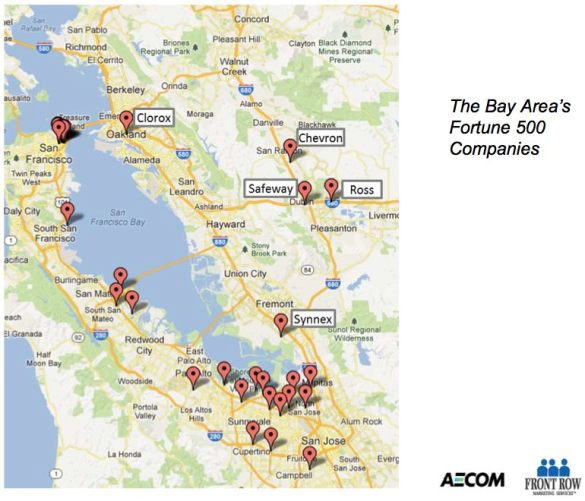
map_of_fortune500s

Map of Fortune 500 companies provided by consultants

One surprise coming out of this is that the Raiders revealed that they feel they can pull in $100 million worth of PSLs. Assuming that’s in the same form as PSLs for the 49ers & Cowboys, those are better than nothing, but also short of what the bigger revenue teams use to support their stadia.

For now the study assumes that all forms of financing are on the table: PSLs, NFL G-4, team equity, public. Chances are that by the September presentation, some of these will be pared down. The study doesn’t include some of the back room discussions that have been ongoing, such as the Raiders’ perhaps declining G-4 (if it’s even available) due to a lack of club seat demand. The study also touches on the impact of limited or zero public funds, but doesn’t assess what will happen if they are (not) available.

Keep in mind that while this report is being prepared for Oakland and Alameda County, the Raiders are doing their own study for themselves and more importantly, the NFL. These reports are not just about how to build and finance a stadium at Coliseum City. These studies are also about determining how viable the Oakland/East Bay market is. That’s the real question here. For now the NFL has not rendered a long-term judgement about the reduced capacity at the Coliseum or the possibility of a much smaller-than-normal Coliseum replacement. When these reports are completed, the NFL will most certainly tell Mark Davis exactly what it thinks about the East Bay as a NFL market long-term, and chances are if these demand numbers don’t improve at the end of this season, the owners and Roger Goodell may look outside the East Bay entirely whether that means Santa Clara or Los Angeles.

The big wildcard is the status of the Raiders’ extension at the Coliseum. We had heard that the extension was “weeks away” from being done as early as last summer. If the Raiders and the Coliseum Authority are still struggling with the extension, that’s because the JPA wants to better link the extension to Coliseum City. Moreover, ongoing tensions with the A’s can’t be helping things, since both teams are bargaining with the JPA for many of the same cuts of revenue (signage, concessions). Oakland/Alameda County have also been pushing hard to get both teams to take on more of the remaining debt at the Coliseum. This is the exact situation that everyone should’ve seen coming long ago. With both teams having no lease after 2013, they’re both free agents. At least the Raiders can crash in Santa Clara for a few years while they try to figure it out. The A’s have no such luxury.

Oakland has an even tougher task ahead of them. The September report should show what Oakland will be expected to put up for Coliseum City. Sure, they can levy new hotel and rental car taxes or create a community facilities district. All of those measures will require some kind of vote. Even more challenging is that Oakland/Alameda County has to take a gamble on what development can be brought in with the Raiders as the only anchor. This is the assessment:

  • 40-60,000 square feet retail
  • 35-70,000 square feet office
  • 150-250 hotel rooms
  • 400-700 residential units

The non-residential component is only around 250,000 square feet, about the size of Hegenberger Gateway across the Nimitz, with retail only a quarter of the total. Patriot Place in Foxborough, MA started out as a strip mall and gained momentum as the team did well and the stadium area became attractive. Now it’s 1.3 million square feet and doesn’t need the football stadium as an anchor. Santana Row (640,000 SF) or Bay Street (400,000 SF) are good comparisons in the Bay Area for what Oakland is aiming for. Oakland is severely under-retailed, but will that be enough to attract the private capital necessary to build the mall? No one can say with any certainty at this point. Plus it’s strange to juxtapose the image of Black Hole dwellers tailgating against what would be an urban/suburban mall landscape. The Patriots made it work because Robert Kraft owned the land and financed everything. He could afford to be patient. Mark Davis doesn’t have the funds to do anything like that. As far as we know, Davis is only interested in a stadium and little else. The retractable dome idea (championed by Mayor Jean Quan) appears to be properly scuttled. But if Oakland gets limited ancillary development from the Raiders’ stadium, what’s in it for Oakland besides pride? Does Oakland need another Hegenberger Gateway?

There’s a reckoning coming. It may be slow. It’ll get here soon enough. We’ll finally have some answers. Brace yourself.

The new Raiders reality: 50,000 seats, $700 million

Update 11:45 PM – Both Nina (in the comments) and Bryan (@wacchampions) pointed out that Matt Artz may have misinterpreted the capacity projection. It’s possible that 50,000 is only representative of regular seats. Some 6,000 club seats and other premium seating weren’t counted. At EBX, Steven Tavares sticks with the 50k number per AECOM’s David Stone. This blog and other media have picked up on the original report, so 50k is the number until we suss everything out in the feasibility study.

Update 5:00 PM – Matt Artz has a new article out, citing the cost of the stadium at $800 million.

I couldn’t make it out to the JPA presentation at Oakland City Hall today. Thankfully, others did. The Trib’s Matthew Artz tweeted this during the meeting:

The feasibility study will be released to the public tomorrow, so for now we have observations from the media, citizens and fans at the meeting. Here’s what we’ve gathered so far:

  • The stadium would have only a 50,000-seat capacity, down not just from the 63,000-seat full capacity of the Coliseum, but also smaller than the 53,250 seats at the tarped off Coliseum the Raiders announced would be configured for the upcoming 2013 season.
  • The new stadium would cost $700 million to start and could go up based on how it is outfitted (dome, amenities).
  • The Raiders’ share of the stadium is $300 million, which would include seat licenses and other forms of financing.
  • The remaining $300-400 million (fuzzy) would have to come from a combination of corporate sponsorships and other commitments, and public financing.
  • The presentation and discussion were focused solely on the Raiders stadium. There was little-to-no mention of the other two tenants.

The Raiders fan known as Dr. Death wore his regalia to the meeting and talked to Oakland Mayor Jean Quan afterwards.

Raiders superfan Dr. Death discusses Coliseum City prospects with Oakland Mayor Jean Quan (photo credit: @edwardjohnCA)

Raiders superfan Dr. Death discusses Coliseum City prospects with Oakland Mayor Jean Quan (photo credit: @edwardjohnCA)

The good doctor also interviewed a few fans and meeting attendees after the meeting. Listen to the below podcast to get a sense of what the discussion was like.

Despite the fact that the City, County, and Raiders are working on the Coliseum City vision, there’s an overwhelming feeling of discord among the parties. One party feels another is not trying hard enough, one criticizes another for not showing more commitment, issues about setting expectations, etc. It may be ugly under the surface, but it’s healthy. The only way to get a real consensus for whatever this vision is will be to talk through the issues, which at this point are mostly financial. It’s part of the adult conversation that I’ve been clamoring for and I’m glad to see that it’s happening. Maybe it will result in a full consensus that everyone feels is attainable. Perhaps it will cause one or more parties to lose interest. Either way it’s a vital part of the process. It’s long overdue.

There are some other concerns, chiefly about the size of the stadium and the public share. We’ll leave them alone for now until we get the details tomorrow. In the near term, the Chronicle’s Matier and Ross pose a big near term issue: architectural firm JRDV is looking for another $3 million to continue work on Coliseum City, which means that the JPA & City may have to go to the trough yet again. Then there’s this bombshell:

That certainly brings a little more heat to everything now, doesn’t it? Maybe they can raid the scoreboard fund again. It’s not as if the scoreboard didn’t break in the middle of Friday night’s game.