Philadelphia Athletics Historical Society non-visit

I was in Northeast Philadelphia on Wednesday, which gave me an opportunity to make a baseball-related pilgrimage even as the All Star Break cleared the schedule with no MLB games happening anywhere. The quick drive was out to Hatboro, PA, home of the Philadelphia Athletics Historical Society. I parked on the busy main drag and walked up to the building that housed PAHS, only to be greeted by this.

pahs-1

pahs-2

Of course, if I had simply checked the website instead of driving out there like an idiot, I would’ve found out that the Society had lost their lease in April. Apparently they’re in the process of moving some of the items to Spike’s, a trophy manufacturer also located in NE Philly. I briefly spoke with a handyman at the site who was unaware of where PAHS was moving, and was doing repairs to get the space ready for the next tenant. I’ve also reached out via e-mail to the Society and will update this post as soon as I hear back. Until then, immense disappointment.

Radio interview with 1010 AM SoCal, talking Raiders & A’s stadium issues

I’m still in Pittsburgh. While resting at The Church Brew Works (a must-see if you’re ever in Steel Town), I did an interview with Julie Buehler and Geoff Bloom of Team 1010, an AM sports talk station in Palm Springs. Normally when I do when of these, I hem and haw a little on the “percentage chance something happens” game. This time I didn’t. Take a listen.


Video streaming by Ustream

Thanks to Julie and Geoff for having me on, and the Trib’s Matthew Artz for linking us up.

Coliseum City Football Stadium Revenue Study (Updated with analysis)

As planned, the study is out. It’s brief. A series of component updates are due over the next couple of months, with the final presentation(s) to come in September.

First, the part that seems to be contention is data that comes directly from the Raiders:

– Little corporate support in the market
– PSL program could potentially generate approximately $100 million
– Anticipated demand could justify approximately:
•  50,000 seats
•  85 to 95 suites
•  6,000 club seats
•  400 to 600 loge seats

The study is vague, perhaps intentionally so on both capacity and cost estimates. The numbers above are only demand, which is important. It’s subject to change based on various factors including team performance, price, and the general attractiveness of the stadium. That doesn’t mean the stadium is set for 50k, 56k, or 60k seats right off the bat. If anything it’s an indicator of two things:

  • What the Raiders feel the market can support right now
  • How low that is compared to other healthier markets (SF being the direct comparison)
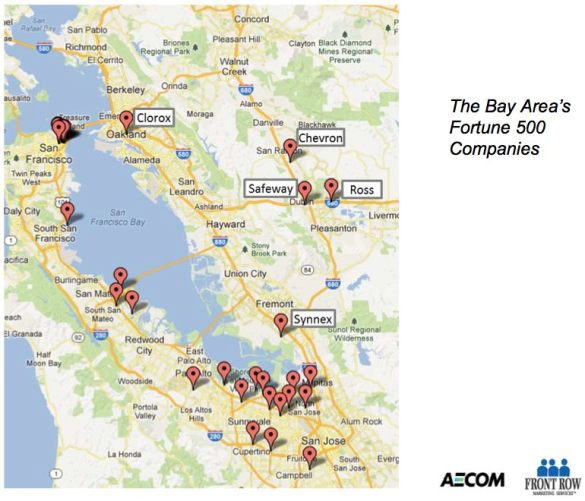
map_of_fortune500s

Map of Fortune 500 companies provided by consultants

One surprise coming out of this is that the Raiders revealed that they feel they can pull in $100 million worth of PSLs. Assuming that’s in the same form as PSLs for the 49ers & Cowboys, those are better than nothing, but also short of what the bigger revenue teams use to support their stadia.

For now the study assumes that all forms of financing are on the table: PSLs, NFL G-4, team equity, public. Chances are that by the September presentation, some of these will be pared down. The study doesn’t include some of the back room discussions that have been ongoing, such as the Raiders’ perhaps declining G-4 (if it’s even available) due to a lack of club seat demand. The study also touches on the impact of limited or zero public funds, but doesn’t assess what will happen if they are (not) available.

Keep in mind that while this report is being prepared for Oakland and Alameda County, the Raiders are doing their own study for themselves and more importantly, the NFL. These reports are not just about how to build and finance a stadium at Coliseum City. These studies are also about determining how viable the Oakland/East Bay market is. That’s the real question here. For now the NFL has not rendered a long-term judgement about the reduced capacity at the Coliseum or the possibility of a much smaller-than-normal Coliseum replacement. When these reports are completed, the NFL will most certainly tell Mark Davis exactly what it thinks about the East Bay as a NFL market long-term, and chances are if these demand numbers don’t improve at the end of this season, the owners and Roger Goodell may look outside the East Bay entirely whether that means Santa Clara or Los Angeles.

The big wildcard is the status of the Raiders’ extension at the Coliseum. We had heard that the extension was “weeks away” from being done as early as last summer. If the Raiders and the Coliseum Authority are still struggling with the extension, that’s because the JPA wants to better link the extension to Coliseum City. Moreover, ongoing tensions with the A’s can’t be helping things, since both teams are bargaining with the JPA for many of the same cuts of revenue (signage, concessions). Oakland/Alameda County have also been pushing hard to get both teams to take on more of the remaining debt at the Coliseum. This is the exact situation that everyone should’ve seen coming long ago. With both teams having no lease after 2013, they’re both free agents. At least the Raiders can crash in Santa Clara for a few years while they try to figure it out. The A’s have no such luxury.

Oakland has an even tougher task ahead of them. The September report should show what Oakland will be expected to put up for Coliseum City. Sure, they can levy new hotel and rental car taxes or create a community facilities district. All of those measures will require some kind of vote. Even more challenging is that Oakland/Alameda County has to take a gamble on what development can be brought in with the Raiders as the only anchor. This is the assessment:

  • 40-60,000 square feet retail
  • 35-70,000 square feet office
  • 150-250 hotel rooms
  • 400-700 residential units

The non-residential component is only around 250,000 square feet, about the size of Hegenberger Gateway across the Nimitz, with retail only a quarter of the total. Patriot Place in Foxborough, MA started out as a strip mall and gained momentum as the team did well and the stadium area became attractive. Now it’s 1.3 million square feet and doesn’t need the football stadium as an anchor. Santana Row (640,000 SF) or Bay Street (400,000 SF) are good comparisons in the Bay Area for what Oakland is aiming for. Oakland is severely under-retailed, but will that be enough to attract the private capital necessary to build the mall? No one can say with any certainty at this point. Plus it’s strange to juxtapose the image of Black Hole dwellers tailgating against what would be an urban/suburban mall landscape. The Patriots made it work because Robert Kraft owned the land and financed everything. He could afford to be patient. Mark Davis doesn’t have the funds to do anything like that. As far as we know, Davis is only interested in a stadium and little else. The retractable dome idea (championed by Mayor Jean Quan) appears to be properly scuttled. But if Oakland gets limited ancillary development from the Raiders’ stadium, what’s in it for Oakland besides pride? Does Oakland need another Hegenberger Gateway?

There’s a reckoning coming. It may be slow. It’ll get here soon enough. We’ll finally have some answers. Brace yourself.

The new Raiders reality: 50,000 seats, $700 million

Update 11:45 PM – Both Nina (in the comments) and Bryan (@wacchampions) pointed out that Matt Artz may have misinterpreted the capacity projection. It’s possible that 50,000 is only representative of regular seats. Some 6,000 club seats and other premium seating weren’t counted. At EBX, Steven Tavares sticks with the 50k number per AECOM’s David Stone. This blog and other media have picked up on the original report, so 50k is the number until we suss everything out in the feasibility study.

Update 5:00 PM – Matt Artz has a new article out, citing the cost of the stadium at $800 million.

I couldn’t make it out to the JPA presentation at Oakland City Hall today. Thankfully, others did. The Trib’s Matthew Artz tweeted this during the meeting:

The feasibility study will be released to the public tomorrow, so for now we have observations from the media, citizens and fans at the meeting. Here’s what we’ve gathered so far:

  • The stadium would have only a 50,000-seat capacity, down not just from the 63,000-seat full capacity of the Coliseum, but also smaller than the 53,250 seats at the tarped off Coliseum the Raiders announced would be configured for the upcoming 2013 season.
  • The new stadium would cost $700 million to start and could go up based on how it is outfitted (dome, amenities).
  • The Raiders’ share of the stadium is $300 million, which would include seat licenses and other forms of financing.
  • The remaining $300-400 million (fuzzy) would have to come from a combination of corporate sponsorships and other commitments, and public financing.
  • The presentation and discussion were focused solely on the Raiders stadium. There was little-to-no mention of the other two tenants.

The Raiders fan known as Dr. Death wore his regalia to the meeting and talked to Oakland Mayor Jean Quan afterwards.

Raiders superfan Dr. Death discusses Coliseum City prospects with Oakland Mayor Jean Quan (photo credit: @edwardjohnCA)

Raiders superfan Dr. Death discusses Coliseum City prospects with Oakland Mayor Jean Quan (photo credit: @edwardjohnCA)

The good doctor also interviewed a few fans and meeting attendees after the meeting. Listen to the below podcast to get a sense of what the discussion was like.

Despite the fact that the City, County, and Raiders are working on the Coliseum City vision, there’s an overwhelming feeling of discord among the parties. One party feels another is not trying hard enough, one criticizes another for not showing more commitment, issues about setting expectations, etc. It may be ugly under the surface, but it’s healthy. The only way to get a real consensus for whatever this vision is will be to talk through the issues, which at this point are mostly financial. It’s part of the adult conversation that I’ve been clamoring for and I’m glad to see that it’s happening. Maybe it will result in a full consensus that everyone feels is attainable. Perhaps it will cause one or more parties to lose interest. Either way it’s a vital part of the process. It’s long overdue.

There are some other concerns, chiefly about the size of the stadium and the public share. We’ll leave them alone for now until we get the details tomorrow. In the near term, the Chronicle’s Matier and Ross pose a big near term issue: architectural firm JRDV is looking for another $3 million to continue work on Coliseum City, which means that the JPA & City may have to go to the trough yet again. Then there’s this bombshell:

That certainly brings a little more heat to everything now, doesn’t it? Maybe they can raid the scoreboard fund again. It’s not as if the scoreboard didn’t break in the middle of Friday night’s game.

Warriors backing away from 2017 SF arena opening date

On June 20 the California Assembly easily passed AB 1273, a bill from San Francisco’s Phil Ting that aimed to speed up the CEQA process by bypassing the Bay Conservation and Development Commission (BCDC). That hope faded on the 25th, when a Senate committee refused to take action on the bill, citing the importance of the BCDC and the State Lands Commission. The bill was withdrawn from committee shortly thereafter.

The Snøhetta/AECOM-designed Warriors arena on San Francisco’s Piers 30/32

The BCDC is the first and largest regulatory body that approves any and all development along the bay. The Warriors and SF pols hoped that by not involving the BCDC they’d be able to hit their target opening date of fall 2017. For now the 2017 date looks shaky, as involvement with the BCDC and contingent agencies could add a 1-2 years (or more) to a normal CEQA process.

Tim Kawakami saw the other shoe drop when he interviewed Warriors co-owner Joe Lacob this week.

LACOB: I do know there’s a possibility, certainly, that (the arena) could be delayed. It’s not a probability at this point. The probability is that we achieve our goal.

Not exactly a rallying cry, rather a more tempered response than Lacob has previously exhibited. Lacob has shown no signs of giving up on the project, as he and Peter Guber most certainly see the revenue advantages it would bring even the arena were delayed 1-2 years. Lacob also said that he’d consider Lot A across McCovey Cove/Mission Creek from AT&T Park, but not Pier 50 next door (which would bring up the BCDC threat all over again). Chances are that the W’s would only build on Lot A if they received exclusive development rights, which have already been given to the Giants with plans drawn up. Not that they couldn’t be changed if the right deal were struck. The Giants are refinancing their remaining debt on AT&T Park to help finance the Lot A project, so you have to think it’s already pretty far along in the process for them.

Interestingly, the apparent defeat of AB 1273 marks the fourth instance of large political effort to fast-track a project that has either backfired or failed to help the effort. A letter from the Pacific Merchant Shipping Association (among others) made note of previous instances:

  • AB 900 in 2011 was legislation for a Portside San Diego Chargers stadium. Eventually the plan fizzled as no one could figure out how to bridge the funding gap.
  • A fast track bill for Farmers Field was passed in 2012, but became moot as Phil Anschutz wavered when confronted with the high price the NFL was going to make him pay to bring one or two teams downtown.
  • Seattle interests also bumped up against their own working Port to ram through a SoDo Sonics arena.

The first two instances of demise were purely financial as no one could make the deal terms pencil out. Bills or other measures may have helped in the end, we’ll never know. The brief list doesn’t include Carole Migden’s failed attempt to block the 49ers’ move to Santa Clara. Seems like the memo to any teams trying these shenanigans should be to simply let the process work itself out, no matter how painful it is.

In the letter link above is also Oakland Mayor Jean Quan’s opposition to the bill, framed in terms of economic impact to Oakland. Quan has also mentioned the BCDC in interviews, but she was smart to not include that argument in the letter. After all, she’s advocating for a ballpark at Howard Terminal, a piece of land that, like Piers 30/32 in SF, is subject to BCDC and SLC review. The BCDC website’s FAQ barely scratches the surface of the regulatory work required to build anything on the Bay (bold are my emphasis):

What types of activity require a permit?

A BCDC permit must be obtained before you do any of the following things within the Commission’s jurisdiction:

Place solid material, build or repair docks, pile-supported or cantilevered structures, dispose of material or moor a vessel for a long period in San Francisco Bay or in certain tributaries that flow into the Bay.

Dredge or extract material from the Bay bottom.

Substantially change the use of any structure or area.

Construct, remodel or repair a structure.

Subdivide property or grade land.

Shouldn’t be a problem for a Howard Terminal ballpark, right? Easy peasy.

—–

In the Kawakami interview, Lacob also referenced the departure of AECOM from the project. According to Lacob, the AECOM had already finished its task of completing design work for the inside of the arena. That means that design work is largely complete, barring CEQA-mandated changes to the project. That should show you how serious the W’s are about getting this thing built.

Howard Terminal settlement approved, what’s next?

The Port of Oakland’s Board of Commissioners approved the settlement with SSA that will free up Howard Terminal for a future ballpark. The unanimous approval was the first of two, but the second is expected to be a formality. SSA will vacate Howard Terminal to move down the harbor, where it will consolidate operations. SSA rival Ports America lobbied against the deal and is dangling a lawsuit threat over the Port. The longshoremen’s union is also protesting the new terms.

Now that we’re here, let’s present the remaining steps that will need to be completed in order to have a truly shovel-ready site.

  1. Need to draft and certify an environmental impact report. Can’t build anything on Howard Terminal without an EIR.
  2. Determine cost to cleanup/prep site. – Howard Terminal proponents claim they can build on the site with as little as $50 million in infrastructure. I’ve investigated this and I estimate that it’s not doable for less than $150 million. Who’s right? We’ll need the EIR (above) to find out.
  3. Determine cost to provide proper car & pedestrian access. – If there’s going to be a lot of parking on site, at least one new multi-lane overpass will need to be built over The Embarcadero at Market Street to provide access for those cars as well as emergency vehicles. Add to that at least one pedestrian bridge from the eastern end of the site and numerous streetscape improvements, and the infrastructure bill could grow significantly.
  4. Avoid other lawsuits. – In working to settle one lawsuit, the Port could find itself fighting a lawsuit two-front war against Ports America and the ILWU. While the labor battle could be resolved through arbitration, a Ports America lawsuit could end up like SSA, dragging on for years. To satisfy SSA, the Port agreed to take it on the chin to the tune of $40 million over the next four years.

How much of this will the Port and Oakland backers accomplish? It’s up to them. There’s only one way to find out – get cracking on that EIR. Without these steps Oakland doesn’t have a site. MLB is looking for something that’s shovel-ready, and the road to getting there is a long one.

Oakland/JPA releasing a feasibility study, not an EIR

The mystery, such as it was, is over. We’re getting a feasibility study on Monday. The meeting will be held at Oakland City Hall, Hearing Room 4 (2nd floor) from 11:30 AM to 1:30 PM.

Coliseum JPA meeting agenda edited to focus on important part

Coliseum JPA meeting agenda edited to focus on important part

Prior to the presentation will be an open forum. Speakers should be expected after the presentation as well. One or more Raiders fan groups were asking for fans to show up to give support for Coliseum City. If the last one of these sessions at City Hall is any indication, there should be a smattering of A’s gear and plenty of folks wearing both “Oakland” teams’ colors. And maybe a Warriors fan or two.

When the feasibility study was green lighted last year, there were plenty of suggestions to include many different alternatives. This ran the gamut from the different open air/dome options we’ve discussed repeatedly to different sites and even an alternative in which no teams remained at the Coliseum. I’m curious to see what alternatives were explored, and how thoroughly the consultants considered each of them. As this is an initial presentation, there’s no expectation that any action would be taken regarding the direction of the Coliseum City project. Any kind of major decision involving scope would likely be part of the broader EIR process, and as we know, that document isn’t out yet (probably fall).

The feasibility study was written by AECOM, the huge architectural and design services firm that until last week was involved with the W’s and their Piers 30/32 arena. AECOM’s a large enough company that different groups will be working on these projects with very different scopes, though it’s possible that some of the principals shared notes. Studies like these will talk a lot about project costs, though it’s also normal for them to include rosy projections about economic impact and revenue. We’ll see how honest this one is. Naturally, I’m most interested in the costs of the different alternatives, especially the two-stadium and three-venue options.

Just as important is that this is the first large project of this type that’s being planned in the post-redevelopment era. The report should reflect that reality and identify other sources of funding for infrastructure and the like. There may also be a mention of other public funding sources, such as the $40 million lost when Measure B1 went down to defeat last November.

From a general public debate standpoint, a feasibility study is better than an EIR in some ways. EIRs are so thick and thorough that it’s easy to get bogged down in the details – and specific cost isn’t even a major consideration. With a feasibility study, we can finally start having that discussion about how much it will cost to retain the Coliseum’s tenants. The EIR has its place when it comes to identifying changes and mitigations that will need to be made to support the project. For now, this is at least a start of a real dialogue. Better late than never.

Port’s SSA settlement invites lawsuit from SSA competitor

The Port of Oakland’s Board of Commissioners has held off from approving a deal with SSA to give up Howard Terminal for nearly two weeks. In that time, opposition to the plan has only getting more fierce. First was the ILWU (longshoremen) objecting to the deal on the grounds that it would cost jobs. Now it’s another terminal operator at the Port named Ports America (PAOHT) who is not on board, claiming that the deal would give SSA an unfair, sweetheart deal over PAOHT. Ports America is threatening to sue the Port of Oakland if SSA’s deal to close Howard Terminal and consolidate operations for SSA is approved.

Remember that the Port was motivated to make the deal in order to settle an existing lawsuit by SSA. So we have a situation where settling one lawsuit brings on one or two more? Brilliant.

Obviously, all of the parties are acting in their own self-interest. Ports America wants to preserve its own sweetheart deal relative to SSA, and SSA’s new lease either matches or leapfrogs PAOHT depending on how you look at it. The union is trying to save jobs, even if it means having the Port run in an arguably less efficient, less competitive way.

Yesterday, a group of ILWU workers picketed outside the APL terminal at the Port’s Middle Harbor, protesting the settlement in the process.

You know what I’d like to see? A summit involving the Port, Clorox CEO Don Knauss plus the good folks at Baseball Oakland and Save Oakland Sports, and the ILWU, SSA and Ports America. I’m sure that if you just got them all in a room they could easily hash out their differences and resolve everything quickly. Because Oakland is the epitome of efficient, well-run government, right?

Frankly, the Port should approve the deal tomorrow and move forward. They can’t bow to one ransom demand after another. It needs to stop at some point. The issue for the Port and City is that this happens not infrequently, and legal structures are in place to let it continue. And if there is a lawsuit by Ports America or the ILWU, no one from San Jose should gloat. South Bay fans have seen what it’s like to have a frivolous lawsuit act as a guise for anticompetitive behavior. No one, whether from San Jose or Oakland, should be happy about that, whenever or however it happens. If you are, well then screw you.

First part of Coliseum City EIR scheduled for 7/15 release

Well, look at what we have here…

Screenshot of Facebook group announcement

Screenshot of Facebook group announcement

I’m traveling on Monday, but I expect to download and read the EIR once it’s available. Since next week is the All Star Break, we’ll have plenty of time to cover the document in detail. The “first part” probably refers to Area 1, which covers the Coliseum complex and some of the immediately surrounding area, including the Malibu and HomeBase lots and some of the land extending out towards the BART station. Hopefully we’ll also get a glance at the feasibility study. I look forward to the release.

Coliseum City Specific Plan

Coliseum City Specific Plan

Coliseum City already running into financing problems

Last week, Zennie Abraham teased with one of his video blogs, this one about Coliseum City. In it, he claimed that a financing plan for Coliseum City fell apart recently.

Abraham, who is still connected with Oakland City Hall to an extent, made a few other points:

  • Mega-developer Forest City Enterprises (responsible for Uptown among other projects) was/is to be the master developer.
  • A businessman from Torrance wants to bring the Raiders south.
  • The Raiders pushed for a cheaper, open-air stadium ($900 million)

Last night Abraham elaborated on the story, filling in some of the gaps.

  • The “Torrance businessman” is in fact Ed Roski, he of the City of Industry stadium plan.
  • Roski attended a Clippers game in april with Raiders managing partner Mark Davis, who may be willing to split with 17% of the team to take care of some inheritance tax obligations after Al Davis passed away. In the past Roski has wanted a 30% share, large enough to be managing partner.
  • A big stumbling block is the potential of seat license sales, which continues to plague the original Mt. Davis project but is also considered a requirement for new NFL stadia due to the enormous cost.
  • Redevelopment funding alternatives are under consideration, such as the establishment of a Mello Roos or Community Facilities District (CFD). It’s not clear how that would work in the case of Coliseum City where a large swath of land is publicly owned. Normally, property owners all choose to vote to tax themselves to fund public improvements, such as infrastructure.

Here’s the thing about Roski’s plan: it’s about as sexy to the NFL as Coliseum City is to MLB. The main draw of Industry was Roski’s advertised low cost to implement, thanks to cheap land, a cheaper stadium design (built into a hillside), and redevelopment money that could’ve paid for new infrastructure. The state’s RDA raid claimed $180 million that was to be earmarked for the project. If, as expected, the funds go away, Roski might have to lobby local legislators to pass a bill that creates a carveout on his behalf, which is a step further than what the Warriors and AEG were seeking in their venue efforts. Regardless, you can’t blame Roski for trying. He waited until the Farmers Field deal fell apart. He can do the same for Coliseum City.

The interesting outside angle for Roski is that last week St. Louis declined to pay for $700 million in improvements for the Edward Jones Dome, setting the stage for negotiations on what would probably be a new outdoor stadium somewhere in the metro. Of course, a new NFL stadium is guaranteed to cost more than $700 million, so it’s hard to know what kind of deal the city/county/state could offer Rams owner Stan Kroenke. A situation involving the Rams and Raiders at Roski’s Industry with Roski getting smaller minority shares could be just the ticket. Now there’s no speculation of this deal happening, but it’s definitely an option, if remote.

Going back to Coliseum City, I’ve said for over a year now that the financing for the project, whatever the scale is, looks iffy at best. That’s expected to be borne out in a feasibility study that should come out latter this summer/fall. What we’ve been told so far has not made the financing picture any clearer:

  • City Administrator Fred Blackwell said in February that the Raiders stadium may not end up with a NFL G-4 loan because of difficulty getting the revenue backing for the loan (club seats). The G-4 money may not be an issue moving forward since the Falcons are getting the last full slice.
  • Contradicting Blackwell, Oakland Mayor Jean Quan has said that she wants the NFL’s loan. She also said she wanted a retractable dome stadium, which appears to be a nonstarter at this point.
  • The “preferred” open air stadium will still cost $900 million, which isn’t chump change, and if the 49ers’ stadium is any guide, destined to grow in cost. In most current stadium development agreements the team is on the hook for cost overruns. How could the Raiders agree to that when Mark Davis doesn’t have the cash?
  • If it’s not a dome it can’t be used as a convention center or an otherwise flexible facility. What incentive is there for Oakland and Alameda County to invest limited resources for a limited use stadium? Is it just because the Raiders are playing nice right now?

Another interesting element about the financing piece is that investors are focused on the area currently known as the Coliseum complex, plus the Malibu/HomeBase lots. In the Coliseum City study, an alternative will include a ballpark in the northern corner of the complex. But what if Forest City recommends that additional commercial or retail development go there instead to help pay for the cost of the NFL stadium? That would be something. Forest City helps kill two Oakland ballpark plans (even if no one cares for Coliseum City for the A’s). Why not get them to develop Howard Terminal while you’re at it?

Speculation about who outside investors are or which country they come from is neither here nor there. The problem is that whoever it is, they need to be able to make money off this plan. We’re starting to see far more realistic discussion of the revenue generating capability at Coliseum City, not some pie-in-the-sky projections. This is a good thing, because it will eventually lead to the adult conversation about what it’ll take to keep one, two, or all three teams in town. Until now every party involved in Coliseum City has been looking to get someone else to pay for their stadium, their resurgence. Soon, we’ll finally find how much it’ll cost everyone, including the public. That’s a lot more honest than the discussion that led to Mt. Davis.