Talking bobbleheads, giveaways, and expectations

The A’s held a 1973 team reunion on April 27. A raft of greats from that repeat championship team were on hand, including Sal Bando, Blue Moon Odom, Bert Campaneris, and Reggie Jackson, who was honored with a commemorative bobblehead.

While the weekend-long reunion went well, the bobblehead giveaway didn’t. Only 10,000 bobbleheads were available for the 31,292 in attendance, which left many who had waited long hours sans souvenir. It’s becoming a common theme: schedule a bobblehead day, line up a bunch of fans, someone inevitably goes home unhappy. Subsequent bobblehead days for Coco Crisp (in June) and Yoenis Cespedes (yesterday) attracted sellout crowds, leaving even more fans without a souvenir. It’s gotten to the point where if a fan is not in line several hours before first pitch, chances are he’ll go home empty handed.

A’s marketing guys Troy Smith and Travis LaDolce invited into the business offices in Oracle Arena before today’s game. I spoke with them for 90 minutes about all manner of giveaways and marketing strategy. Smith admitted that Reggie Jackson day was a debacle and that there was major room for improvement. To that end they bumped up the orders for both the Crisp and Cespedes giveaways from 10,000 to 15,000, a move they had to make months ahead of time in order to ensure prompt delivery. It’s all part of the guessing game the A’s front office constantly has to play regarding demand.

Collectible pins, which get far less attention than bobbleheads

Collectible pins, which get far less attention than bobbleheads

For instance, take yesterday’s game. Now that we’ve come to expect sellouts on bobblehead day, it’s natural to want greater quantities of items. Because of the parking situation associated with the circus next door at the arena, it was decided that the gates should open at 2:30, 90 minutes before the normal time. Throughout the day A’s marketing staff including Smith and LaDolce were monitoring the situation. D Gate, which appeared to be most heavily impacted, ran out of bobbleheads at 3:27 PM. However, by that point lines had fully dissipated so if you had walked up prior to 3:30, chances were good you’d get one. Chances were even better at the season ticket entrance, which usually is stocked well enough to handle giveaways past the point when other gates run out.

What wasn’t known about the game was that the A’s had only sold 25,000 tickets to the game 24 hours prior to first pitch. An incredible 10,000 tickets were sold as either walkups or online during that period. That’s rather typical these days due to the rather predictable number of advance tickets sold. Some additional amount were sold after Cespy won the Home Run Derby. The problem is that the A’s have to plan everything for each game well ahead of time, including staffing and giveaways. Staffing can be handled with some flexibility. Because of the lead times associated with giveaways, bobbleheads have almost no flexibility (well, except for the actual bobblehead itself).

Two other examples of this phenomenon occurred in the last several weeks. The first was on Grant Balfour Gnome Day (June 16), which was a full standing room only sellout. Walkup sales were so high that in the week prior to the game, the front office worried if only 25,000 would show up. On the Fourth of July, less than 27,000 showed up for a picnic blanket giveaway, which left the marketing crew (and me) baffled because the annual fleece blanket giveaway day typically goes gangbusters.

Now think about the leadup to yesterday. All sorts of things could’ve dampened attendance. Cespedes could’ve been eliminated early in the HR Derby. He could’ve been injured early in the season. The team might not have been in postseason contention. All of this comes into play, and if you’re working off a steady base of about 10-15,000 attendees, it can be difficult to justify bumping it up more. The easy thing to say is to order 30-35,000 right off the bat. Because of the team’s limited marketing budget, 35,000 bobbleheads would’ve negatively impacted some other promotional day, potentially getting rid of a promotion altogether. I asked about other teams that sell 40,000 or full capacity quantities such as the Brewers or Dodgers. Those teams can afford to do it because marginal tickets they sell in the leadup to the game are usually very expensive ($100 or more), so they have headroom to make up for it. The A’s have dynamic pricing, but even then prices might go up only 20-30% in the process. Sponsors attached to each giveaway have little say over the quantity since the giveaways have to be planned as early as November prior to the following season, and they generally don’t directly fund giveaway purchases. I pressed on with 35,000 items. Smith countered that the last thing the team wants is to have 5,000 left over. When I said the items could just be sold in the team store, he said (I’m paraphrasing here) that if that’s the case, they’re not a good promotional tool. The whole point is of giveaways is to get people in the park and to give them a special memento. Sell overstock in team store would defeat the purpose (though I suppose it would give the naming rights sponsor an avenue, hint-hint). Judging from the response at the Coliseum, it’s working whether the quantity is 10,000 or 15,000. He admitted that there may be room for more in the future, but it would all be linked to ticket sales since everything flows from there.

jamesvenes-bobblehead_chart

James Venes’ June chart showing different teams’ bobblehead giveaway figures

The chart above, put together by the inimitable James Venes independently from this article two months ago, shows the wide spectrum of bobblehead quantities for the various teams. The Brewers and Phillies give to capacity, the Giants and Dodgers are pretty close. Then again, those four teams surpass 3 million in attendance annually. The A’s are in the middle of the pack as far as the bobblehead-to-capacity ratio goes. Last weekend I attended the Ken Griffey Jr. day at Safeco Field. Despite a sure sellout crowd (47,000), they had only 20,000 bobbleheads. Like it or not, giving items to around 40% of the house is standard practice.

Over the years the A’s have tweaked the types of giveaways they’ve done. Gone are the cheapo caps of yesteryear as few people care about those. Smith showed me a commemorative back-to-back World Series champs pennant from 1974, to which his mother added “1974” in pen. I asked why there aren’t giveaway pennants anymore. Smith replied that people don’t seem to hold them in any value. I imagine the same thing could be said about the old end-of-season baseball card giveaways (remember how those were sponsored by Mother’s Cookies?). LaDolce had a similar pennant commemorating the A’s 1992 division crown, a moment that reflected the true end of the Haas era. Nowadays the stuff people want are collectibles, with bobbleheads at the forefront.

Troy Smith's assembled scorecards from The Streak. Note the attendance figures from each.

Troy Smith’s assembled scorecards from The Streak. Note the attendance figures from each. Game 20 isn’t there because Smith he was working the scoreboard that day.

When I was asked for future giveaway suggestions, I only had one: an A’s fan. Preferably an action figure or figurine with a gold jersey if that can be done. He/she might be donning a green cape or a Reddick luchador mask. I can’t speak to how racially non-specific it should be or to anatomical correctness. I’m sure it can be done. It would be a great acknowledgement of how faithful the hardcore A’s fan is, a kind of olive branch disguised as an in-joke. I’m no marketing genius, but I think it’d be cool. Accessories could be given away at future games. Besides, if the marketing folks have to order these before knowing what will happen with the notoriously volatile A’s roster, a good bet would be one thing Billy Beane can’t trade: a fan.

Yours truly posing with the three straight American League Championship trophies

Yours truly posing with the three straight American League Championship trophies

We talked about a great number of topics including the upper deck tarps, ballpark sites, the Josh Reddick effect, crossing over from being a lifelong fan to working for the team (as both Smith and LaDolce are), what it means to move from an old stadium to a new ballpark, and other matters. They showed me a prototype Green Day trucker hat to be given away at the end of the month, along with a hint about surprise guest they’re hoping to secure in time for the next Star Wars fireworks night. We didn’t talk about costs to produce items, though some of that information can be found elsewhere. I don’t know if our talk or the feedback from this article will effect change. The team has a fan committee that it listens to regularly. Smith and LaDolce were happy to talk to me at length. They read this blog, as do others around the league. Hopefully the kinks can be worked out to a happy medium. Maybe they can institute a ticket system like the kind employed for concert ticket sales or iPhone/iPad launches. There are ways to get these things in the hands of people that really want them. Until then, we’ll keep waiting in line. Thanks to Troy Smith and Travis LaDolce for inviting me into the inner sanctum for a little bit. I’m sure we’ll have more to chat about in due course. Maybe we’ll be talking action figures.

—-

P.S. – The team and bobblehead manufacturers can take months to work on items and still not get them exactly right. Case in point:

Radio interview with 1010 AM SoCal, talking Raiders & A’s stadium issues

I’m still in Pittsburgh. While resting at The Church Brew Works (a must-see if you’re ever in Steel Town), I did an interview with Julie Buehler and Geoff Bloom of Team 1010, an AM sports talk station in Palm Springs. Normally when I do when of these, I hem and haw a little on the “percentage chance something happens” game. This time I didn’t. Take a listen.


Video streaming by Ustream

Thanks to Julie and Geoff for having me on, and the Trib’s Matthew Artz for linking us up.

Coliseum City Football Stadium Revenue Study (Updated with analysis)

As planned, the study is out. It’s brief. A series of component updates are due over the next couple of months, with the final presentation(s) to come in September.

First, the part that seems to be contention is data that comes directly from the Raiders:

– Little corporate support in the market
– PSL program could potentially generate approximately $100 million
– Anticipated demand could justify approximately:
•  50,000 seats
•  85 to 95 suites
•  6,000 club seats
•  400 to 600 loge seats

The study is vague, perhaps intentionally so on both capacity and cost estimates. The numbers above are only demand, which is important. It’s subject to change based on various factors including team performance, price, and the general attractiveness of the stadium. That doesn’t mean the stadium is set for 50k, 56k, or 60k seats right off the bat. If anything it’s an indicator of two things:

  • What the Raiders feel the market can support right now
  • How low that is compared to other healthier markets (SF being the direct comparison)
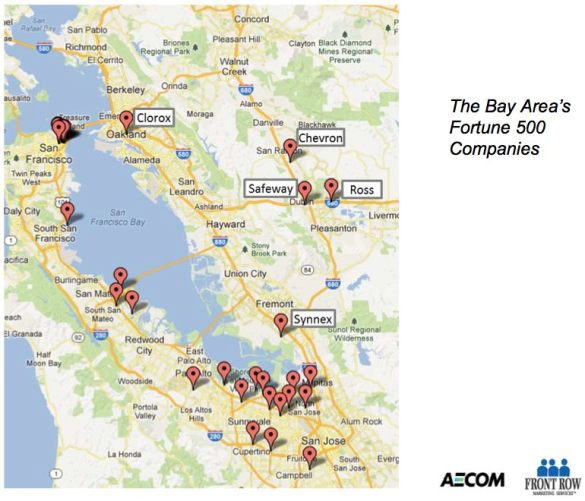
map_of_fortune500s

Map of Fortune 500 companies provided by consultants

One surprise coming out of this is that the Raiders revealed that they feel they can pull in $100 million worth of PSLs. Assuming that’s in the same form as PSLs for the 49ers & Cowboys, those are better than nothing, but also short of what the bigger revenue teams use to support their stadia.

For now the study assumes that all forms of financing are on the table: PSLs, NFL G-4, team equity, public. Chances are that by the September presentation, some of these will be pared down. The study doesn’t include some of the back room discussions that have been ongoing, such as the Raiders’ perhaps declining G-4 (if it’s even available) due to a lack of club seat demand. The study also touches on the impact of limited or zero public funds, but doesn’t assess what will happen if they are (not) available.

Keep in mind that while this report is being prepared for Oakland and Alameda County, the Raiders are doing their own study for themselves and more importantly, the NFL. These reports are not just about how to build and finance a stadium at Coliseum City. These studies are also about determining how viable the Oakland/East Bay market is. That’s the real question here. For now the NFL has not rendered a long-term judgement about the reduced capacity at the Coliseum or the possibility of a much smaller-than-normal Coliseum replacement. When these reports are completed, the NFL will most certainly tell Mark Davis exactly what it thinks about the East Bay as a NFL market long-term, and chances are if these demand numbers don’t improve at the end of this season, the owners and Roger Goodell may look outside the East Bay entirely whether that means Santa Clara or Los Angeles.

The big wildcard is the status of the Raiders’ extension at the Coliseum. We had heard that the extension was “weeks away” from being done as early as last summer. If the Raiders and the Coliseum Authority are still struggling with the extension, that’s because the JPA wants to better link the extension to Coliseum City. Moreover, ongoing tensions with the A’s can’t be helping things, since both teams are bargaining with the JPA for many of the same cuts of revenue (signage, concessions). Oakland/Alameda County have also been pushing hard to get both teams to take on more of the remaining debt at the Coliseum. This is the exact situation that everyone should’ve seen coming long ago. With both teams having no lease after 2013, they’re both free agents. At least the Raiders can crash in Santa Clara for a few years while they try to figure it out. The A’s have no such luxury.

Oakland has an even tougher task ahead of them. The September report should show what Oakland will be expected to put up for Coliseum City. Sure, they can levy new hotel and rental car taxes or create a community facilities district. All of those measures will require some kind of vote. Even more challenging is that Oakland/Alameda County has to take a gamble on what development can be brought in with the Raiders as the only anchor. This is the assessment:

  • 40-60,000 square feet retail
  • 35-70,000 square feet office
  • 150-250 hotel rooms
  • 400-700 residential units

The non-residential component is only around 250,000 square feet, about the size of Hegenberger Gateway across the Nimitz, with retail only a quarter of the total. Patriot Place in Foxborough, MA started out as a strip mall and gained momentum as the team did well and the stadium area became attractive. Now it’s 1.3 million square feet and doesn’t need the football stadium as an anchor. Santana Row (640,000 SF) or Bay Street (400,000 SF) are good comparisons in the Bay Area for what Oakland is aiming for. Oakland is severely under-retailed, but will that be enough to attract the private capital necessary to build the mall? No one can say with any certainty at this point. Plus it’s strange to juxtapose the image of Black Hole dwellers tailgating against what would be an urban/suburban mall landscape. The Patriots made it work because Robert Kraft owned the land and financed everything. He could afford to be patient. Mark Davis doesn’t have the funds to do anything like that. As far as we know, Davis is only interested in a stadium and little else. The retractable dome idea (championed by Mayor Jean Quan) appears to be properly scuttled. But if Oakland gets limited ancillary development from the Raiders’ stadium, what’s in it for Oakland besides pride? Does Oakland need another Hegenberger Gateway?

There’s a reckoning coming. It may be slow. It’ll get here soon enough. We’ll finally have some answers. Brace yourself.

The new Raiders reality: 50,000 seats, $700 million

Update 11:45 PM – Both Nina (in the comments) and Bryan (@wacchampions) pointed out that Matt Artz may have misinterpreted the capacity projection. It’s possible that 50,000 is only representative of regular seats. Some 6,000 club seats and other premium seating weren’t counted. At EBX, Steven Tavares sticks with the 50k number per AECOM’s David Stone. This blog and other media have picked up on the original report, so 50k is the number until we suss everything out in the feasibility study.

Update 5:00 PM – Matt Artz has a new article out, citing the cost of the stadium at $800 million.

I couldn’t make it out to the JPA presentation at Oakland City Hall today. Thankfully, others did. The Trib’s Matthew Artz tweeted this during the meeting:

The feasibility study will be released to the public tomorrow, so for now we have observations from the media, citizens and fans at the meeting. Here’s what we’ve gathered so far:

  • The stadium would have only a 50,000-seat capacity, down not just from the 63,000-seat full capacity of the Coliseum, but also smaller than the 53,250 seats at the tarped off Coliseum the Raiders announced would be configured for the upcoming 2013 season.
  • The new stadium would cost $700 million to start and could go up based on how it is outfitted (dome, amenities).
  • The Raiders’ share of the stadium is $300 million, which would include seat licenses and other forms of financing.
  • The remaining $300-400 million (fuzzy) would have to come from a combination of corporate sponsorships and other commitments, and public financing.
  • The presentation and discussion were focused solely on the Raiders stadium. There was little-to-no mention of the other two tenants.

The Raiders fan known as Dr. Death wore his regalia to the meeting and talked to Oakland Mayor Jean Quan afterwards.

Raiders superfan Dr. Death discusses Coliseum City prospects with Oakland Mayor Jean Quan (photo credit: @edwardjohnCA)

Raiders superfan Dr. Death discusses Coliseum City prospects with Oakland Mayor Jean Quan (photo credit: @edwardjohnCA)

The good doctor also interviewed a few fans and meeting attendees after the meeting. Listen to the below podcast to get a sense of what the discussion was like.

Despite the fact that the City, County, and Raiders are working on the Coliseum City vision, there’s an overwhelming feeling of discord among the parties. One party feels another is not trying hard enough, one criticizes another for not showing more commitment, issues about setting expectations, etc. It may be ugly under the surface, but it’s healthy. The only way to get a real consensus for whatever this vision is will be to talk through the issues, which at this point are mostly financial. It’s part of the adult conversation that I’ve been clamoring for and I’m glad to see that it’s happening. Maybe it will result in a full consensus that everyone feels is attainable. Perhaps it will cause one or more parties to lose interest. Either way it’s a vital part of the process. It’s long overdue.

There are some other concerns, chiefly about the size of the stadium and the public share. We’ll leave them alone for now until we get the details tomorrow. In the near term, the Chronicle’s Matier and Ross pose a big near term issue: architectural firm JRDV is looking for another $3 million to continue work on Coliseum City, which means that the JPA & City may have to go to the trough yet again. Then there’s this bombshell:

That certainly brings a little more heat to everything now, doesn’t it? Maybe they can raid the scoreboard fund again. It’s not as if the scoreboard didn’t break in the middle of Friday night’s game.

Oakland/JPA releasing a feasibility study, not an EIR

The mystery, such as it was, is over. We’re getting a feasibility study on Monday. The meeting will be held at Oakland City Hall, Hearing Room 4 (2nd floor) from 11:30 AM to 1:30 PM.

Coliseum JPA meeting agenda edited to focus on important part

Coliseum JPA meeting agenda edited to focus on important part

Prior to the presentation will be an open forum. Speakers should be expected after the presentation as well. One or more Raiders fan groups were asking for fans to show up to give support for Coliseum City. If the last one of these sessions at City Hall is any indication, there should be a smattering of A’s gear and plenty of folks wearing both “Oakland” teams’ colors. And maybe a Warriors fan or two.

When the feasibility study was green lighted last year, there were plenty of suggestions to include many different alternatives. This ran the gamut from the different open air/dome options we’ve discussed repeatedly to different sites and even an alternative in which no teams remained at the Coliseum. I’m curious to see what alternatives were explored, and how thoroughly the consultants considered each of them. As this is an initial presentation, there’s no expectation that any action would be taken regarding the direction of the Coliseum City project. Any kind of major decision involving scope would likely be part of the broader EIR process, and as we know, that document isn’t out yet (probably fall).

The feasibility study was written by AECOM, the huge architectural and design services firm that until last week was involved with the W’s and their Piers 30/32 arena. AECOM’s a large enough company that different groups will be working on these projects with very different scopes, though it’s possible that some of the principals shared notes. Studies like these will talk a lot about project costs, though it’s also normal for them to include rosy projections about economic impact and revenue. We’ll see how honest this one is. Naturally, I’m most interested in the costs of the different alternatives, especially the two-stadium and three-venue options.

Just as important is that this is the first large project of this type that’s being planned in the post-redevelopment era. The report should reflect that reality and identify other sources of funding for infrastructure and the like. There may also be a mention of other public funding sources, such as the $40 million lost when Measure B1 went down to defeat last November.

From a general public debate standpoint, a feasibility study is better than an EIR in some ways. EIRs are so thick and thorough that it’s easy to get bogged down in the details – and specific cost isn’t even a major consideration. With a feasibility study, we can finally start having that discussion about how much it will cost to retain the Coliseum’s tenants. The EIR has its place when it comes to identifying changes and mitigations that will need to be made to support the project. For now, this is at least a start of a real dialogue. Better late than never.

First part of Coliseum City EIR scheduled for 7/15 release

Well, look at what we have here…

Screenshot of Facebook group announcement

Screenshot of Facebook group announcement

I’m traveling on Monday, but I expect to download and read the EIR once it’s available. Since next week is the All Star Break, we’ll have plenty of time to cover the document in detail. The “first part” probably refers to Area 1, which covers the Coliseum complex and some of the immediately surrounding area, including the Malibu and HomeBase lots and some of the land extending out towards the BART station. Hopefully we’ll also get a glance at the feasibility study. I look forward to the release.

Coliseum City Specific Plan

Coliseum City Specific Plan

Coliseum City already running into financing problems

Last week, Zennie Abraham teased with one of his video blogs, this one about Coliseum City. In it, he claimed that a financing plan for Coliseum City fell apart recently.

Abraham, who is still connected with Oakland City Hall to an extent, made a few other points:

  • Mega-developer Forest City Enterprises (responsible for Uptown among other projects) was/is to be the master developer.
  • A businessman from Torrance wants to bring the Raiders south.
  • The Raiders pushed for a cheaper, open-air stadium ($900 million)

Last night Abraham elaborated on the story, filling in some of the gaps.

  • The “Torrance businessman” is in fact Ed Roski, he of the City of Industry stadium plan.
  • Roski attended a Clippers game in april with Raiders managing partner Mark Davis, who may be willing to split with 17% of the team to take care of some inheritance tax obligations after Al Davis passed away. In the past Roski has wanted a 30% share, large enough to be managing partner.
  • A big stumbling block is the potential of seat license sales, which continues to plague the original Mt. Davis project but is also considered a requirement for new NFL stadia due to the enormous cost.
  • Redevelopment funding alternatives are under consideration, such as the establishment of a Mello Roos or Community Facilities District (CFD). It’s not clear how that would work in the case of Coliseum City where a large swath of land is publicly owned. Normally, property owners all choose to vote to tax themselves to fund public improvements, such as infrastructure.

Here’s the thing about Roski’s plan: it’s about as sexy to the NFL as Coliseum City is to MLB. The main draw of Industry was Roski’s advertised low cost to implement, thanks to cheap land, a cheaper stadium design (built into a hillside), and redevelopment money that could’ve paid for new infrastructure. The state’s RDA raid claimed $180 million that was to be earmarked for the project. If, as expected, the funds go away, Roski might have to lobby local legislators to pass a bill that creates a carveout on his behalf, which is a step further than what the Warriors and AEG were seeking in their venue efforts. Regardless, you can’t blame Roski for trying. He waited until the Farmers Field deal fell apart. He can do the same for Coliseum City.

The interesting outside angle for Roski is that last week St. Louis declined to pay for $700 million in improvements for the Edward Jones Dome, setting the stage for negotiations on what would probably be a new outdoor stadium somewhere in the metro. Of course, a new NFL stadium is guaranteed to cost more than $700 million, so it’s hard to know what kind of deal the city/county/state could offer Rams owner Stan Kroenke. A situation involving the Rams and Raiders at Roski’s Industry with Roski getting smaller minority shares could be just the ticket. Now there’s no speculation of this deal happening, but it’s definitely an option, if remote.

Going back to Coliseum City, I’ve said for over a year now that the financing for the project, whatever the scale is, looks iffy at best. That’s expected to be borne out in a feasibility study that should come out latter this summer/fall. What we’ve been told so far has not made the financing picture any clearer:

  • City Administrator Fred Blackwell said in February that the Raiders stadium may not end up with a NFL G-4 loan because of difficulty getting the revenue backing for the loan (club seats). The G-4 money may not be an issue moving forward since the Falcons are getting the last full slice.
  • Contradicting Blackwell, Oakland Mayor Jean Quan has said that she wants the NFL’s loan. She also said she wanted a retractable dome stadium, which appears to be a nonstarter at this point.
  • The “preferred” open air stadium will still cost $900 million, which isn’t chump change, and if the 49ers’ stadium is any guide, destined to grow in cost. In most current stadium development agreements the team is on the hook for cost overruns. How could the Raiders agree to that when Mark Davis doesn’t have the cash?
  • If it’s not a dome it can’t be used as a convention center or an otherwise flexible facility. What incentive is there for Oakland and Alameda County to invest limited resources for a limited use stadium? Is it just because the Raiders are playing nice right now?

Another interesting element about the financing piece is that investors are focused on the area currently known as the Coliseum complex, plus the Malibu/HomeBase lots. In the Coliseum City study, an alternative will include a ballpark in the northern corner of the complex. But what if Forest City recommends that additional commercial or retail development go there instead to help pay for the cost of the NFL stadium? That would be something. Forest City helps kill two Oakland ballpark plans (even if no one cares for Coliseum City for the A’s). Why not get them to develop Howard Terminal while you’re at it?

Speculation about who outside investors are or which country they come from is neither here nor there. The problem is that whoever it is, they need to be able to make money off this plan. We’re starting to see far more realistic discussion of the revenue generating capability at Coliseum City, not some pie-in-the-sky projections. This is a good thing, because it will eventually lead to the adult conversation about what it’ll take to keep one, two, or all three teams in town. Until now every party involved in Coliseum City has been looking to get someone else to pay for their stadium, their resurgence. Soon, we’ll finally find how much it’ll cost everyone, including the public. That’s a lot more honest than the discussion that led to Mt. Davis.

Oakland Mayor Quan with Bucher & Towny, 7/3/13

Update 7/5 5:00 PM – The Trib’s Matthew Artz confirmed what we were all thinking:

Get on that, Oakland. Chop chop!

—–

Oakland Mayor Jean Quan continued to make the case for Howard Terminal on Bucher & Towny’s show today, talking up site control at both the waterfront site and at Coliseum City, which she more-or-less admitted MLB has little interest in based on their inquiries. She even got a dig in at Lew Wolff, saying that “to say there are no sites in Oakland you have to have blinders on.”

Streetscape of The Embarcadero adjacent to Howard Terminal

Quan also revealed that the A’s Coliseum lease extension is very close, that the JPA has been negotiating all spring, and one item remains to negotiate – the scoreboard replacement. A capital improvements fund that was set to cover replacement scoreboards was raided to cover costs associated with the Coliseum City study, and that chicken has come home to roost. There’s no reason to think that the scoreboard would be a showstopper for the two parties moving forward, but this is the JPA we’re talking about. Who knows what can happen in the coming weeks.

Chris Townsend alluded to a July 11 announcement that Howard Terminal could be fully available. In all likelihood that’s dependent on the Port approving settlement terms with SSA, which are now under fire by the longshoremen’s union.

Townsend also tried to get an explanation for what needs to be done with railroad tracks at Howard Terminal, which brought on the following exchange:

Townsend: Someone has told me that one of the problems with Howard Terminal – I wonder if you can speak to this – is that the railroad tracks that run through there… can you talk about that one main concern?

Quan: Well, the ones that go to the Amtrak are outside the (area) so I don’t see that as a problem at all. The other tracks were going straight to the ships. If that’s no longer a terminal they’ll just be lifted up or out, or maybe we’ll make it part of a new light rail system into the ballpark. I don’t know. All of the developers I’ve had look at it have never raised that as an issue.

A couple things to point out here. First, the main tracks that run down The Embarcadero are owned and operated by Union Pacific, who also has a huge yard just northwest of Howard Terminal. The rail line is a vital part of port operations, and that won’t be moved. There’s no chance of that. The issue, as we identified last year, is that a bunch of infrastructure has to be built in conjunction with Howard Terminal’s conversion to a ballpark site in order to support cars, bikes, and pedestrians that would all converge there for games. Plus there would have to be streetscape improvements and safety equipment installed to prevent people and drivers from playing chicken with heavy diesel trains. Add in the presence of a gas pipeline and you have a situation where the Public Utilities Commission will have to come in and approve everything that gets done along The Embarcadero.

Second, the tracks on the site are little more than an afterthought at this point. They were preserved as part of the capping process. If, as Quan says, the tracks can be lifted up or out, the cap would be breached. I always figured that the cap would have to be breached to prep the site, so no big deal there, right? But if a ballpark is supposed to be built without disturbing the cap, how is digging up and removing the tracks supposed to be compatible with that? Moreover, the thought that the tracks could otherwise be folded into a light rail or streetcar project shows how little Quan understands about the situation there. There are strict federal rules about separating freight and other heavy rail trains from light rail trains, to the point that grade separations are frequently required to ensure safety along both lines. The tracks as they sit feed directly into the big railyard, so they couldn’t be used for light rail or a similar purpose unless someone built another bridge to lift trolleys above the heavy rail tracks. The cost to do that would be astronomical on top of the other bridges that would be required there.

Look, I don’t expect Quan to be on top of all of the little details. She seems content to delegate much of the work to her teams and committees, and that can work in many instances. On the other hand, this puzzling response about the rail safety issues clearly shows that her background info on Howard Terminal is very limited. Maybe there’s a reason for that, and that reason is that there is no environmental impact report. Townsend suggested that there’s an EIR for Howard Terminal is coming, but Quan backtracked from that, saying that the Coliseum City EIR is around the corner while not providing a timeframe for Howard Terminal. She said that she believed the Port Commission has ordered the review work. There’s no record of any initial or ongoing environmental review happening at Howard Terminal, so color me confused. Quan took some time out to talk about the importance of CEQA, so she’s fully aware of how mindbogglingly thorough CEQA can be. CEQA is so thorough that new construction has to at least have an initial determination of whether or not a project requires the rest of the CEQA process. So far, there’s no record of that step or any beyond that happening. Now, the Port could be doing some background work to help supplement an EIR if it gets formalized. If that has occurred it hasn’t been publicized. That’s far different from the running clock on an EIR. Oakland won’t be able to cut the EIR clock in half by doing prep work. There are hearings and public comment periods that are required.

Quan fielded election-related questions at the end, with the knowledge that no one of note is running against her in 2014. She’s full of bravado if not outright swagger, propelled by the green lights at the OAB Port project and Brooklyn Basin. She even articulated Oakland’s general stance about the stadium effort in a very succinct way, “You have to prove that we can’t do it.” Well, it’s been proven that Victory Court was a loser. Will Howard Terminal and Coliseum City be strikes two and three?

BART, AC Transit strikes to affect A’s fans

By now you’re probably aware of the awful gridlock gripping much of the Bay Area because of the BART employees’ strike, which started this morning of months-long negotiations broke down again over the weekend. The employees, who are members of the ATU and SEIU, have been asking for raises to make for recession-era givebacks. The ATU asked Governor Jerry Brown to force an order to keep the trains running while negotiations continued. Brown refused to act, leading to a complete shutdown of trains. (Disclosure: My dad, who retired 2 years ago, was a shop steward for ATU in the South Bay/VTA chapter.)

Whatever your feelings are about the strike, if it goes on throughout the week there will be no BART service to the three-game series against the Cubs, Tuesday through Thursday. BART has attempted to bridge some of the commuter gap by running charter buses between its terminal stations (Fremont, Dublin/Pleasanton, etc.) to San Francisco, but those buses are limited to commute hours. AC Transit is providing extra Transbay buses, while service along the BART spine remains as-is.

AC Transit’s employee contracts were also up last night, so they’re currently working without a contract. There is talk that AC Transit employees will do a one-day walkout as early as Tuesday, which would compound the the East Bay’s transit crisis.

Ferries are experiencing a huge surge in ridership. Unfortunately, fans still need AC Transit (or Capitol Corridor) to get from Jack London Square to the Coliseum.

And not to be left out, the City of Oakland’s non-emergency public employees started their own one-day strike on Monday.

Capitol Corridor is an option that will provide uninterrupted service, despite the fact that its trains are actually operated by BART. While Capitol Corridor isn’t the quickest or most convenient way to get to the Coliseum, it can do in a pinch if you’re set against driving to what will undoubtedly be a more packed Coliseum parking lot. Amtrak even started a promotion this summer that allows riders to pay only $5 each way for companions, up to 5 companions per trip. Capitol Corridor doesn’t have a very frequent schedule late at night, so if you’re considering taking the unelectric train, first check the schedules to see if they work for you.

Fans along the 680 corridor are pretty much screwed from a public transit standpoint. As for South Bay and Peninsula folks, BART was never a direct option unless you drove to Fremont or Millbrae to take BART in the first place. Same goes for North Bay fans, whose transit options to the Coliseum have historically been limited.

BART usually accounts for 15-20% of fans getting to the Coliseum. Tuesday’s date is not a Free Parking Tuesday game, so don’t be shocked if you have to pay – it was on the schedule from the beginning. The A’s haven’t provided any advisories for the series yet, but you can expect to see something tomorrow. The A’s homestand ends Thursday, which should hopefully limit damage if the strike extends through the weekend. The Giants have a six-game homestand starting on Friday starting with a Dodgers series. The A’s return on the 12th with a Red Sox series.

The last BART strike occurred in September 1997, at the end of a particularly dismal season for the A’s (65-97). The A’s weren’t affected in the first two days of the six-day strike as they were on the road. Come Wednesday, September 10, the A’s were greeted by crowds of 4,764 and 6,135 against Toronto.

Advice: Carpool as much as possible. Allow for an extra 30 minutes to get to the ballpark, or leave late (close to 7) to avoid the nastiest part of the commute. Try Capitol Corridor if it works within your schedule. And hope that the different parties can come to their senses and end this mess.

When meaningless numbers are spun

In the eight-plus years I’ve been writing this blog, I’ve remembered a lot of little details. I’ve also forgotten just as many. Such was the case Thursday, when a John Shea article brought up San Jose’s economic impact report from 2009 (Exhibit 3 in the antitrust case filing). Shea asked whether a move to San Jose would boost attendance. He then pointed to the report’s assumption of only 2.1 million in annual attendance at a hypothetical 32,000-seat ballpark.

A’s superfan, radio gadfly and occasional commenter here (and friend of the blog) Bleacher Dave stepped up to push the idea that San Jose has an attendance problem, even though an Athletics game has never been hosted there. I rebutted that the attendance claims were never meant to forecast actual demand, only to provide a baseline for tax benefits (conservatively) and indirect benefits (usually outrageous). No matter, Dave pressed on, citing study author CSL’s experience in the field to buttress his argument.

CSL also did similar reports for the 49ers and Raiders to back those teams’ respective stadium campaigns. So far, only the 49ers have their stadium going. I pointed Dave to the Raiders report. Later I remembered that Let’s Go Oakland did its own report for a hypothetical Oakland ballpark either at the Coliseum or somewhere in the Jack London Square area.

Funny thing. Gruen Gruen & Associates, the firm hired to do LGO’s study, made its own attendance assumptions for a new ballpark:

  • Coliseum: 2.11 million/year
  • Jack London Square: 2.24 million/year

The key difference is that LGO’s study has a ballpark capacity of 36,000 instead of San Jose’s 32,000, which would in theory allow for larger sellout crowds when sellouts occur. The projections put the Coliseum roughly on par with San Jose and JLS ahead of both to the tune of 1,600 fans per game. If San Jose’s capacity were greater and had a similar number of sellouts, San Jose would land somewhere in the middle of the Coliseum and JLS projections.

Now if I wanted to twist these numbers into something they aren’t, I’d say that there’s something definitely wrong with the supposedly rabid Oakland fanbase only increasing attendance over the old Coliseum years by 7-13%. Surely there’d be a better response than that, right?

But I won’t. Because that’s not what these studies are for. The studies base their assumptions on five-year historical ticket sales at the Coliseum, which as we all know isn’t exactly an attractive, modern venue. Only one of those years was a playoff year. A major rebuilding plan marked the following years, which negatively affected ticket sales and fan interest. Wherever the A’s build, they won’t have the luxury of getting a big public subsidy as was the case in Miami or Washington, DC. If this thing actually gets built, it’s reasonable to expect that there will be so much pent-up desire to be there (the wildcard of on-field performance notwithstanding) that attendance should easily surpass those assumptions. It all has to do with season ticket sales.

Before a single pile is driven or brick is laid, the A’s will probably have to get somewhere in the neighborhood of 15,000 season ticket commitments or FSEs (full season equivalents). The closer to 20,000, the better (the A’s hover below 10k currently last I heard). The Giants maintain 25-27,000 FSEs annually, and they were so confident in the demand when their park opened that they only offered full season ticket subscriptions. (Note: More upfront ST commitments – especially multiyear – also proves to banks that the project is worth financing.)

The greater the ST sales, the better for the whole A’s market. It creates scarcity for the remaining seats, it provides a solid secondary market, and if pricing tiers are set correctly, should create good value for fans at multiple levels. It also means a lot fewer really cheap seats, but that’s the price of growing into a better, privately funded facility.

The two economic impact reports written for San Jose and Oakland provided none of this context and took none of these factors into account. All they did was average attendance over a short window, bump it initially upon opening, and taper it down over time as the honeymoon effect wore off. That’s the most basic of analysis and should be treated as such. Actual numbers should be better, but could also be worse if prices are too high or the team is pitiful. There are no guarantees.

If the goal of certain individuals is to create a gotcha moment out of a misinterpreted number, then we’re going to waste a lot of time finding gotcha numbers and moments everywhere. It smacks of a political race. There are much more important numbers to consider, such as the cost of Howard Terminal or a territorial rights payoff. Those are the numbers that matter. Not some previously ignored projections from several years old documents that are easily disregarded.

If people want to persist with stuff like this, I can’t stop them. We’ll be here as we always have, ready to provide the nuance that the news articles, tweets, and radio callers often lack.

—–

P.S. – Oakland Fan Pledge, which was started to prove fan commitment to the A’s, has just over 4,000 pledges so far (including mine). We’ve got a long way to go, folks.

P.P.S. – One more thing to consider. The Giants have long maintained that they need attendance of 30,000 every game in order to take care of AT&T Park’s debt service and field a competitive roster. How on earth would the A’s be able to pay for a more expensive park with 25,000 a game, even if prices were jacked up?