A’s let go of PR man Bob Rose, signal possible stadium-oriented change

The A’s hired Bob Rose in 2008 to be head of the team’s public relations. Rose handled many of the tasks you’d expect of a PR guy, handling inquiries directed towards ownership. He also occasionally wrote a blog called Clubhouse Confidential, which provided player profiles and reflections on the team during the season.

Today Rose was let go for reasons that were initially unclear. Then came this:

The PR department is already siloed to an extent for media relations and broadcasting, so it makes sense for the front office to have someone who can also work with public sector. For instance, the Giants have a 4-person public affairs group. The A’s currently have no group or person in that role. Ironically, Rose was the PR guy for the Giants in the lead up to the opening of China Basin.

It makes even more sense if you read into the move the need for a person to work in concert with counterparts at the Coliseum Authority (JPA) and/or the City of Oakland. Robert Bobb’s consulting group is going to handle much of the deal specifics on the JPA’s side, whether or not Coliseum City moves forward successfully. For large projects it’s common to draw up team org charts so that everyone understands their roles and responsibilities. I try to do that for every large project I work in my day job.

Org chart supplied by The Robert Bobb Group

Org chart supplied by The Robert Bobb Group

Does it mean that an Oakland ballpark is happening? Not yet. But this is a solid step in preparation for a ballpark.

P.S. – I’m curious to see if this affects media access among bloggers. I wouldn’t expect any big changes.

Interview on Swingin’ A’s Podcast

Yesterday I did lengthy interview with Tony Frye (@GreenCollarBB) of Swingin’ A’s about all manner of stadium stuff. Since it came on the heels of the election, we talked a lot about that and the Raiders. We talked a good deal about the A’s too, and I tried to show how the two are interrelated and how the teams’ fates are intertwined as long as they’re in Oakland.

Swingin’ A’s Podcast Episode 4

My part of the interview comes about 36 minutes in and runs a whopping 50 minutes.

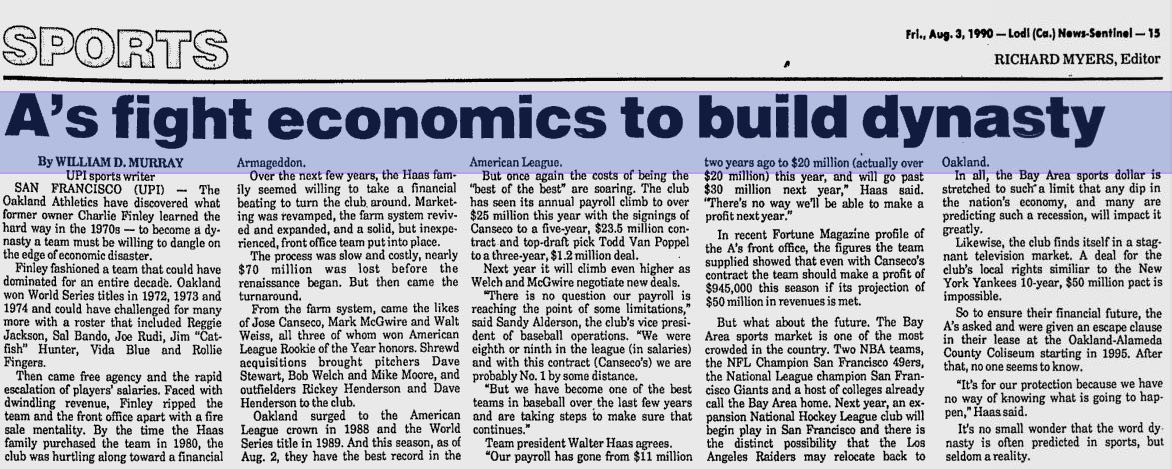
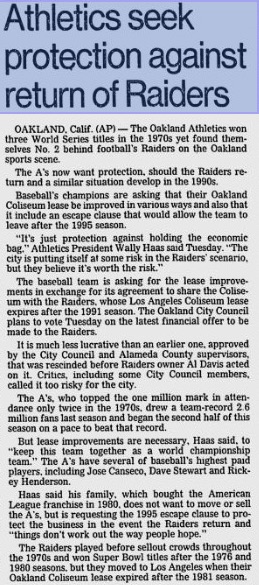
In the interview I discuss Walter Haas and Steve Schott, the latter a subject of a Frye blog post from earlier today. I focused on Haas, partly because of some renewed interest in what he did towards the end of his ownership tenure. Take a look at some of these articles:

A’s fight economics to build dynasty 

haas_1990-lodi

Athletics to move if Raiders return?

boca_raton-athletics_to_move

Athletics seek protection against return of Raiders

deseret-athletics_seek

While we remember Haas for his great generosity, winning teams, and partnership with Oakland, what has gotten lost was that when the winds started to swirl around the Raiders and their potential return to Oakland, Haas picked up on it early and voiced his worry about it. He soft-played it, didn’t want to make appear like he was threatening to move out of Oakland. He made it clear, however, that the team was losing money because of his family’s sacrifices. He was going to sell at some point if it got much worse, which it did. He ended up selling at a heavily discounted price because of the big debt load. Haas felt his business was threatened, so he reacted the way you’d expect a business owner to do – to try to protect his team. Some owners have taken this to unseemly extremes, and it’s unfortunate that Oakland has had to suffer the worst of that behavior from Al Davis and Charlie Finley.

I’ve mentioned this before and it bears repeating: it’s no coincidence that the A’s salad days occurred when the Raiders were gone. The three-peat A’s won the most, but turnout was not particular good and Finley whined about it frequently. With no competition from football on or off the field, Haas didn’t feel a threat. He allowed the Giants to explore the South Bay, in hindsight a strategic error on his part. Haas was as genial guy as ever existed in the Bay Area. But he was still a businessman who knew what was Priority #1 when backed into a corner.

Listen to the interview, rate it on iTunes, and give feedback here in the comments section. I had a good time talking to Tony, and I expect to do another one of these in February, after the Coliseum City ENA expires. Then we can talk next steps. For now, give this a listen.

P.S. – The day Frye asked me to do the interview, Mike Davie of Baseball Oakland wanted to be on too. He’ll have his own episode at some point with a lot of Oakland cheerleading and ownership bashing, I assume.

Election Aftermath 2014

A wise person would’ve turned off the lights and gone to sleep early, waiting to let the election news wash over them until the following morning. Not this guy. As the various county registrars were plagued by reporting delays traced back to a vendor in Florida (that’s your first clue right there), election observers sat at their computers, thumbs properly inserted.

Eventually we got our results. Though not certified, we have a pretty good sense where everything’s leading:

  1. Libby Schaaf is the apparent winner of the Oakland mayoral race.
  2. Sam Liccardo narrowly defeated Dave Cortese in San Jose’s mayoral race.
  3. Alameda County’s Measure BB passed with 69% of the vote, approving a 0.5% sales tax hike for 30 years.

Last week Schaaf did an interview with Athletics Nation in which she discussed current efforts to keep the A’s and other teams in town, as well as her own ideas on doing things differently. She said many of the right things about the City working with greater transparency. She criticized certain aspects of the Coliseum City plan, such as the fanciful replacement arena for the Warriors (who are working on their own arena in SF). Fans of the A’s and/or Raiders will definitely seize upon this:

AN: Do you see keeping the A’s and Raiders as mutually exclusive? What are some of the challenges that go along with keeping both teams in the city?

Schaaf: There is enough room for both teams, and my clear priority is keeping both teams. But from an economic point of view, the A’s have a larger economic benefit for Oakland that should always be kept in mind. They play more than 80 games a year, compared to 10. But I just want to be clear, I’m a very proud Oakland native; my parents were season-ticket holders for both the A’s and the Raiders throughout my life.

If Schaaf is going to work via a straight economic comparison of the two sports, there’s little doubt that the regular season of baseball is far more impactful than a football season. Football’s big payoff was to come via a Super Bowl, though that’s perhaps more of a pipe dream than Coliseum City itself. If Schaaf moves towards abandoning visions of a Super Bowl or retractable roof stadium, it would lead to much more productive discussions between the City and the Raiders. The team and the NFL don’t particularly care about Oakland’s Super Bowl fantasies, and the added cost ($200-300 million at today’s rates) makes an already difficult project even more prohibitive.

Schaaf also led off by saying there’s enough room for both teams, a common refrain from many candidates during the campaign. The problem is not a matter of physical room, it’s whether or not the assembled parcels and other resources can properly pay for the bulk of two stadia. Later on in the interview she emphasizes that the venue(s) will be built with someone else’s money, which is fine as long as someone else can figure out a way to make it pay for itself and turn a profit to boot.

For now Coliseum City remains lame duck mayor Jean Quan’s baby, one covered with the stench of desperation and imminent failure. Schaaf won’t be sworn in until January, which will leave probably one week for her to determine in concert with a new city council how to proceed. She can choose to carry on Quan’s work as Quan conceives the project, leave certain processes going (EIR) while regrouping to think up another strategy, or abandon the project altogether to come up with a completely different plan. How Schaaf proceeds will largely dictate how the A’s and Raiders act, since both teams are waiting for each other to vacate. Complicating matters is the NFL’s activity, which includes a special meeting of its stadium and finance committees to further plan potential Los Angeles relocation(s). In February the relocation window officially opens, which could allow the Rams and/or Raiders to apply to move. If that happens, it’s expected that the NFL will have the procedure in place for relocation candidates to move forward.

If the Raiders leave Oakland only one month into Schaaf’s tenure, her legacy won’t be defined by it. She has worked just about everywhere in Oakland government except as part of the JPA or with the JPA. She has been a sitting council member, sure, but that’s much different from working deals the way Rebecca Kaplan did recently or Schaaf’s old boss Ignacio De La Fuente did previously as members of both the City Council and the JPA. If Schaaf allows both the A’s and Raiders to leave with the Warriors already one foot out the door – now that could be terribly damaging to her. Quan has been scrambling to keep all three teams without a cohesive plan. Schaaf doesn’t want to repeat that. The Raiders leaving would allow Schaaf to devote resources to the A’s, an idea the JPA is already on board with. If the Raiders decide to stay in Oakland and partner with Coliseum City everything remains status quo, though Schaaf will also have the new task of negotiating a short-term lease with Mark Davis.

If the Raiders choose to nix LA and work on a new stadium in Oakland, Schaaf will have to decide if it makes sense to devote more resources towards an A’s ballpark. She expressed support for Howard Terminal, yet the A’s lease and stance leave the site out of the picture. Perhaps Schaaf could work with Doug Boxer and Don Knauss to better present a plan to pay for the ballpark at HT while smoothing over the bad relationship between Quan and Lew Wolff – it is a new regime, right? However, that may be a bridge too far for a site that neither Wolff nor MLB supports. Building a stadium in California is hard. If Schaaf can guide her city towards the realization that they’ll be more productive by putting more wood behind fewer arrows, they stand a better chance at turning that dream of a new stadium into a reality. Schaaf will have to remember one guiding principle: If she’s going to plan for a stadium with someone else’s money, chances are that someone else will have a lot more say about how that stadium gets built than a publicly-built stadium.

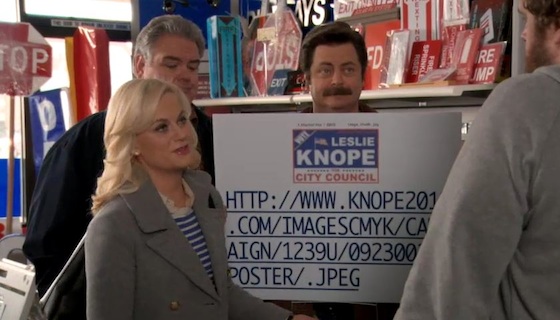
P.S. – One other thing. Without knowing that much about Schaaf’s work in her district, all the talk about her work ethic and positive attitude reminds me of fictional city bureaucrat Leslie Knope. Is that a reasonable comparison? Oakland could use Leslie Knope’s kind of determination. Maybe we’ll be able to see that now that the craziness of the campaign is over.

Election Day 2014

Update 11/5 6:00 AM – 100% of precincts are in and the ranked choice tabulations have been made. The next Oakland mayor is Libby Schaaf, who effectively trounced her rivals at the polls, nearly doubling Incumbent Mayor Jean Quan’s vote total. After RCV was calculated, Schaaf finished the night with 62.79% of the vote. Runner-up was Rebecca Kaplan. Quan was eliminated in the penultimate round.

Measure BB also won with 69.56% of the vote in Alameda County.

Sam Liccardo held on to win the San Jose mayoral job over Dave Cortese, finishing 51-49.

More commentary to come.

Update 11:30 PM – Results are coming back with some needed urgency. Schaaf has extended her lead over Jean Quan from 28.45-17.10 to 28.74-16.39, with Rebecca Kaplan now in third place at 14.36%. 44% of precincts have reported so far. Measure BB is now up 69-31. San Jose’s mayoral race has tightened up with Liccardo leading Cortese 50.9-49.1, a difference of 1,500 votes with 45% of precincts reporting.

Update 10:30 PM – The polls have been closed for over two hours, but results have been coming late, the last major update coming at around 9 PM. In Santa Clara County there have been technical (website) issues. Alameda County appears to have similar problems. I’ll hang tight for another hour before calling it a night. So far Libby Schaaf is ahead in the Oakland mayoral race, though be advised that these are extremely early returns and the ranked choice tabulations are not factored in yet.
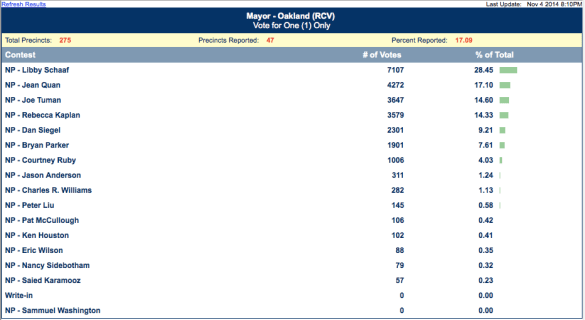
oakmayor


Meanwhile, Alameda County Measure BB is ahead 68-32 and Sam Liccardo leads Dave Cortese 51-49 in the San Jose mayoral race.

Update 3:30 PM – San Jose City Council voted 9-1 to approve the A’s land option extension. Stand for San Jose’s law firm, Pillsbury, disagreed with the lease option on CEQA and referendum grounds. City attorney John Boyle clarified that a referendum wasn’t needed and that the EIR was certified. CM Pierluigi Oliverio was the lone no vote, saying that if the A’s wanted the land they should just buy it.

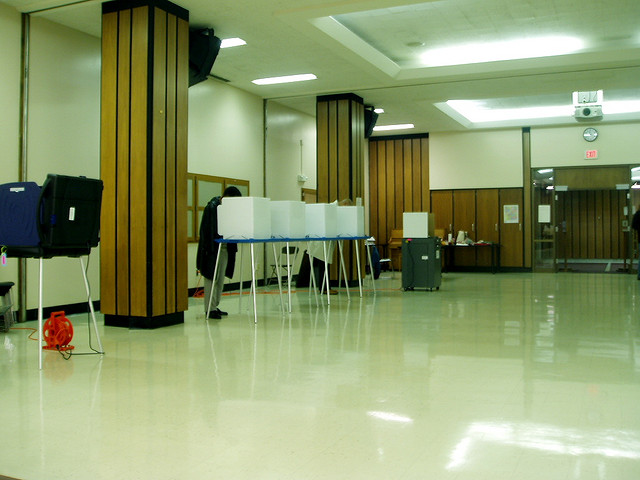
Photo courtesy of Flickr user Dina-Roberts Wakulczyk

Photo courtesy of Flickr user Dina-Roberts Wakulczyk

Despite the general disinterest in today’s general election, there are some important races that will impact stadium efforts for the A’s and Raiders in the Bay Area. Let’s take a look.

Oakland’s mayoral race is the big one, with 15 candidates including incumbent Jean Quan. A KPIX 5 poll from two weeks ago had council member Rebecca Kaplan first at 19%, fellow CM Libby Schaaf at 17%, and Quan and SF State professor Joe Tuman tied for third at 15%. The Chronicle is reporting that final ballot counts may not happen for a few days, even though they now have the ability to do election night tabulations tonight. In 2010, tabulating the results of the ranked choice vote took the rest of the week to complete. Members of Save Oakland Sports and supporters of Coliseum City have thrown their weight behind Quan, while going against Kaplan, who helped broker the A’s lease extension. Kaplan hasn’t officially stood behind any one concept, though it’s a logical progression to think that she might support a Lew Wolff-offered, A’s-oriented redevelopment plan for the Coliseum. Kaplan had received campaign contributions from Wolff, but chose to return them after questions about impropriety arose. Schaaf and Tuman have been highly critical of the City and the JPA throughout the campaign season, but haven’t offered much in the way of solutions for keeping the pro teams in town. Port commissioner Bryan Parker has remained the most vocal supporter of Howard Terminal for the A’s.

If Quan loses, it’s unclear what happens to Coliseum City. The CEQA/EIR process will continue at least through the 90-day deadline set last month. Kaplan, who had previously considered the Coliseum site the best future place for Oakland sports, remains on the JPA board and could pivot as a “savior” of the plan if she wins. If she doesn’t win she’ll remain in her at-large council seat and on the JPA board. Schaaf is vacating her District 4 seat, so like Quan, if she loses she’ll be out of elected office in Oakland.

As results come in they’ll be posted here. Look for a followup post discussing impacts later tonight or tomorrow.

San Jose also has a mayoral race, though it is more traditional than Oakland’s RCV. The primary was held in June, and as expected the top two candidates were current council member Sam Liccardo and Santa Clara County Supervisor Dave Cortese. Liccardo is being held up as the successor to Chuck Reed and is expected to carry on Reed’s pro-business policies if elected. Cortese, who was also a council member a decade ago, enjoys a great deal of support from labor and is considered the anti-Reed candidate. Both hold differing views on the baseball-to-San Jose effort. Liccardo prefers to continue Reed’s legal challenge of MLB, whereas Cortese has put forth a more conciliatory approach towards baseball. Both are proponents of bringing the A’s to San Jose.

Alameda County is set to vote on Measure BB, the 0.5%, 30-year sales tax hike for transportation projects. The tax would fund $7.785 billion in new projects, from more than $2 billion in largely deferred street maintenance to a Livermore BART extension ($400 million) to Bus Rapid Transit in Oakland ($35 million) to $284 million in improvements to I-880. Also in the package is $40 million for Coliseum City, money that would expand and better integrate the transit hub at the Coliseum BART station. This money is considered key to the success of Coliseum City, since additional privately financed development would be catalyzed by the creation of such a transit center. Two years ago a similar measure, Measure B1, barely missed the two-thirds majority needed for passage. Supporters of BB are vowing not to let such a defeat happen again by throwing greater campaign resources and garnering broader support for the measure. In 2012, Coliseum City basically had to punt while it waited for the next election, effectively delaying planning for nearly two years. With so much uncertainty surrounding Coliseum City’s prospects, another defeat could mean a very big nail in its coffin.

Finally, the City of San Jose’s City Council will vote today on the land option extension on the Diridon ballpark site for the A’s. The option, which is only for part of the fully assembled site, would run at least four years and up to seven at the A’s discretion. The cost of the option is $100,000 for the first four years, with additional years at $25,000. If the A’s exercise the option, they would pay $7 million for those 5 acres, and would have to buy the rest privately. No transaction can happen unless MLB approves a move to San Jose, which it has not done to date.

—-

Watch the top of this post for updates as they occur.

A’s release 2015 Spring Training Schedule

The A’s have released their spring training schedule, so you can start planning your trip to the desert for their first season back at Hohokam Stadium. That’s right, if you hadn’t heard, the A’s are moving on from Phoenix Municipal Stadium, which while cozy and scenic lacked up-to-date training facilities for the players and some of the creature comforts found at other Cactus League ballparks. I recently had a chance to check out some of the renovation work at Hohokam. Thankfully the old beige paint is pretty much gone, replaced by forest green, light gray, and gold accents. The new Daktronics scoreboard is up, seats have been replaced, work on the party deck in left field should begin soon. All renovation work is expected to be completed by the end of the year.

This slideshow requires JavaScript.

In keeping with the later start of the regular season, spring training starts on Tuesday, March 3, with a “home-and-home” set against the Giants. The Cactus League slate ends April 1 before moving to the Bay Area for the ritual Bay Bridge Series.

springtraining-2015

If you want to catch as many games as possible at the new Hohokam, come during the first weekend and into the second week, when 5 of 6 games will be played there. The first 3 games are also a good bet, since 2 of them will be in Mesa (1 at Hohokam, 1 at Cubs Park). If you have the chance, make sure to check out some of the newer parks such as Salt River Fields and Camelback Ranch. Salt River Fields is the new gem in the Cactus League and is worth the extra drive.

If you have any questions about how to plan your Cactus League trip, feel free to reply in the comments. I’ll be happy to help.

Hohokam seating chart

Hohokam seating chart

Kephart provides some brutal honesty about Coliseum City

New Coliseum City frontman Floyd Kephart provided a wide-ranging interview to the SF Business Times (main article/additional quotes). After 2+ years of the project lacking real details and general cageyness from its spokespeople and supporters, Kephart’s honesty is a breath of fresh air. He minces no words about the difficulties Coliseum City faces, and sets the table for what needs to follow.

birdseye-view_north

Coliseum City with two new venues plus the existing arena

The article, written by Ron Leuty, lays out Kephart’s previous experience, much of it in the horse-racing business, some of which is in financial crisis management. The latter’s probably the best why to describe his current ordeal, with 90 80 days left in the ENA. Kephart admits that CC is by far the biggest project he’s ever worked on. Among the things he says needs to be done:

  • Public benefit analysis
  • Disposition and development agreement
  • At least one signed team
  • Master developer

I put together a more extensive list last week when the ENA extension was signed. The public benefit analysis, while not a requirement, is an excellent idea since it could help garner public support if conducted honestly. That could be crucial if CC ends up going to the ballot box in the future. The DDA is a potential showstopper, since it can take up to a year after a team and developer sign on to hammer it out, as it did for the 49ers and Santa Clara. The DDA isn’t anything like a apartment rental agreement or even a mortgage, it’s hundreds of pages of details about financing, ownership, rights, timelines, and legal responsibilities. Maybe if the Raiders or A’s sign on prior to the end of the 90 days another extension could be granted for the DDA, but it goes to show how far behind the 8-ball this project is.

The big takeaway is that Kephart is meeting with Wolff in early November (perhaps next week?), which will give Kephart a chance to sell Wolff on having a more competent team in place or tailoring the vision for the A’s. Kephart’s aim appears to be lower than what the City was selling for the last two years, as the goal of having one team in place, maybe two is not nearly the same as bold (or pointless) as saying Everyone can stay here, there’s plenty of land.

Wolff could easily dismiss the plans just as he had done over the summer, but with the finish line drawing near, Wolff may be more likely to listen. The reason? Process. Having an active CEQA/EIR process underway is worth millions of dollars and at least a year’s worth of effort, so if Wolff were to sign on or bring in a master developer that will work in concert with the A’s, they’d already be ahead of the game. It’s a risk for Oakland, though, since the Mark Davis could view this as a sign that the Raiders are about to be marginalized. Since Davis hasn’t signed on himself, there isn’t much room for him to complain. As Kephart notes:

“Nothing says what the Raiders want. Is it a life-sized statue of Al Davis at the entrance of the stadium and then they’ll stay? … Maybe the teams have asked the city that — I don’t know.”

Another big piece of news is the timeline.

Yet even if Kephart’s group assembles all the agreements and documentation needed to win over a master developer for Coliseum City, the soonest the A’s would play in a new ballpark would be 2018 and the Oakland Raiders would land a new stadium in 2019 ‘at the earliest,’ Kephart said.

‘We want to cooperate,’ Wolff said. ‘We want to see what happens in whatever timeframe, 90 days or longer. Then we’ll know better what we have to do.’

2019 for the Raiders is a long ways away. It’s unclear whether that would be acceptable for Davis. If someone’s promising a new stadium in LA earlier, he may be willing to take it if the terms are right, even if he’s the second team in LA. 2018 for the A’s pretty much falls in line with reset expectations coming out of the lengthy Coliseum lease negotiations. We all want it sooner, I know.

For now Kephart is saying the right things – the truth – that can help get everyone on the same page. There’s no doubt that the effort at this point is a Hail Mary. Then again, Kephart probably knows a thing or two about long shots. If his work can help get the A’s in a ballpark in Oakland, he’ll have done his job magnificently.

Oakland Sports Forum, Wednesday October 29, 6-8 PM

Oakland has had a slew of mayoral candidate forums and debates, all leading up to the election on November 4. Surprisingly, there has been little coverage of the sports franchises and their impacts, save for the occasional easy-to-dodge question here and there. Thankfully, Zennie Abraham has seen fit to host his own forum. Named the Oakland Sports Forum, the event will be held this Wednesday, October 29, from 6 to 8 PM at Lakeshore Baptist Church in Oakland.

Abraham, who does a lot of video in addition to blogging, will be livestreaming the forum on YouTube as well. If there’s a Game 7, you may have to multitask.

A set of four questions will be posed to mayoral candidates who show up. So far 12 of the 15 have confirmed. Here are the questions:

  1. Wild card question from audience submitted beforehand, asked by that person. (1 min per candidate, then 10 minute conversation period with moderators.)
  2. The Golden State Warriors are working to build an arena in San Francisco. Some say the deal is done and its too late to stop it. But others say that the Warriors belong here in Oakland, still owe Oakland and Alameda County rent that would pay off the bond that was issued to pay for arena renovation in 1998, and should not be allowed to skip town. What is your take? (1 min per candidate, then 10 minute conversation period with moderators.)
  3. The Oakland Raiders and the Oakland A’s need new stadiums. As I speak, Coliseum City is in the early planning stages, but could progress better – financing has not been completely secured. Is Coliseum City the right approach, and if it’s not, then what would you push for as Mayor? The ballpark waterfront proposal? (1 min per candidate, then 10 minute conversation period with moderators.)
  4. The Oakland / Alameda County Joint Powers Authority was formed to provide a government issuing body for the Raider Bonds. Lately, the JPA has been the focus of strained City and County relationships, and I’m presenting that in an open-ended fashion. What, if anything, should be done with the JPA, and as Mayor what will you do to make that happen? (1 min per candidate, then 10 minute conversation period with moderators.)

It’s a good set of questions which should keep the candidates from being too vague in their responses. The responses will be scored – how very sports – and a winner will be announced at the end of the proceedings.

It’s been eight years sense the “Choose or Lose” forum prior to the 2006 election. This shapes up to be a more substantive event than the last one. Maybe there will even be an adult conversation.

A’s renew land lease option with San Jose for 7 years

With Oakland’s Coliseum City dominating the news over the last few weeks, it’s a shock to see San Jose come out of nowhere with news of its own. According to the Merc’s Mike Rosenberg, the A’s and San Jose have agreed to a seven-year option on the Diridon ballpark site next to the main train station. The new deal is essentially an extension of the previous land option, which was due to expire next month. The A’s will pay $25,000 per year to retain the option, the same terms as in the previous agreement.

The other big reveal in the article was that last month, San Jose Mayor Chuck Reed met with baseball’s Commissioner-elect (and current COO) Rob Manfred in New York. While Reed didn’t make any headway in getting Manfred to loosen the Giants’ grip on territorial rights, it’s a positive sign for San Jose that the two had a meeting, which could lead to more discussions. Reed’s mayoral successor – either County Supervisor Dave Cortese or SJ Councilman Sam Liccardo – would be the new point person, both willing to take Reed’s baton. Retiring commission Bud Selig created a 3-man panel to act as a buffer so that he wouldn’t have to be directly involved. The panel (BRC) was apparently disbanded earlier this year, leaving Manfred to handle any new talks. It’s no guarantee of future talks for sure, but it does have some weight.

More meaningful is the impact of the land option deal. Though the A’s couldn’t build there tomorrow or even next year, the very presence of the land option keeps San Jose in the game and gives MLB a card to play against Oakland in case they turn future ballpark talks with the A’s into yet another circus. After all, it was Manfred who purportedly threatened Oakland with the immediate approval of a move to San Jose if Oakland killed the A’s lease extension. At the time many called it a mere negotiating ploy, which it was. Oakland folded quickly then, so there’s little reason to think it wouldn’t work on some level again.

Complicating things for MLB is that other tenant in the Coliseum, the Raiders. Since Coliseum City is ostensibly a Raiders project, everyone has to wait for the Raiders’ eventual approval or rejection of the project before knowing what to do next. The list of outcomes is short and clear.

  • Oakland and Raiders sign Coliseum City deal, triggering clause for A’s to escape lease and look to San Jose
  • Coliseum City talks break down, allowing A’s to start up talks with the JPA and Oakland while the Raiders look elsewhere
  • Mark Davis becomes indecisive and signs a short-term lease at the Coliseum, status quo

Lew Wolff has been clear about his disinterest in Coliseum City, so his becoming a signatory over the next three months is just wishful thinking. The terms of the lease extension have kept Howard Terminal out of the discussion, with the focus on the Coliseum only. The Oakland crowd will consider this cagey and deceitful, whereas San Jose (or pan-Bay Area) partisans will call Wolff’s moves prudent and in the best interest of getting a ballpark built ASAP. There’s some truth to both views, and they’re inextricably linked. For some time Wolff’s priorities have been simply to build a ballpark and figure out a way to pay for it. If the Raiders’ fate can be determined, the A’s will be the next domino.

Timing is also interesting. For a while I’ve been of the opinion that San Jose could never be completely ruled out as a ballpark option as long as so many things in Oakland remained uncertain. MLB’s tacit approval – twice – of the A’s-San Jose land option affirms that. If MLB truly wanted to affirm T-rights as iron-clad and non-negotiable, they wouldn’t allow the land option. They know the value there. To be certain, MLB does not want to break that glass if an emergency occurs, but it’s there and it allows MLB and Wolff to maintain focus on the Bay Area, instead of playing the usual stalking horse game with another market outside NorCal. All this comes out just after the 90-day countdown on Coliseum City begins and the Raiders accelerate towards the NFL’s February relocation window. MLB and NFL have been careful to enter in the A’s and Raiders discussions only when they had to, and to let the process in Oakland work itself out. The JPA is readying itself by hiring Robert Bobb to work with either New City Development or Lew Wolff.

Is this the winter when resolution occurs? Well, let’s not get ahead of ourselves. The winter will arrive soon enough.

P.S. – As usual, much of the initial Oakland reaction is, Why doesn’t Wolff (and Fisher) sell the team? Because they have no interest, and no one can force them to sell. Next question.

P.P.S. – How long will it take for Oakland Mayor Jean Quan’s office to call up Rob Manfred, asking for a meeting?

P.P.P.S. – My initial draft didn’t include that third “Indecisive Mark Davis” option. It’s a distinct possibility, though it comes with its own permutations. Davis wants maximum flexibility in whatever he does over the next couple years. He has looked at various non-Coliseum stadia to temporarily host his team. You might think the leading candidate would be Santa Clara, but the terms don’t work for him because he’d have to sign a longer-term lease to cover the additional construction required at Levi’s Stadium. The leading candidate is, would you believe… AT&T Park? The Oakland Raiders at AT&T Park. You can always count on Larry Baer to always have Oakland sports’ best interests in mind.

P.P.P.P.S. – Wasn’t San Jose’s lawsuit vs. MLB supposed to make the city persona non grata in baseball’s eyes? Yet they have a meeting. Funny, that.

Mesa, A’s show off Hohokam Stadium progress

With two months to go before completion, A’s ownership and the City of Mesa did a tour of Fitch Park and Hohokam Stadium today, emphasizing all the  improvements A’s players and fans will get to enjoy in a few months. I visited back in the summer. I should have a chance to check it out again in the coming weeks. Until then, take a look at tweets by local media showing the project’s progress. The new clubhouse isn’t quite finished yet, but the seats and scoreboard appear to be complete.

Think about that for a moment. Over the span of six months, the A’s are installing new scoreboards at Hohokam, the Earthquakes Stadium, and the Coliseum. That’s a lot of blinking lights!

As much as I loved the old school, laid back intimacy of Phoenix Muni, I’m looking forward to attending games at Hohokam, which is a fairly short bike ride from my brother’s house in Mesa. The spring pilgrimage looks to become an annual rite for me.

Lew Wolff and Mark Davis meet with Coliseum JPA

The second item in the most recent Matier and Ross column is short albeit promising one.

It was a rare sight indeed — A’s co-ownerLew Wolff, Raiders owner Mark Davis and their advisers in the same room with members of the Oakland-Alameda County Coliseum Authority, talking about building separate stadiums on the Coliseum site.

Not much was said beyond that, especially from anyone on the JPA. Still, it’s an encouraging sign that the JPA and the two teams are on the road to a viable Coliseum City alternative. Even with this rather small step, it’s better partnership than Coliseum City, which has at been given a lukewarm response from Davis and a decided nay from Wolff.

I don’t expect any plans soon, but the winter would be a good time for an unveiling. Oakland would be past the election craziness and its holiday recess. Barring a lengthy last-minute ENA extension, it’s also likely that we’ll know the fate of Coliseum City.

If you want to dream about an Oakland ballpark in earnest, now’s a good time to start.