Tuesday off-days, rare during the baseball season, are pretty good days to make announcements. Dave Kaval made a big announcement this morning that can only win over fans. The failed scarcity experiment and objects of scorn known as the upper deck tarps are no more.
While the compression of the seating inventory helped make the venue more intimate at times, the optics of 12,000 seats of upper deck being tarped and cordoned off were embarrassing and could not be escaped. The policy was put into effect for the 2006, not long after Lew Wolff and John Fisher bought the team from Steve Schott and Ken Hofmann. That makes the tarps the one enduring visual symbol of the Wolff era, which officially ended last November.
The tarps atop Mount Davis will stay as the seats at the summit won’t be sold. When football season begins there will be a humdrum exercise in rotating between the A’s and Raiders tarps, covering seats that the Raiders wanted in 1995 but haven’t sold since 2013. The new baseball seating capacity will be 47,170 plus a thousand potential standing room admission tickets available for big crowd event games (Giants, Yankees, Red Sox, fireworks).
Tickets for the newly reopened sections (300-315, 319-334) will be $15 everywhere with half the proceeds for the upcoming 10-game homestead going to Oakland Promise, a charity and mentoring program that aims to have every Oakland high school student graduate with the necessary skills needed to finish college.
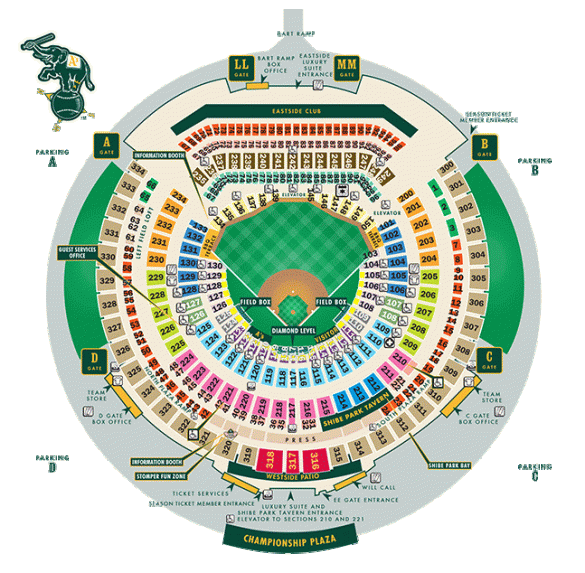
Say goodbye to the old seating chart:
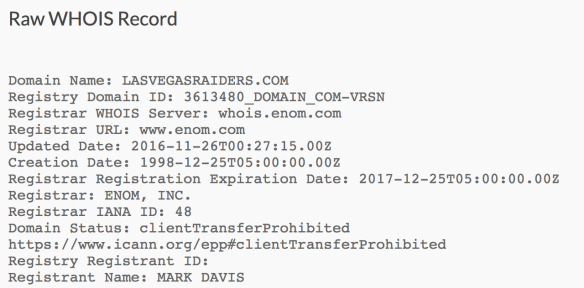
Hello to the new (old) seating chart, whose URL is um, interesting:
Finally, we can’t bring back the Coliseum upper deck without that one incident (NSFW)…
During that first homestand with the upper deck reopened, the A’s will play the M’s on 4/20. It’s a night game. You know what to do. Note: the tickets do have seating assignments, so any thoughts that the upper deck is now some massive general admission section are at best unspoken and informal.
As for what the A’s should do with the tarps, I thought up some options. Vote on one. Now that I’m thinking about it, whatever happened to the tarps that covered 316-318?
What do you think the @Athletics should do with the upper deck tarps?
Listening to radio and read the internets today, it was no surprise by mid-afternoon the recriminations came in full force. Denial and pain set in quickly, thanks to advance reports of the pending NFL owners’ approval of the Raiders’ move to Las Vegas. So when it came time to start the anger and bargaining stage (3), no stone was left unturned, no name forgotten. Here’s a partial list of the people to blame for the Raiders’ departure:
Every player in this Coliseum saga wanted out of something. The pols wanted the albatross of Coliseum debt off their necks without giving away valuable Coliseum land or forcing any of the teams out. The A’s, Raiders, and Warriors wanted their own venues, preferably nowhere near one another. All were willing to leave Oakland to get that venue. The placed the City of Oakland and Alameda County in a delicate dance with three lukewarm dance partners. The team with the most freedom, the Warriors, announced their departure as soon as they could. The A’s tried to take a more circuitous route via the back rooms of The Lodge and then the court, failing to overturn the Giants’ territorial rights to the South Bay. The Raiders, whose owner had the least money and leverage, tied itself to city after city before going it alone in Vegas. Patience and persistence prevailed for Davis, as he somehow finagled gap funding from Bank of America, consequently earning the NFL owners’ trust in the process (31-1 vote).
Let’s go back to fall 2013. The A’s were focused on the postseason, while the Raiders were rolling out another bad run under Dennis Allen. In September, Davis came out of nowhere and suggested that his new stadium be built where the existing Coliseum stands. Had the JPA taken that proposal seriously, the plan would have been to demolish the Coliseum and construct a new Raiders stadium in its place, with the potential for a new ballpark down the road. The Raiders would play at Levi’s Stadium for two years. The A’s could play at AT&T Park for some length of time, probably longer than two years. Davis later rationalized the idea as needed to avoid all the construction-related upheaval and the related parking shortage.
The next spring, in 2014, Lew Wolff started lease extension talks with the JPA. Chastened by the legal loss over San Jose and MLB’s desire to get something going in Oakland, Wolff asked for a lengthy term keeping the A’s at the Coliseum until 2024. He also asked for a special set of conditions clearly related to Davis’s own concept: a process to vacate the Coliseum if the Raiders put together a Coliseum redevelopment proposal. Wolff’s notion was that the A’s needed some time to get a ballpark proposal started and wanted to minimize the chance of playing at a temporary venue (remember Cashman Stadium?). So he got language to give the A’s two full baseball seasons before they would be evicted. By this time Wolff was also working on improvements for the team’s new spring training facility, Hohokam Stadium/Fitch Park. The plans included new scoreboards for Hohokam and the Coliseum (buy in bulk!).
Even in 2014 Wolff and Davis were taking different approaches to the getting lease extensions (emphasis mine).
Wolff and Mark Davis are going at this stadium business in different ways. Wolff wants a lease extension, while taking that time to figure out the future either in San Jose or in Oakland. Davis is taking an opposite tack, declaring last year that it was time to stop delaying and get the stadium deal in place before any new lease. That puts the JPA in a very delicate spot. They’re already working with Davis, though he hasn’t been satisfied with the pace or the information he’s getting. Both owners, whether in league or not, are forcing Oakland to make a difficult decision between the two franchises. Both know that it’s incredibly hard to build one stadium, let alone two right next to each other. Public resources are increasingly scarce. Fred Blackwell’s leaving before he can get any blame for this. Smart move on his part.
The A’s lease was stuck in deliberations for a couple months before approval. Raiders supporters decried it as something that would eventually force the football team out. The two-season exit, the demand for a bona fide football stadium plan and $10 million to secure it, and the length of the lease to 2024 hampered the Raiders’ flexibility. All those things would be reasonable arguments if not for the fact that Davis never formulated a proposal of his own beyond the aforementioned desire to build on the Coliseum’s existing footprint. Instead, he let Coliseum City complete its process without his signature, and the Lott/Fortress plan had virtually no input or involvement from Davis at all. Davis hired former 49ers exec Larry MacNeill as his representative at meetings. The NFL admonished both City proposals for no team or league direct involvement, yet the NFL reportedly never so much as inquired about the Coliseum land nor offered any alternatives.
Easy to blame Mark Davis there, and Lew Wolff if you’re so inclined. What this showed was that Davis’s will to build in Oakland was not strong. Schaaf held firm to her no-public-funds-for-construction stance, which can be interpreted as Schaaf not having the political will to get a stadium project going in Oakland. She’ll take that.
Since 2006, the Coliseum arrangement has been a series of short-term lease extensions for both the A’s and the Raiders, with no major fundamental changes. Oakland’s goal was to stay in the game with each extension, waiting for a great plan to materialize. Maybe they expected one team to change the game by seeking different terms. Turns out that happened in 2013, when Davis admitted he wanted to replace the Coliseum and evict everyone for a couple years. That started a chain of events which eventually brought us here, with Davis getting city he’s wanted since at least 1998.
The A’s get the Coliseum if they want it, and Schaaf may finally be the mayor that gets rid of the albatross. Dave Kaval, you’re up.
They tried. Everyone can say they tried. Well, maybe not Mark Davis, since he hasn’t attended an Oakland stadium development meeting in at least a year. Instead, Davis hired a guy to sit in on the meetings he didn’t want to attend. The NFL can say they tried, since they kept Oakland in the game longer than St. Louis or San Diego, despite Oakland providing the least competitive offer among the three cities. Oakland did try repeatedly, though not hard enough for the NFL. And so we find a city and a fanbase at the precipice of losing its football team yet again, the second time less than forty years.
During a press conference-cum-rally yesterday, Oakland Mayor Libby Schaaf defended the city, while expounding on a letter sent to NFL commissioner Roger Goodell. The letter was an effort to convince the league to give one more chance to keep the team in town. The presser was followed by a walk by supporters around the Coliseum complex and a pizza protest outside Raider HQ in Alameda. Sounds like a good day of fan activism, right?
Whatever positive momentum that generated was quickly squashed by the reveal of a reply by Goodell, which made it abundantly clear that Oakland needed to accede to the league’s demands, not vice-versa.
March 24, 2017
Hon. Libby Schaaf
Mayor City of Oakland
1 Frank H. Ogawa Plaza, 3d Floor
Oakland, CA 94612
Dear Mayor Schaaf:
We have had an opportunity to review the material your office released today regarding a stadium project in Oakland for the Raiders.
Before addressing the substance of the material, I want to personally thank you for your leadership and for the time and effort you have devoted to addressing the Raiders’ stadium needs and to keeping Oakland as an NFL community. As you have said more than once, the unquestioned need to replace the current stadium has been hampered by a long record of unrealistic and unkept promises that has complicated your efforts and constrained your options. I know from my own discussions with you, as well as those that have involved our staffs, that you and your team have made every effort to be accessible, creative, and diligent in exploring alternatives. I am grateful to you for doing so, and our member clubs are as well.
I particularly want to thank you for meeting on two occasions with our Finance and Stadium Committees, and much of our executive staff, most recently at our committee meetings on March 6. Those two committees consist of 18 owners and have devoted considerable time and attention to the Raiders. They will be presenting their analysis and recommendations to the full membership next week. Your presentations to those committees, as well as the many discussions between our staffs, have been valuable in giving us an understanding of the opportunity available to the Raiders in Oakland.
The material that we reviewed earlier today confirms certain information that had previously been communicated orally, such as a willingness to bring bank financing to a stadium project, and a proposed valuation of the land at the Coliseum site. It also confirms that key issues that we have identified as threshold considerations are simply not resolvable in a reasonable time. In that respect, the information sent today does not present a proposal that is clear and specific, actionable in a reasonable timeframe, and free of major contingencies.
In making this assessment, we recognize and accept the core negotiating principles that you have articulated as being appropriate to your community. A significant number of NFL clubs play in stadiums that have little or no public financial support (including the stadium being built in Los Angeles). We have long accepted your position that no public funds are available for stadium construction in Oakland. We also accept that you do not wish to exercise (and may not be able to exercise) the contractual termination rights related to the A’s.
We have been prepared for nearly two years to work on finding a solution based on access to land at a certain cost, without constraints on the location of the stadium or timing of construction, and clarity on overall development. However, at this date, there remains no certainty regarding how the site will be fully developed, or the specific and contractually-defined nature of the participation by Fortress or other parties. In addition, the long-term nature of the commitment to the A’s remains a significant complication and the resolution of that issue remains unknown. Other significant uncertainties, which we have previously identified, remain unaddressed.
We had hoped that the past two years would have allowed both of us to develop a viable project in Oakland. You have provided valuable leadership; for our part, our clubs have repeatedly delayed any relocation by the Raiders and committed an additional $100 million in NFL financial support (for a total of $300 million) to a stadium project in Oakland. We have had regular communications with you, your staff, and more recently with Mr. Lott and his colleagues. And of course, many of our owners have met with you directly, as noted earlier.
Despite all of these efforts, ours and yours, we have not yet identified a viable solution. It is disappointing to me and our clubs to have come to that conclusion.
At our upcoming meeting, the clubs will consider the Raiders’ application to move to Las Vegas. A key part of that discussion will be a thorough review of our collective efforts in Oakland. I will contact you promptly regarding any decisions made next week.
Thank you again for your leadership and for the material of earlier today.
Sincerely,
ROGER GOODELL
In short: Don’t call us, we’ll call you.
Financing and planning issues remain for Las Vegas, even with BofA’s injection of $750 million into the stadium project. I could see the project eventually splitting into two parts: the initial less fully-featured, indoor/domed venue that will be sufficient for the Raiders and UNLV to start, and then some $200 million to pay for Super Bowl-ready improvements. Super Bowls are already assigned through 2021, not including second go-arounds for the new stadia in Arlington, Santa Clara, and Indianapolis, so there’s time to figure it out.
If yesterday’s rally ends up the last hurrah, it would appear truly final. The Coliseum will be demolished within the next decade, whether there’s a tenant at the complex or not. The stance against public money will remain as strong as ever in Oakland. The city would end up competing with San Diego, St. Louis, San Antonio, and perhaps London for new franchises. If we say goodbye to the Raiders, be prepared to say goodbye to the NFL. Forever.
Actually, Mark Davis was able to get Bank of America (BofA) to bridge the critical funding gap that was vacated weeks ago by both Sheldon Adelson and Goldman Sachs, leaving the Raiders scrambling and the stadium deal on the verge of collapse. No numbers were released, so we don’t know just how much BofA is putting up, but the reaction from around the league indicates that the Raiders got the job done.
2. More Eric Grubman: "I will simply say the project as presented appears to pass the financial tests" https://t.co/SP3ImTeTLc
— Vincent Bonsignore (@VinnyBonsignore) March 7, 2017
Along with you, I’m scratching my head wondering exactly what convinced BofA to sign on with what is effectively a private stadium subsidy. Maybe the parties got extremely creative regarding the revenue streams. BofA already has a big presence in the NFL thanks to its naming rights deal at the Panthers’ stadium in Charlotte, the bank’s hometown.
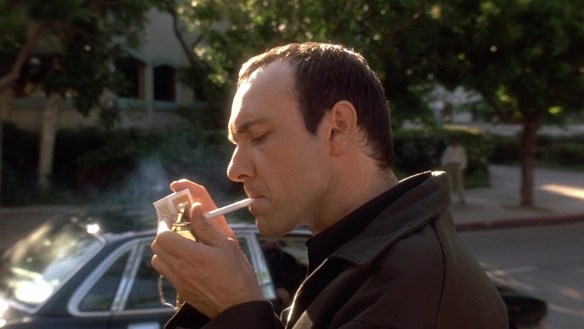
As for Oakland, Mayor Schaaf’s response was the same old boilerplate, where Oakland’s not going to risk the general fund while claiming it’s “ready to compete.” And as with all previous such statements, they’re falling on deaf ears at the league office. Yes, Davis could blunder this all the way back to Oakland. It’s well within his capabilities. Davis’s work is now done. The decision is no longer in his hands. Yet you have to wonder – considering that he’s got the money lined up without giving up his controlling stake or involving the omnipresent gambling industry in the deal – if Davis has a little Verbal Kint in him.
Yes, Howard Terminal is high on the list for the A’s. Eastshore Empire looked the last week’s Port Commissioners’ meeting agenda and found something interesting:
I can only imagine last Thursday’s closed session of the Board of Port Commissioners was interesting. pic.twitter.com/Kn76c6qtD9
That type of language comes up a lot for the Coliseum JPA’s board meetings, especially when the JPA and its tenants are negotiating leases. It’s great to hear that the A’s are having talks about land use and potential acquisitions or leases with the Port. That shows that they’re willing and able to move on multiple sites without waiting for the Raiders to clean up their own mess. Having Berths 20-24 (?) on there is a different matter altogether.
Berths 20-24 are better known as the former PAOHT (Ports America) site. Due to an ongoing dispute with the Port over their own lease and slow business, PAOHT declared bankruptcy last year, abandoning their 50-year lease in the process. I wrote about the potential of the site last year, though I framed it as more of a replacement site for the Raiders should the A’s take over the Coliseum. Because of the site’s lack of transit availability (BART runs nearby but can’t stop there) but massive size for a future parking lot, it could work as a NFL stadium site. For baseball it makes little sense at all. It’s two miles from West Oakland BART, three from Howard Terminal, and three from downtown Oakland. There’s nothing around it and the wind there makes Candlestick feel like a light tropical breeze. And because a ballpark can’t face west, fans would never benefit from the incredible view of the Bay Bridge and San Francisco.
The site may function as parking for a Howard Terminal, which might work better in terms of planning and maintaining Port operations. However, as mentioned before, the site is a three mile bus ride from HT. That’s the same distance along Broadway from the Embarcadero to 51st Street. Having dozens of shuttles running such a lengthy distance on regular Oakland surface streets during peak hours sounds like a recipe for disaster. It belies the urban ballpark concept that Oakland and the A’s are seeking. Still, parking is rather scarce at JLS/HT, and maybe the shuttles can be routed to stop by West Oakland BART to pick up fans.
David Kaval reaffirmed that the A’s will announce their site choice, plan, and timeline this year. While the communication lines are open to fans for suggestions, the decision-making process isn’t exactly open. That was a major mistake made under Lew Wolff, and I hope that the team at the very least provides more insight into the factors driving the decision (cost, transit, land availability, development potential, etc.). A’s fans deserve at least that much.
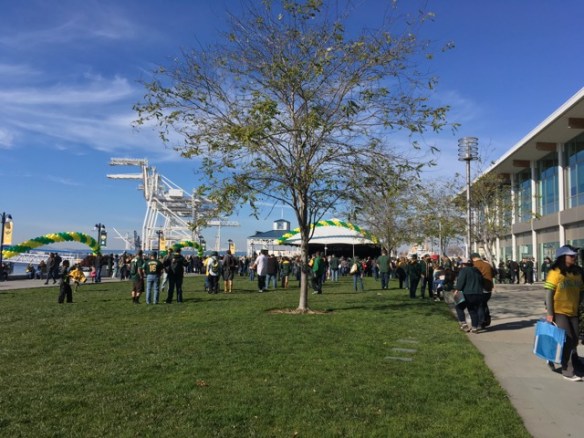
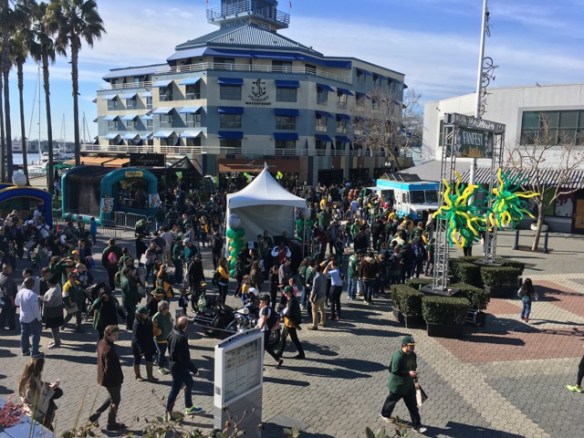
As I arrived at the Jack London Square Amtrak station around 9:30 AM on Saturday, I looked around. No fog. Thin cirrus clouds. The sun was warming the air. This was, for once, going to be a good Fan Fest. Which it was. The A’s had a permit for 7,500, and if it rained as it had over the past several weeks and during most recent Fan Fests, they were expecting a modest 3,000 to show up. They were even considering putting up a tent at the Ferry Lawn, if only to provide more cover for fans. Instead, they got a reported 15,000 fans to show. And according to Sean Doolittle, the crowd actually measured 1.5 million in attendance. Frankly, I’m all for #alternativefacts when it comes to A’s attendance.
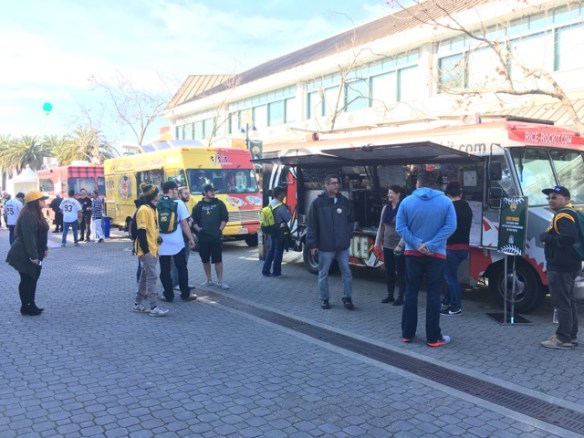
Fans took over Jack London Square: waiting in line for autographs, sampling free food from several food trucks, watching player interviews, or taking in kids’ activities. Some came out because of the great weather, others wanted to check out nearby Howard Terminal. I’ll have an expansive post on that later this week. For now I’ll give you some initial thoughts.
This slideshow requires JavaScript.
15,000 is an impressive crowd for Fan Fest, and Jack London Square makes for a pretty decent already-built ballpark village, doesn’t it? That’s only half the size of a good new ballpark crowd, and it’s on Saturday morning, not a traditional heavy traffic window as you would see most weeknights. Still, things seemed to go without incident. There could have been plenty, though. Counting the train on which I arrived, there were five trains rumbling through Jack London Square in a roughly 40 minute span coming from both east and west, including a long freight train. I also saw a near accident:
Pedestrian bridge at Yoshi’s between Washington and Clay
The driver of the black Tesla was confused about where he could turn, thanks to the barricades at the Washington Street entrance to JLS. He stopped on the tracks before making a U-turn. Thankfully there was no train in the area. This is the same intersection where, only two weeks ago, two members of seminal Oakland jazz group Tower of Power were tragically hit by an oncoming Amtrak train. I know I sound like an obsessed worrywart about this train safety aspect. I can’t emphasize it enough, not just because safety is paramount, but also because the whole area needs to be safe for the companies that operate trains in the area.
At Fan Fest itself, new team president David Kaval reaffirmed the A’s commitment to Oakland. The new marketing slogan is “Rooted in Oakland.” The Shibe Park Tavern rebranding of the West Side Club space at the Coliseum is to make it more baseball-leaning and fan-friendly. Kaval’s chief desire during this planning stage is to have a very intimate ballpark experience with “neighborhoods.” Anyone who has been following this story back through the Wolff years knows that those last items aren’t new. They’re not location-specific. As for those locations, they remain the Coliseum, Howard Terminal, and two “in and around Lake Merritt.” Those two are the Laney College and Peralta CCD sites. Kaval was quick to praise the Howard Terminal locale especially with the perfect weather at the time. He also mentioned that the team will need help from fans in terms of community support and lobbying at the city, county, and even state levels. Citing his experience in bringing Avaya Stadium to completion, Kaval emphasized the need to deal with the special regulations unique to Howard Terminal, including the Tidelands Trust. Kaval’s language has been careful to not favor one site over another, no matter what fans want to read into tweets and news quotes.
The thing Kaval didn’t provide was an announcement regarding the site choice. That’s still in progress, though Kaval promised a timeline along with renderings and the usual things that come with such an announcement. The simple fact is that we don’t know if any of these sites will be available when the time comes, so hedging by studying four sites (down from twelve) is the most prudent move the A’s and Kaval can make for now. So we’ll have to wait for some months to come before that major event. Until then, enjoy the food trucks!
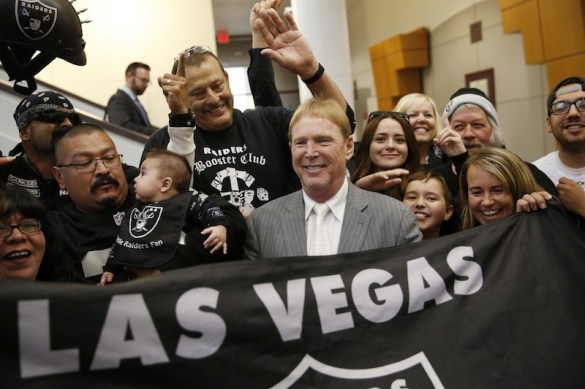
The Raiders unceremoniously filed for relocation to Las Vegas last week, a move as predictable as expecting the sun to rise tomorrow. Raiders owner Mark Davis has stayed steadfast in his opinions of Sin City since last year’s Carson stadium plan was rejected. Many questions still exist regarding the plan regarding the financing, potential attendance, and whether the franchise will actually make significantly more money there as opposed to Oakland. While I remain skeptical about the Raiders’ prospects in Vegas, I’ve come around to thinking that ultimately it won’t matter. If the Raiders move, they’ll get a massive subsidy from Clark County. If they come up short, they’ll somehow finagle their way to get another subsidy on top of that. The team can always cook the books in some way to make it look like they’re losing money even if they aren’t, which would start the cycle of getting more public money all over again.
Oakland and Alameda County limited their contributions to cheap land and subsidized infrastructure, and naturally, the NFL is not impressed by this. Yet the NFL has given the city/county several years to come up with some sort of plan that fits within the NFL’s typical stadium-building business model. At this point it’s simply unreasonable to expect the two sides to come to an agreement that is mutually satisfactory, let alone beneficial, within the next two months. While this isn’t a zero-sum game, there is always a winner, and it’s usually the NFL. When the public statements boil down to Oakland saying it has a plan and the NFL saying Oakland doesn’t, there isn’t much common ground.
Should Davis get the necessary 24 owner votes to move, he still plans to play out the next two lease option years at the Coliseum while the Vegas stadium starts construction (which may not happen until 2018). The lease allows for this, a huge mistake on the part of the City/County. Two lame duck years may be propped up by a more competitive Raiders team. They will suffer severe backlash from long-time Oakland Raiders fans. How much? Well, it won’t help that for the first time in twelve years, the Raiders are raising season ticket prices.
2017 Raiders Season Ticket Prices
Surely, some fans who are location-agnostic will continue to come to games. The Raiders have good information on this so they have to be preparing for the worst. Though honestly, I have no idea what to expect. I’ve had many fans tell they’ll never go again, some who’ve said they’ll appreciate the time they have left with the Raiders, some who won’t go because of the ticket price hikes, and others who’ll continue their traditions of tailgating only or watching on TV. Dean Spanos chose to have the Chargers play in a stadium that currently seats only 27,000 (at least it’s in Carson, right Dean?), smaller than capacities for some two dozen FBS programs (out of 128). The Raiders could face hundreds of weekly references on Empty Seats Galore. It’s a sad way to go out, and probably not what the NFL intended. That rant, and the NFL’s mismanagement of the LA situation, deserves a much longer treatise at a later date.
The A’s have stayed largely quiet on this, other than a bit of shade thrown the Raiders’ direction last year. They just want the NFL to get on with it, though they won’t say that publicly. Yes, the search for the best site in Oakland remains ongoing. Then there’s this.






 newballpark.org
