For Davis it’s all about #1

Mark Davis explained where he stands vis-à-vis the A’s now and into the future during an interview with Tim Kawakami.

As I’ve said, I’m not against the A’s, I’m not for the A’s, I (sic) just for whatever’s best for our organization.

I don’t think anything else needs to be added here.

Kephart provides update on Coliseum City, AEG rumors fly

Two articles – one a blog post by Mark Purdy, the other a SFBT piece by Cory Weinberg – provide a tiny amount of news on Coliseum City. Citing confidentiality agreements, New City and Renaissance head Floyd Kephart provided few new details. He did take time to trumpet that the project’s progress, which is better than no progress, I guess. The other “big” takeaways:

  • Kephart threw Colony Capital and HayaH under the bus for getting its documentation wrong.
  • He’s optimistic, saying that New City is “probably between 60 and 70 percent there.” That last 30-40% is a major sticking point, since it involves convincing at least the Raiders to sign on and a master developer as well.
  • Wolff had a discussion with Kephart. Kephart didn’t offer details to Wolff. Wolff reiterated his “wait-and-see” stance.
  • According to Purdy, both Wolff and Mark Davis would prefer to keep surface parking instead of building garages for various reasons.
  • The financing model – and whether includes paying off the Coliseum’s existing debt – remains unknown, at least publicly.

Next week the 90-day “project” will hit its midway point. Kephart is to be commended for getting the meetings, talking to potential principals, and for ably playing catchup, cleaning up the mess left for him by Colony. That still doesn’t mean there’s a deal in place, and Kephart may have to pull a rabbit out of his hat to convince Davis to commit. Private interests would be fools to give Davis any kind of revenue guarantee – that’s how Oakland get into this mess to begin with – since it could add considerable risk for them.

Meanwhile, the LA options for Davis may be dwindling. LA sportscaster Jeanne Zelasko said yesterday that the Rose Bowl and LA Coliseum want nothing to do with the Raiders, leaving Davis with possibly Dodger Stadium in the short term and perhaps Farmers Field in the long term. AEG, which bought a piece of the Lakers when Staples Center was built, is offering a similar “Lakers deal” to a prospective NFL team. AEG was even reportedly hiring a PR person for the NFL stadium effort, which the company is denying. Of course, it was AEG that asked for and received a six month extension to attract a team to Farmers Field.

Anyone following this story knows that Davis will have to give up some percentage of the team in exchange for tenancy in a new stadium anywhere, whether it’s Oakland, LA, or even San Antonio if a new stadium is built there. Here’s how I assess the Oakland vs. LA:

  • Oakland: Steadier fanbase, limited market potential, difficult financing plan, greater civic/government support
  • Los Angeles: Less stable fanbase, greater market potential, known financing plan, less civic/government support

I honestly don’t know how to handicap that. There are no deal terms available.

As for the parking issue, if you really want to read into this it’s quite possible that the Coliseum City alternative that Wolff is putting together is a low-density development like the original Fremont Pacific Commons plan. No high-rises, few parking garages. If true, that’s a huge departure from Coliseum City, though the infrastructure buildout would project to be much less intense, and therefore less expensive for Oakland/Alameda County since the public sector is expected to fund that part. Assuming that Wolff gets a chance to pitch his plan, it’ll be up to City/County to determine whether that’s good enough.

Timeline from KC years through today now available

Many of you have asked for it, I never got around to it. Until this week.

A timeline. That’s right, a timeline. Point your browser to https://newballpark.org/timeline and off you go.

It covers the years from when the Mack family sold the team to Arnold Johnson until now. It covers 60+ years and is 4,500+ words long, requiring a lot of curating and editing to get it down to that length. For the most part, I’ve included important events in the stadium saga. I’ve excluded much of the posturing and back-and-forth that, while entertaining, is ultimately unproductive.

I hope that this timeline helps you in terms of understanding the full scope of the struggle the A’s have always had in trying to finding a permanent home. Links are provided to my articles or outside articles. For now I’ve kept it to a simple bulleted list format. That may change to a linked list or an interactive format. For now I’m forcing you to scroll all the way down if you want to reach 2014. It’s worth reading the whole thing if you can. Appreciate the struggle.

If you have suggestions or you feel I’ve missed anything, comment away or send me a tweet.

Wolff to meet with New City’s Kephart over Coliseum City on Monday

An early reason for Thanksgiving? Well, let’s not get ahead of ourselves yet. Floyd Kephart, the point man for the rejuvenated Coliseum City effort, has a meeting with Lew Wolff scheduled for Monday.

The encouraging news is that Kephart may have put together a plan to keep either the A’s and/or Raiders while paying off the outstanding Mt. Davis debt. That previously was not on the table, at least under the Raiders-centric plan.

birdseye-view_north

As of this writing, there are 58 days left in the recently-extended Coliseum City ENA. Kephart has to deliver at least one team and a master developer to sign on, otherwise CC is toast.

Or is it? Is there anything stopping yet another 3 or 6 months? Presumably the Raiders will have to decide whether to make a run for LA in January or February, when the NFL’s relocation window opens. Mark Davis, Stan Kroenke, and Dean Spanos will all be tempted to be first movers, if only to stake the first claim to LA despite the lack of concrete new stadium plans. What would happen if the relocation window and the ENA both expired with no action by Davis? Davis would be forced to work on a lease extension somewhere, whether at the Coliseum, Levi’s, AT&T Park, wherever. The JPA and the City of Oakland would prefer to keep the Raiders locked into a multiyear lease, which would buy them additional time while they waited for Coliseum City to magically pencil out. Naturally, Davis would be most comfortable with a year-to-year agreement. Inevitably, it all comes down to Davis being the first domino. Little else substantive can happen without his involvement, at least if Oakland wants to keep the Raiders within city limits.

A hidden issue for all three potential relocation candidates is the need for a practice facility and headquarters. The Chargers might be able to get away with keeping theirs temporarily in San Diego. The Raiders could also keep theirs in Alameda via a lease extension while flying down to LA for games, though the JPA may choose to slam the door in Davis’s face if he brings in the moving vans. Kroenke has vast land holdings, including that Hollywood Park purchase from earlier in the year, so if he wanted to build a facility in conjunction with the move, there’s little to stop him. However, that would take at least a year to complete with no temporary facility in place, and the NFL would prefer that these teams not use a local JC or high school in the interim.

Going back to Wolff, there’s little reason to think he’ll be significantly swayed by Kephart. Wolff already has his own designs on the Coliseum complex, so a third party would add needless complication. Kephart might have a third way that suits Wolff and New City’s investors, though it’s hard to see what that is. Perhaps if Wolff gets the complex to develop, while New City takes the area between the complex and the BART station and the “Area B” west of 880, all parties may be satisfied. It was always assumed that the $500-600 million funding gap made using all 800 acres necessary. Since the A’s would probably need only a fraction of that for the ballpark, there stands to be more wiggle room for all parties. For a project as large as this it’s not unusual to have several developers handling different sections and phases. Getting them all on the same page, making their respective contributions, and not getting too greedy – that’s the hard part.


OWB terminates Howard Terminal ENA, then explains why Howard Terminal is great

We’re having some dissonance here, folks. OWB leaders T. Gary Rogers and Don Knauss wrote a letter in today’s Tribune declaring that the group is terminating the ENA, effectively killing Howard Terminal on their end after A’s ownership and MLB removed the site from consideration earlier in the summer.

The relevant part of the letter is quoted below:

And, for a multitude of reasons, we had high hopes that the A’s ownership would seize on the opportunity to develop this prime 50-acre waterfront site into a ballpark and ancillary retail. It is now clear, however, that the current ownership has no intention of seeking a new ballpark at Howard Terminal, or anywhere else in Oakland for that matter.

Thus, it is with great frustration and sadness that our group has elected to release the Port of Oakland from our Exclusive Negotiating Agreement on Howard Terminal.

The rest of the letter reads like a long passive aggressive complaint against ownership, sour grapes more than anything else. Before I get into that, there’s a thoroughly unfounded allegation that “current ownership has no intention of seeking a new ballpark at Howard Terminal… or anywhere else in Oakland…”

Seriously? Lew Wolff presented a plan to redevelop the Coliseum to the JPA weeks ago. The front office is starting a reorganization with a PR hire meant to interface directly with public officials and local government. At the Coliseum, that is. Not at Howard Terminal. You’d think that a group that had publicly been happy with simply keeping the team in Oakland would’ve applauded this. Not so. In fact, they didn’t mention the Coliseum at all in the letter. Strange, right? It’s almost as if they only cared about Howard Terminal and getting their hooks into the team – but I wouldn’t want to cast aspersions on them. It’s all about keeping the team in Oakland. I’m sure that omission was purely unintentional.

Rogers and Knauss go on to mention how they’ve studied the site, they consider it viable, etc. And they can rest with that argument knowing that they never have to show any information to back them up. There’s no draft EIR published, no feasibility study, no economic impact report. Nothing public to back them up. Just their word, which some in Oakland were happy to swallow without question. Without any of that information we have little to go on but our own research and statements from the Port indicating that the ballpark would be difficult to pull off.

OWB and Howard Terminal’s backers had been in contact with MLB for the better part of two years. If they had a truly compelling case to press that could’ve allowed MLB to recommend the site, MLB would’ve been swayed at least a little. In this ongoing saga MLB’s constant indecision actually worked in Oakland’s and HT’s favor. A plan could’ve been presented that showed HT was superior to the Coliseum, San Jose, or any other site that could’ve been presented. Yet that didn’t happen. And now OWB wants to whine one more time about it. OWB referred to Wolff’s and San Jose’s court strategy as a Hail Mary when they could’ve said the same thing about their own strategy. They hoped that Wolff would get frustrated enough to sell or do something that would compel either John Fisher or MLB to consider an ownership change. Even now, they’re calling for the current ownership group to sell, a trademark attack of Quan-era combativeness. Absent a compelling story, they had their own desperate plan.

Pot. Kettle. Black.

The untold story is that the Port is losing $10 million a year for the next several years while they figure out what to do with the land. At the moment the Port is looking into providing shore power so that some types of operations can be carried out. Otherwise there are few ways to eat into that $10 million. Rogers and Knauss should consider figuring out ways to make Howard Terminal a revenue generator. 50 acres is a good start for a football stadium-cum-convention center. That suggestion’s on me, fellas.

If these businessmen truly want the A’s to stay in Oakland, they’d be best off offering assistance to the A’s than in publicly spitting in their faces at every turn. After all, they’re not spending money on the ballpark. They spent $50,000 on incomplete studies. The ballpark will cost $600 million to construct, of which they were going to pay practically nothing. The Coliseum’s not a sexy site. The plan is probably not going to look like a pie-in-the-sky fever dream that Coliseum City resembles. But if it’s offered by the A’s and has broad public support, it will be the best chance the A’s have EVER had to have their own ballpark in Oakland. Not everyone will be happy. OWB doesn’t like the Coliseum site. Wolff prefers San Jose. It’s a compromise, which is a lot better than a fantasy.

P.S. – I wrote a summary of Howard Terminal news on March 19. This was the conclusion:

That’s why I’m glad all this is happening. Someone’s gonna get to say I told you so at the end. As childish as that may sound, it’s better than not knowing.

I was wrong. We never even got to the point of knowing. Hey OWB, about your letter – Cool story bro.

P.P.S. – When the old Gas Plant at Howard Terminal had to be cleaned up, PG&E had three estimates for the project. Only one, Alternative 3, would’ve made the land developable. The other two were some form of asphalt cap to protect the land.
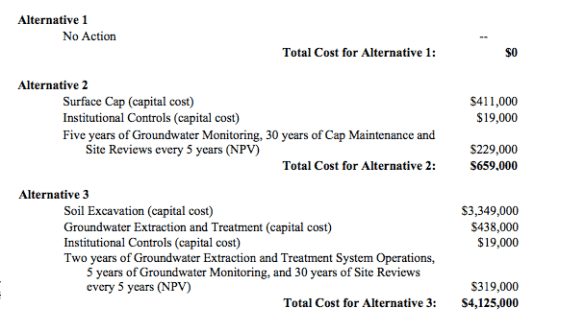
cleanupcost

Alternative 3, a full cleanup with hauled away toxic dirt much like China Basin, cost $4.125 million – for 1.58 acres. Scale that to 50 acres (31.6x). Now you’re starting to get an idea how much Howard Terminal would cost.

A’s let go of PR man Bob Rose, signal possible stadium-oriented change

The A’s hired Bob Rose in 2008 to be head of the team’s public relations. Rose handled many of the tasks you’d expect of a PR guy, handling inquiries directed towards ownership. He also occasionally wrote a blog called Clubhouse Confidential, which provided player profiles and reflections on the team during the season.

Today Rose was let go for reasons that were initially unclear. Then came this:

The PR department is already siloed to an extent for media relations and broadcasting, so it makes sense for the front office to have someone who can also work with public sector. For instance, the Giants have a 4-person public affairs group. The A’s currently have no group or person in that role. Ironically, Rose was the PR guy for the Giants in the lead up to the opening of China Basin.

It makes even more sense if you read into the move the need for a person to work in concert with counterparts at the Coliseum Authority (JPA) and/or the City of Oakland. Robert Bobb’s consulting group is going to handle much of the deal specifics on the JPA’s side, whether or not Coliseum City moves forward successfully. For large projects it’s common to draw up team org charts so that everyone understands their roles and responsibilities. I try to do that for every large project I work in my day job.

Org chart supplied by The Robert Bobb Group

Org chart supplied by The Robert Bobb Group

Does it mean that an Oakland ballpark is happening? Not yet. But this is a solid step in preparation for a ballpark.

P.S. – I’m curious to see if this affects media access among bloggers. I wouldn’t expect any big changes.

Interview on Swingin’ A’s Podcast

Yesterday I did lengthy interview with Tony Frye (@GreenCollarBB) of Swingin’ A’s about all manner of stadium stuff. Since it came on the heels of the election, we talked a lot about that and the Raiders. We talked a good deal about the A’s too, and I tried to show how the two are interrelated and how the teams’ fates are intertwined as long as they’re in Oakland.

Swingin’ A’s Podcast Episode 4

My part of the interview comes about 36 minutes in and runs a whopping 50 minutes.

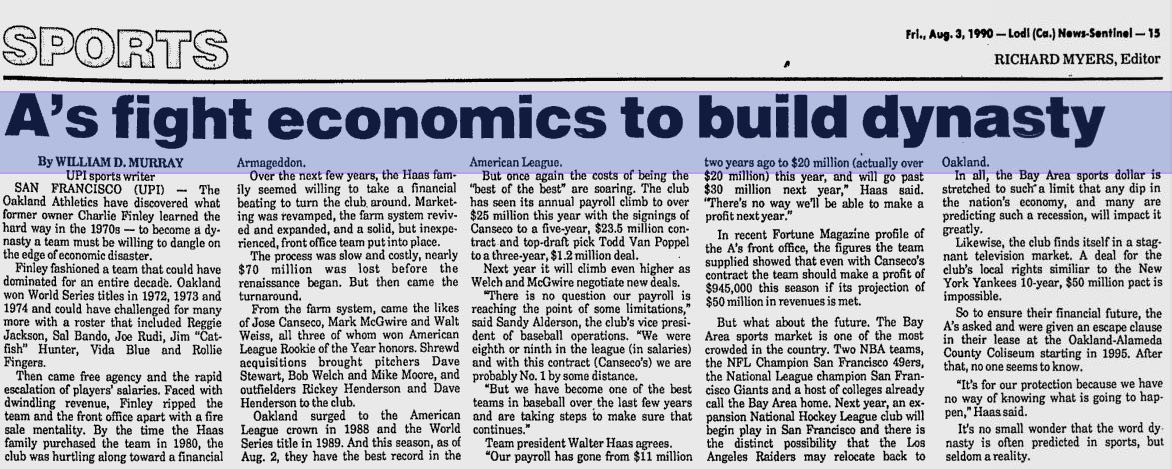
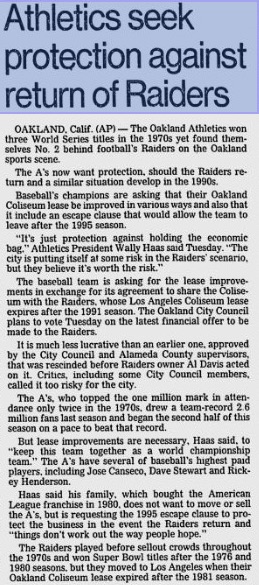
In the interview I discuss Walter Haas and Steve Schott, the latter a subject of a Frye blog post from earlier today. I focused on Haas, partly because of some renewed interest in what he did towards the end of his ownership tenure. Take a look at some of these articles:

A’s fight economics to build dynasty 

haas_1990-lodi

Athletics to move if Raiders return?

boca_raton-athletics_to_move

Athletics seek protection against return of Raiders

deseret-athletics_seek

While we remember Haas for his great generosity, winning teams, and partnership with Oakland, what has gotten lost was that when the winds started to swirl around the Raiders and their potential return to Oakland, Haas picked up on it early and voiced his worry about it. He soft-played it, didn’t want to make appear like he was threatening to move out of Oakland. He made it clear, however, that the team was losing money because of his family’s sacrifices. He was going to sell at some point if it got much worse, which it did. He ended up selling at a heavily discounted price because of the big debt load. Haas felt his business was threatened, so he reacted the way you’d expect a business owner to do – to try to protect his team. Some owners have taken this to unseemly extremes, and it’s unfortunate that Oakland has had to suffer the worst of that behavior from Al Davis and Charlie Finley.

I’ve mentioned this before and it bears repeating: it’s no coincidence that the A’s salad days occurred when the Raiders were gone. The three-peat A’s won the most, but turnout was not particular good and Finley whined about it frequently. With no competition from football on or off the field, Haas didn’t feel a threat. He allowed the Giants to explore the South Bay, in hindsight a strategic error on his part. Haas was as genial guy as ever existed in the Bay Area. But he was still a businessman who knew what was Priority #1 when backed into a corner.

Listen to the interview, rate it on iTunes, and give feedback here in the comments section. I had a good time talking to Tony, and I expect to do another one of these in February, after the Coliseum City ENA expires. Then we can talk next steps. For now, give this a listen.

P.S. – The day Frye asked me to do the interview, Mike Davie of Baseball Oakland wanted to be on too. He’ll have his own episode at some point with a lot of Oakland cheerleading and ownership bashing, I assume.

Election Aftermath 2014

A wise person would’ve turned off the lights and gone to sleep early, waiting to let the election news wash over them until the following morning. Not this guy. As the various county registrars were plagued by reporting delays traced back to a vendor in Florida (that’s your first clue right there), election observers sat at their computers, thumbs properly inserted.

Eventually we got our results. Though not certified, we have a pretty good sense where everything’s leading:

  1. Libby Schaaf is the apparent winner of the Oakland mayoral race.
  2. Sam Liccardo narrowly defeated Dave Cortese in San Jose’s mayoral race.
  3. Alameda County’s Measure BB passed with 69% of the vote, approving a 0.5% sales tax hike for 30 years.

Last week Schaaf did an interview with Athletics Nation in which she discussed current efforts to keep the A’s and other teams in town, as well as her own ideas on doing things differently. She said many of the right things about the City working with greater transparency. She criticized certain aspects of the Coliseum City plan, such as the fanciful replacement arena for the Warriors (who are working on their own arena in SF). Fans of the A’s and/or Raiders will definitely seize upon this:

AN: Do you see keeping the A’s and Raiders as mutually exclusive? What are some of the challenges that go along with keeping both teams in the city?

Schaaf: There is enough room for both teams, and my clear priority is keeping both teams. But from an economic point of view, the A’s have a larger economic benefit for Oakland that should always be kept in mind. They play more than 80 games a year, compared to 10. But I just want to be clear, I’m a very proud Oakland native; my parents were season-ticket holders for both the A’s and the Raiders throughout my life.

If Schaaf is going to work via a straight economic comparison of the two sports, there’s little doubt that the regular season of baseball is far more impactful than a football season. Football’s big payoff was to come via a Super Bowl, though that’s perhaps more of a pipe dream than Coliseum City itself. If Schaaf moves towards abandoning visions of a Super Bowl or retractable roof stadium, it would lead to much more productive discussions between the City and the Raiders. The team and the NFL don’t particularly care about Oakland’s Super Bowl fantasies, and the added cost ($200-300 million at today’s rates) makes an already difficult project even more prohibitive.

Schaaf also led off by saying there’s enough room for both teams, a common refrain from many candidates during the campaign. The problem is not a matter of physical room, it’s whether or not the assembled parcels and other resources can properly pay for the bulk of two stadia. Later on in the interview she emphasizes that the venue(s) will be built with someone else’s money, which is fine as long as someone else can figure out a way to make it pay for itself and turn a profit to boot.

For now Coliseum City remains lame duck mayor Jean Quan’s baby, one covered with the stench of desperation and imminent failure. Schaaf won’t be sworn in until January, which will leave probably one week for her to determine in concert with a new city council how to proceed. She can choose to carry on Quan’s work as Quan conceives the project, leave certain processes going (EIR) while regrouping to think up another strategy, or abandon the project altogether to come up with a completely different plan. How Schaaf proceeds will largely dictate how the A’s and Raiders act, since both teams are waiting for each other to vacate. Complicating matters is the NFL’s activity, which includes a special meeting of its stadium and finance committees to further plan potential Los Angeles relocation(s). In February the relocation window officially opens, which could allow the Rams and/or Raiders to apply to move. If that happens, it’s expected that the NFL will have the procedure in place for relocation candidates to move forward.

If the Raiders leave Oakland only one month into Schaaf’s tenure, her legacy won’t be defined by it. She has worked just about everywhere in Oakland government except as part of the JPA or with the JPA. She has been a sitting council member, sure, but that’s much different from working deals the way Rebecca Kaplan did recently or Schaaf’s old boss Ignacio De La Fuente did previously as members of both the City Council and the JPA. If Schaaf allows both the A’s and Raiders to leave with the Warriors already one foot out the door – now that could be terribly damaging to her. Quan has been scrambling to keep all three teams without a cohesive plan. Schaaf doesn’t want to repeat that. The Raiders leaving would allow Schaaf to devote resources to the A’s, an idea the JPA is already on board with. If the Raiders decide to stay in Oakland and partner with Coliseum City everything remains status quo, though Schaaf will also have the new task of negotiating a short-term lease with Mark Davis.

If the Raiders choose to nix LA and work on a new stadium in Oakland, Schaaf will have to decide if it makes sense to devote more resources towards an A’s ballpark. She expressed support for Howard Terminal, yet the A’s lease and stance leave the site out of the picture. Perhaps Schaaf could work with Doug Boxer and Don Knauss to better present a plan to pay for the ballpark at HT while smoothing over the bad relationship between Quan and Lew Wolff – it is a new regime, right? However, that may be a bridge too far for a site that neither Wolff nor MLB supports. Building a stadium in California is hard. If Schaaf can guide her city towards the realization that they’ll be more productive by putting more wood behind fewer arrows, they stand a better chance at turning that dream of a new stadium into a reality. Schaaf will have to remember one guiding principle: If she’s going to plan for a stadium with someone else’s money, chances are that someone else will have a lot more say about how that stadium gets built than a publicly-built stadium.

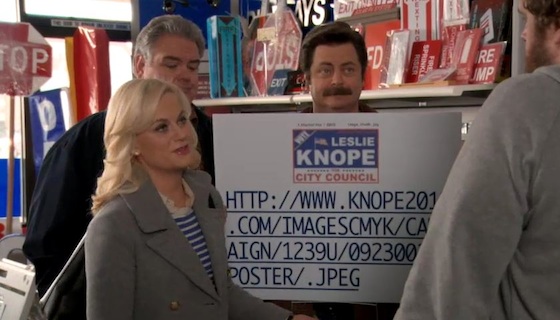
P.S. – One other thing. Without knowing that much about Schaaf’s work in her district, all the talk about her work ethic and positive attitude reminds me of fictional city bureaucrat Leslie Knope. Is that a reasonable comparison? Oakland could use Leslie Knope’s kind of determination. Maybe we’ll be able to see that now that the craziness of the campaign is over.

Kephart provides some brutal honesty about Coliseum City

New Coliseum City frontman Floyd Kephart provided a wide-ranging interview to the SF Business Times (main article/additional quotes). After 2+ years of the project lacking real details and general cageyness from its spokespeople and supporters, Kephart’s honesty is a breath of fresh air. He minces no words about the difficulties Coliseum City faces, and sets the table for what needs to follow.

birdseye-view_north

Coliseum City with two new venues plus the existing arena

The article, written by Ron Leuty, lays out Kephart’s previous experience, much of it in the horse-racing business, some of which is in financial crisis management. The latter’s probably the best why to describe his current ordeal, with 90 80 days left in the ENA. Kephart admits that CC is by far the biggest project he’s ever worked on. Among the things he says needs to be done:

  • Public benefit analysis
  • Disposition and development agreement
  • At least one signed team
  • Master developer

I put together a more extensive list last week when the ENA extension was signed. The public benefit analysis, while not a requirement, is an excellent idea since it could help garner public support if conducted honestly. That could be crucial if CC ends up going to the ballot box in the future. The DDA is a potential showstopper, since it can take up to a year after a team and developer sign on to hammer it out, as it did for the 49ers and Santa Clara. The DDA isn’t anything like a apartment rental agreement or even a mortgage, it’s hundreds of pages of details about financing, ownership, rights, timelines, and legal responsibilities. Maybe if the Raiders or A’s sign on prior to the end of the 90 days another extension could be granted for the DDA, but it goes to show how far behind the 8-ball this project is.

The big takeaway is that Kephart is meeting with Wolff in early November (perhaps next week?), which will give Kephart a chance to sell Wolff on having a more competent team in place or tailoring the vision for the A’s. Kephart’s aim appears to be lower than what the City was selling for the last two years, as the goal of having one team in place, maybe two is not nearly the same as bold (or pointless) as saying Everyone can stay here, there’s plenty of land.

Wolff could easily dismiss the plans just as he had done over the summer, but with the finish line drawing near, Wolff may be more likely to listen. The reason? Process. Having an active CEQA/EIR process underway is worth millions of dollars and at least a year’s worth of effort, so if Wolff were to sign on or bring in a master developer that will work in concert with the A’s, they’d already be ahead of the game. It’s a risk for Oakland, though, since the Mark Davis could view this as a sign that the Raiders are about to be marginalized. Since Davis hasn’t signed on himself, there isn’t much room for him to complain. As Kephart notes:

“Nothing says what the Raiders want. Is it a life-sized statue of Al Davis at the entrance of the stadium and then they’ll stay? … Maybe the teams have asked the city that — I don’t know.”

Another big piece of news is the timeline.

Yet even if Kephart’s group assembles all the agreements and documentation needed to win over a master developer for Coliseum City, the soonest the A’s would play in a new ballpark would be 2018 and the Oakland Raiders would land a new stadium in 2019 ‘at the earliest,’ Kephart said.

‘We want to cooperate,’ Wolff said. ‘We want to see what happens in whatever timeframe, 90 days or longer. Then we’ll know better what we have to do.’

2019 for the Raiders is a long ways away. It’s unclear whether that would be acceptable for Davis. If someone’s promising a new stadium in LA earlier, he may be willing to take it if the terms are right, even if he’s the second team in LA. 2018 for the A’s pretty much falls in line with reset expectations coming out of the lengthy Coliseum lease negotiations. We all want it sooner, I know.

For now Kephart is saying the right things – the truth – that can help get everyone on the same page. There’s no doubt that the effort at this point is a Hail Mary. Then again, Kephart probably knows a thing or two about long shots. If his work can help get the A’s in a ballpark in Oakland, he’ll have done his job magnificently.

Non-recap of the Oakland Sports Forum

Technical difficulties resulted in me (and others) getting only bits and pieces of the Oakland Sports Forum livestream, which at times suffered from dropped audio and the stream cutting out altogether. Streaming an event while trying to run it is extremely difficult, so try as Zennie Abraham did, it didn’t work out well. Thankfully the forum was archived on Ustream so we can all view it after the fact, though the audio quality remains poor.

At this point late at night I don’t think I can give a proper writeup, so I won’t do that. If I can get the full picture after rewatching in the morning I’ll give it a shot. Instead I’ll drop in a few tweets from last night. Hopefully that’ll give you a sense of discussion.

https://twitter.com/muppet151/status/527642880588787713

https://twitter.com/muppet151/status/527651433370247168

https://twitter.com/muppet151/status/527654119826128896

Rebecca Kaplan and Jean Quan spent a good amount of time pitching themselves as the best possible saviors for the Raiders. Quan plugged the progress on Coliseum City (such as it is), while Kaplan sold herself as a more conciliatory negotiator that wouldn’t damage the relationships between the City and the teams. Joe Tuman had a lecturing moment when he dismissed these mini stump speeches as pure election politics with little to come at the end. Bryan Parker cast himself as an out-of-the-box thinker, though his example of Stanford Stadium seemed a little off the mark. Libby Schaaf, who until recently hasn’t spoken that much about the pro sports teams at all, seemed against the idea of the City buying out Alameda County in order to advance Coliseum City.

Those who attended may have learned a little more about the candidates and their relative stances on pro sports. Ultimately, I don’t know that it will affect the actual vote all the much, as we’re 5 days from the election and whatever messages could be gleaned from this event probably won’t permeate the voting public to any significant degree. That said, it was still a good idea for Zennie Abraham to put on the event (pity it happened opposite Game 7). It may not have been the sequel to The Adult Conversation we were looking for, but there were signs. I suppose that discussion will come in early December.

P.S. – Big thanks to Bryan Cauwels, who tried valiantly to help Zennie fix the stream problems. Bryan is part of Save Oakland Sports and is a good representative for their cause. We may not agree on the future of sports in Oakland, but we always have good, civil discussions about it, probably because Bryan is one of the nicest guys on the planet (I am not).